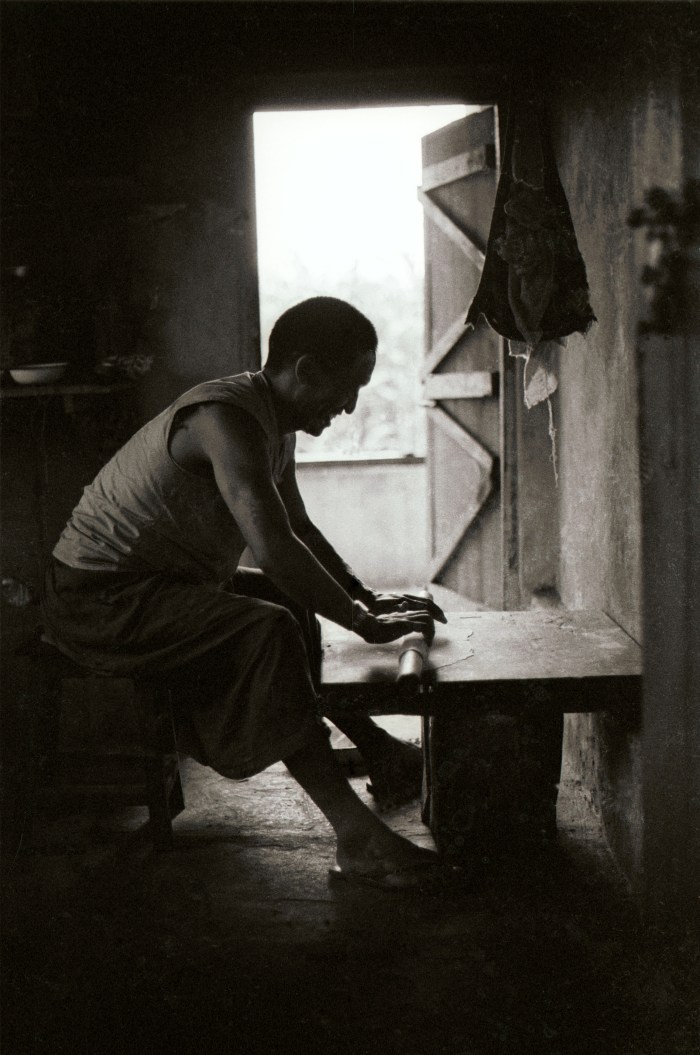
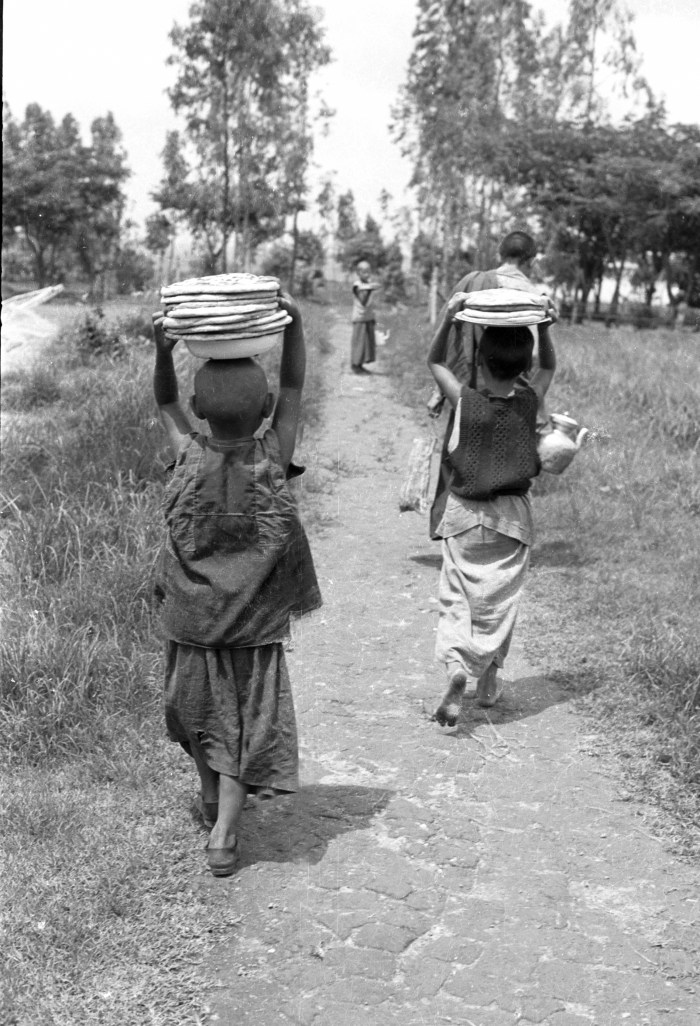
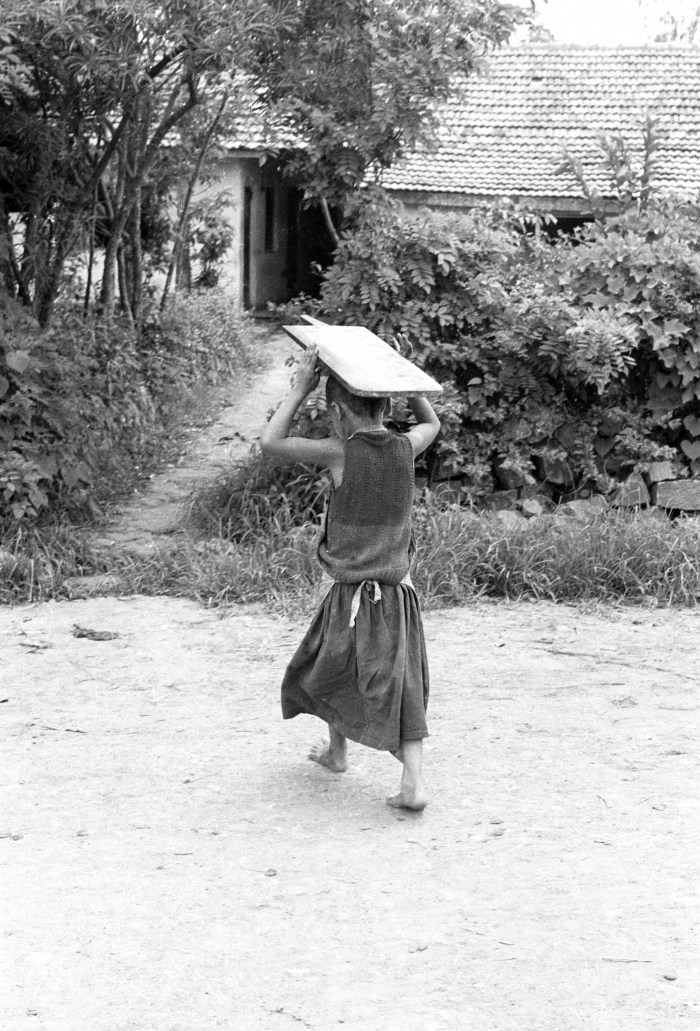
When I first came to Drepung in Mundgod in 1978 and settled into the monastery routine, I became accustomed to seeing the large flat bread that formed the core of the monk’s diet circulating the camp around 11 am each day, piled high on the head of child monks who took turns to collect it from the kitchen for their teachers. The monks would then settle on their verandas, sitting cross legged in a circle and tear off chunks of bread dipping it into a large enamel mug filled with Tibetan tea. They were still very attached to Tibetan tea, which the local doctors said was the worst possible combination for cholesterol and high blood pressure. The monks estimated they were lucky; in Tibet, the monastery did not provide regular meals, only tea and tsampa or noodles, but mostly tea at the morning assembly. Their families usually sent them bags of tsampa, but for those monks who came for far away Kham or Amdo, life was hard.
As I watched them eat bread and Tibetan tea, and an occasional thukpa, white flour doughy chunks in an oily broth with a few pieces of meat floating here and there, I asked them why they didn’t eat vegetables. The answer was always that vegetables were expensive, vegetables had no taste. They didn’t believe in vegetables. Diabetes and stomach cancer were rampant, and the children all had boils. It was true, they had no money to eat better, and if they had, meat and chili had precedence over vegetables. Fruits? That was for children, though the children’s teachers could only rarely provide it. Papayas grew everywhere, but the taste and textures evoked a grimace of disgust. The Tibetan settlers usually fed them to pigs.
Ten years later, the bread was still there, though spinach, turnips, carrots and even pineapples and grapes now accompanied it. Papayas were accepted and even appreciated by some.
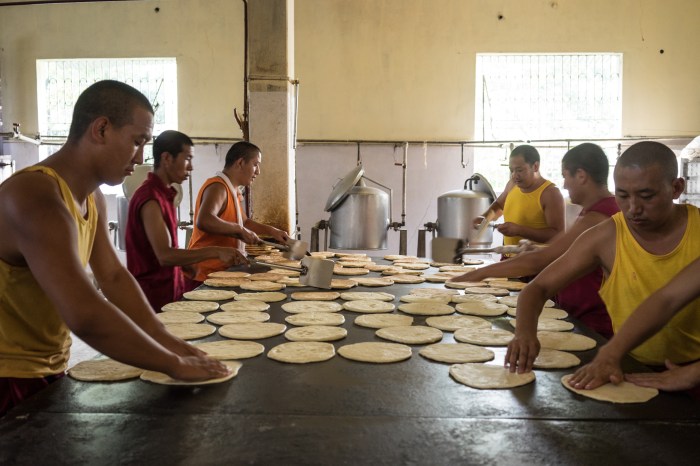
When I returned to Drepung Loseling in 2016, the bread was still the main feature of the morning meal, but vegetables were well integrated into the diet and the evening thukpa was full of them. I visited the kitchen, serviced by the monks in rotation. Vegetables were bought in bulk and piled high on metal shelves and noodles came from the College’s own noodle machines. Diabetes was still rampant among the older monks, but I found all of them watching their diets with care and lauding the benefits of exercise. Boils and ringworm were a bad memory of the past.
The Loseling School room in 1978; teacher at the head of the class, and on the left, the class supervisor or guenda, usually the class bully.
School in Tibet in the old days was, as described by my husband Kalsang who attended Lhasa’s Nyarongsha School in the 50’s, an institution that taught exclusively calligraphy, dispensed a wide array of punishments, and had painfully long hours. In short, it had all the elements for inducing extreme boredom tempered by fear. As Kalsang described it, returning to school after 15 days of glorious summer picnicking by the river was like going from heaven to hell.
These methods, which were the only ones known, provided the guidelines for education in the early times of the reestablished monasteries in South India. In Tibet, monks generally enrolled in the monasteries in their teens or twenties and already knew how to read and write. If they enrolled at a young age, it was their teacher’s responsibility to teach them the basics . In India, the Buxa monks, after moving from the former internment camp in Assam, their home for ten years, to the new settlements in the South, began to enroll new monks. These were inevitably very young, children of refugees and new settlers, many who sent over a son or two to lessen their burden. The monks had no choice but to set up a school of sorts to teach them collectively how to read and write, in the only way that they knew. Around fifteen, they would begin the monastic curriculum, which was highly complex and demanding, and they had to be ready.
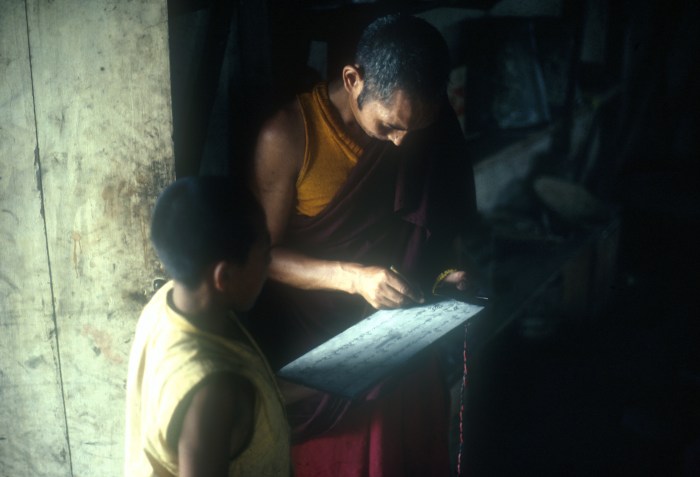
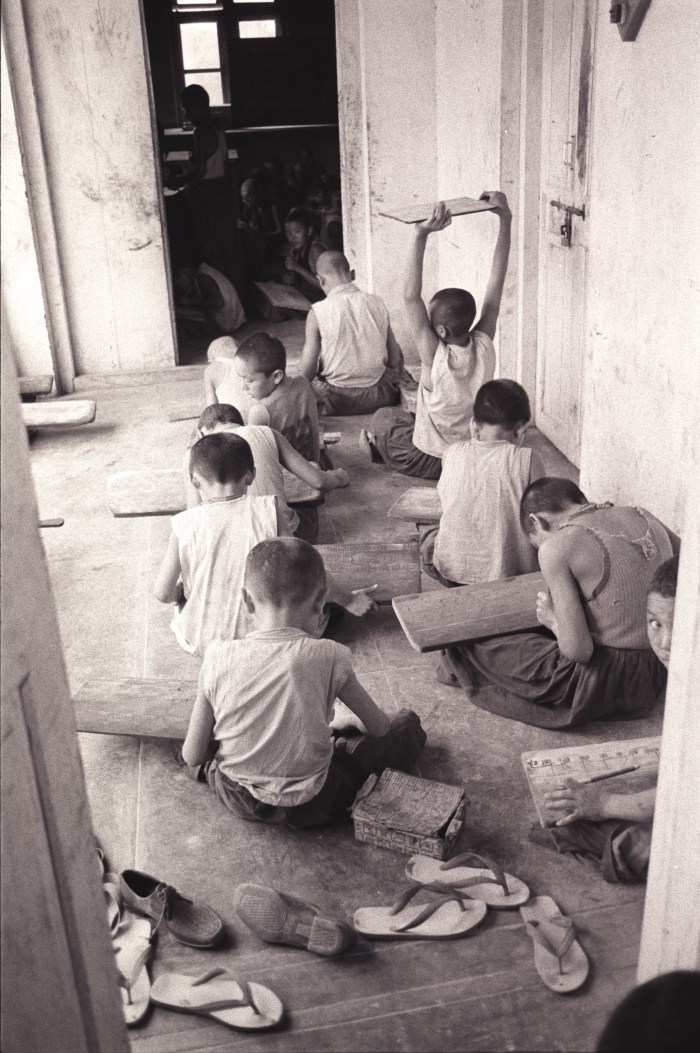
Loseling School, which I visited in 1978, was a simple rectangular structure where boys between five and twelve sat cross legged on the mud floor, a large wooden tablet spread on their laps. As in Tibet, they practiced on an erasable surface, as paper was scarce and resources limited. They etched letters into the tablet, and brought the result for review to their teacher, who sat menacingly at the front of the class, an electric wire (not a live one) in hand, ready to strike at any emerging naughtiness. The atmosphere in the room was electrifying; the energy of forty feisty boys bottled up doing something very boring, constantly weighing the urge for a prank against the deterrent of the wire. The scene was beautiful, though and I never tired to walking by to photograph it.
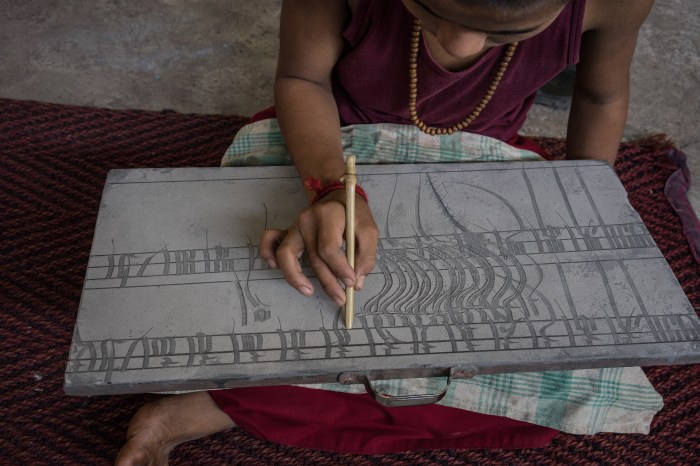
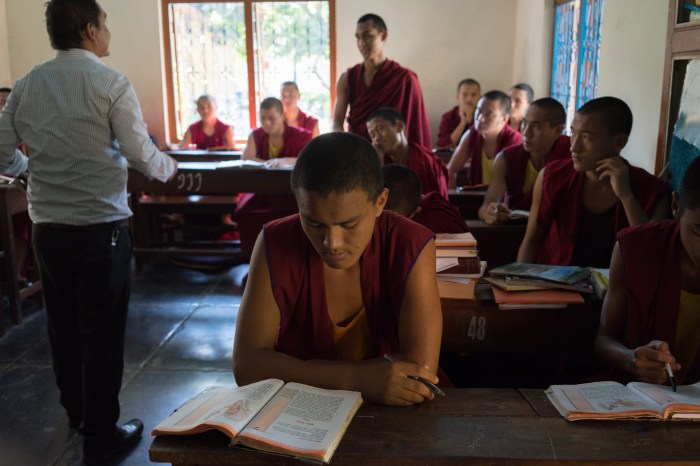
In the years that followed, talk emerged of a better education for young monks, one that would introduce math and science, and even English. Elder monks were always afraid that the lure of the outside world would lead their young pupils astray, but in the mid 80’s monastery recruits began to pour out of Tibet, swelling the numbers. Sera Je in Bylakuppe settlement lead the way with a progressive school funded by an Italian monk, and the other Colleges followed. When I visited in 2016, all had modern style schools. Loseling still had the calligraphy class, but the teacher sat in a relaxed manner at the front of the class, reviewing his pupil’s tablets in a conciliatory and helpful manner. The room was calm; within an hour or so, the children knew they could play, jump and run outside in the school’s recess ground.
In other classrooms, English, science and math were being taught, even to older monks who had begun the monastery’s curriculum. Concepts that would have elicited suspicion and doubt thirty years back were the new normal.
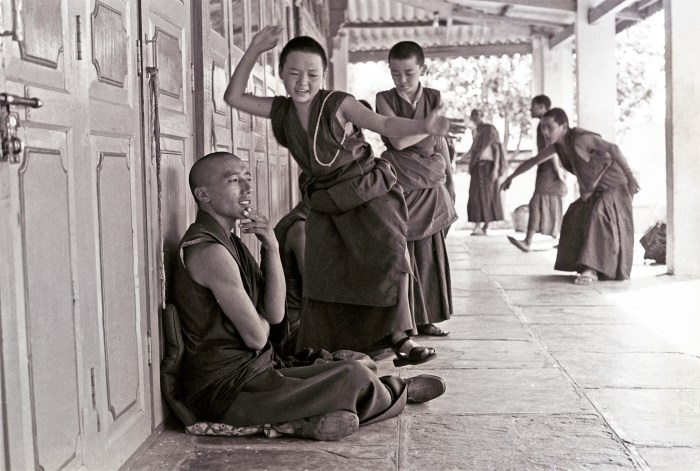
Calligraphy; erasable ink on a wooden tabletGoing to School, 1978Feisty boys coming in late for a lecture by a visiting monk.Correcting; electric wire in hand
Calligraphy class, 2016, etching on chalk, on a wooden tabletTeacher correcting tablets and paper
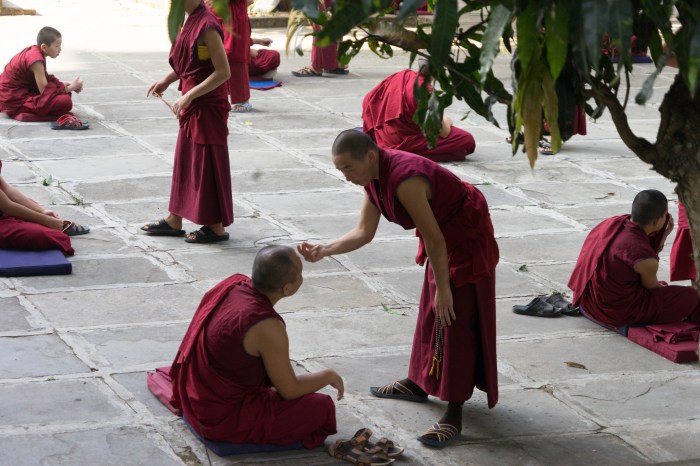
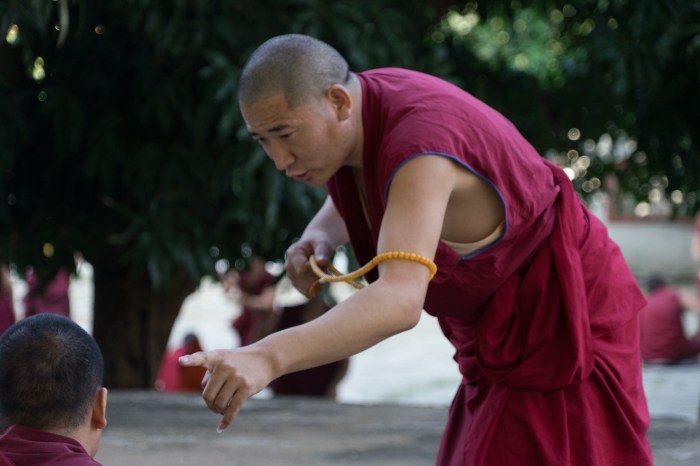
Debate is in integral part of Tibetan Buddhist monastic education in many of the traditions that flourish in India and the Tibetan Plateau. Philosophical subjects are a core of monastic education and debate is designed to help assimilate the complexities they present. It is a form of mental gymnastics, to integrate concepts presented through texts and train the mind to delve deeper into their intricacies.
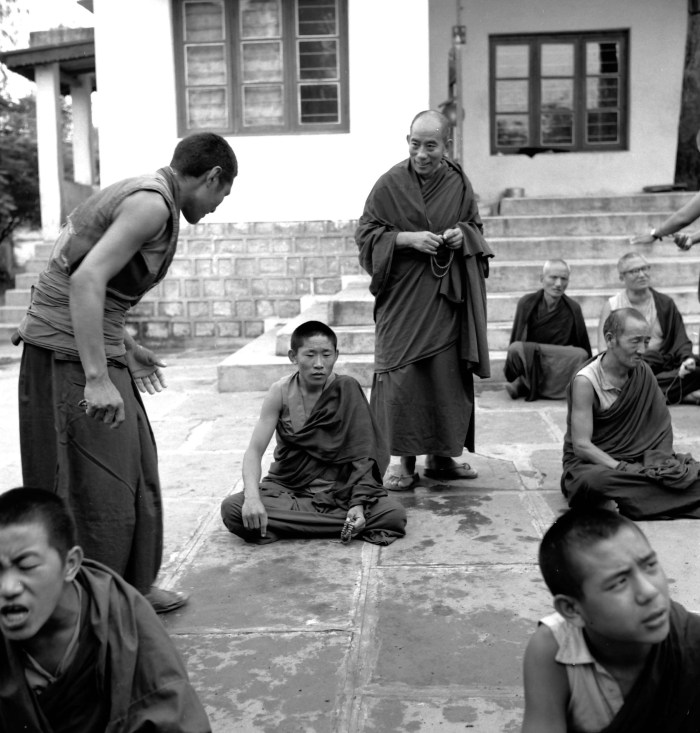
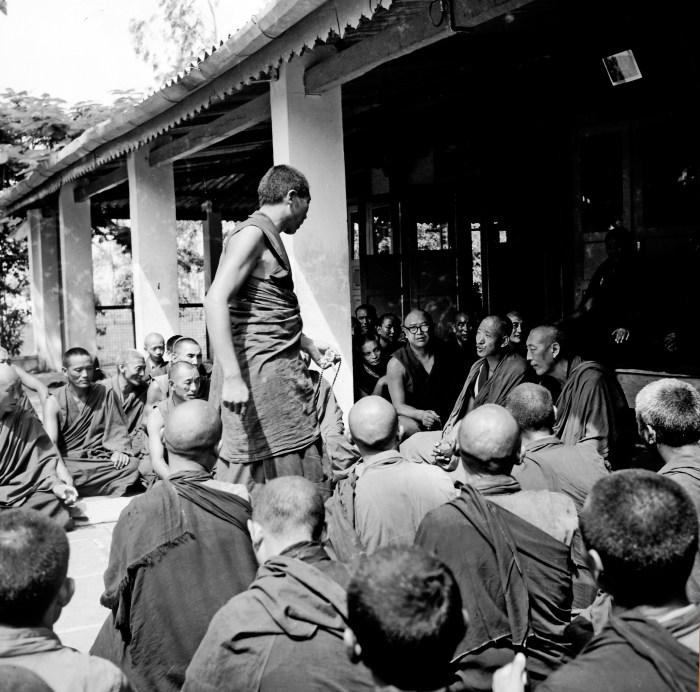
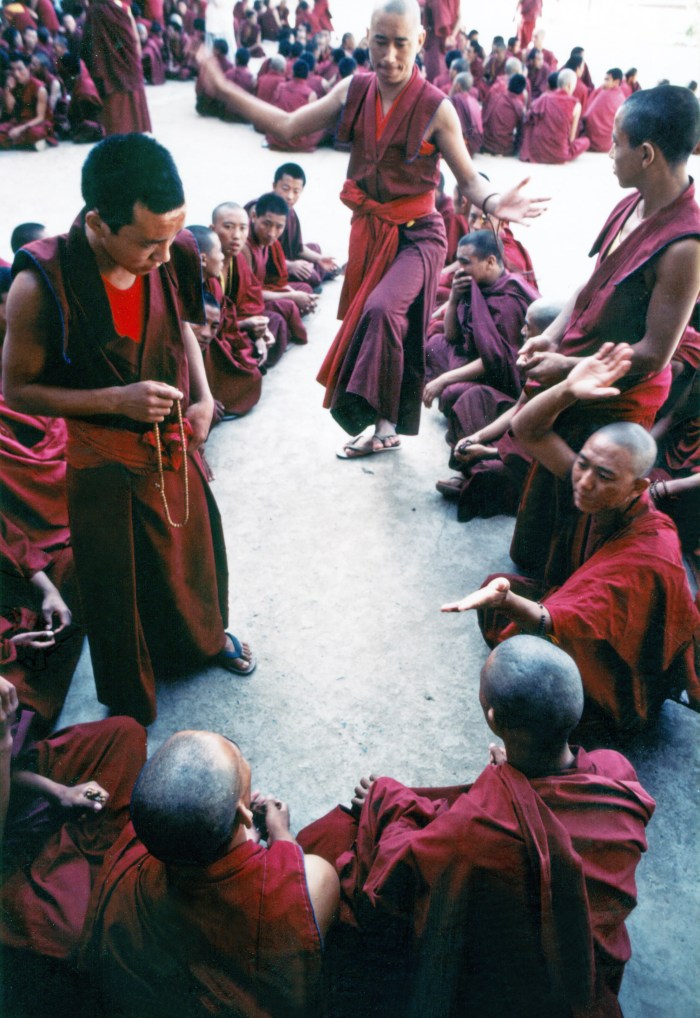
Debate is typically conducted on a daily basis, in a designated courtyard, tiled in flagstones and shaded by trees. The challenger, standing, throws a statement at his opponent, who is seated and is meant to refute it. A volley of exchange ensues, accompanied by clapping gestures on the part of the challengers, which can become extremely animated.
A good debater will look forward to the session like a football or basketball player to a match. He will thrive on the excitement, and other monks will watch the proceedings with great anticipation. My husband Kalsang, who was a Drepung monk for fifteen years, distinguished himself as an able debator. In the initial years in exile, which took place in the monk camp in Buxa, between 1959 and the time he left for Teacher’s Training in 1961, he thrived on the debate sessions that were recreated in the jungle of Assam, as part of the makeshift monasteries of Drepung, Sera, Ganden and Sakya. The excitement helped him forget the heat, malnutrition, rats and leeches, as well as the anxiety of being so far from home.
Lati Rinpoche, then abbot of Ganden Shartse, watching the debate. At Ganden Shartse in Karnataka, India, in 1978Drepung Loseling debate session, Karnataka India, 1979At Drepung Loseling, 1989 Tsona Rinpoche, from Loseling, debating in front of the first assembly hall. 1979At Drepung Gomang, Karnataka, India, 2016
I first met them in 1978, the night we arrived in the Tibetan settlement of Mundgod, in Northern Karnataka. After bumping around on winding roads for several hours, driving past bullocks and buffalos with extravagant horns and through thick jungle, we arrived in the Tibetan settlement of Mundgod. It was dark by then, and we emerged from our white Ambassador to be greeted by a group of monks with white scarves, then ushered into an elongated mud brick house, proudly referred to as the just finished Nyare Khamtsen House, boasting an assembly hall, two guest rooms and the Khamtsen’s first ever bathroom, a cement cubicle with a single tap and with (what we call in France) a Turkish toilet. Smaller monks lurked behind their teachers, peeking at us through the door, taking turns to gawk, especially at me. Only then did I realized how close they were to Kalsang’s world, these monks with whom he had shared the few years he had spent at Drepung in Lhasa as Nyare Chunsel, the rank his parents had insisted he have, which afforded him the privilege accorded to lamas. After three years, he had escaped with them to Buthan, then India and settled for some years to life in Buxa, Assam, a former British internment camp where the monks pulled together a semblance of monastic life, a thousand monks from among the escapees of the three Monasteries of Drepung, Sera and Ganden. Kalsang thrived there, though many died of TB and others succumbed to madness when they realized they was no turning back.
For two months, that summer of 1978, I bathed in these monk’s warmth and hospitality. They were Kalsang’s only family, his parents having remained in Lhasa where they passed away about the time we made this first visit to Mundgod.
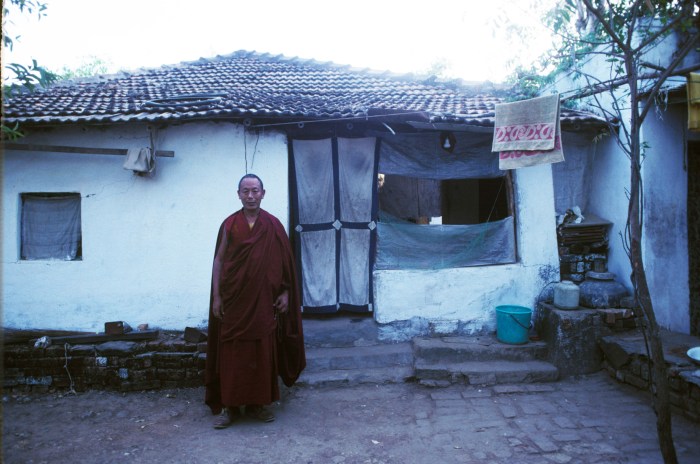
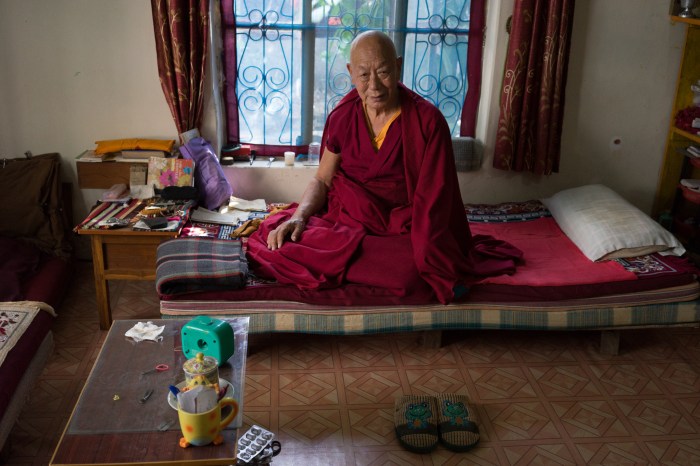
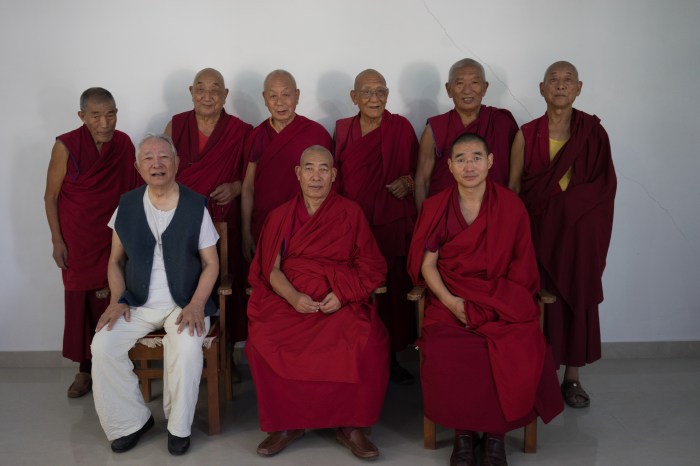
This year, I visited Loseling in Mundgod after a hiatus of twenty one years. The monastery’s environment had drastically changed; It had become like a small town, full of trees and flowering bushes, the monks were more health conscious, finally adapting their diet and lifestyle to the tropical climate of the Deccan Plateau. They also lived comfortably in better houses. Time had taken its toll, though, with six out of twenty five Nyare Buxa monks remaining, the others having been claimed by cancer, diabetes, or other casualties. The youngest was seventy nine, the oldest eighty five.
I made a point of photographing these old friends in a group photo, then in their monk quarters, in the transplanted universe of a Tibetan Monastery in South India.
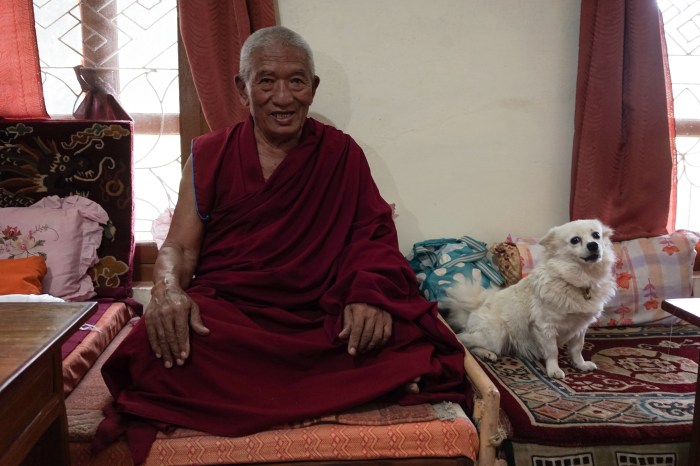
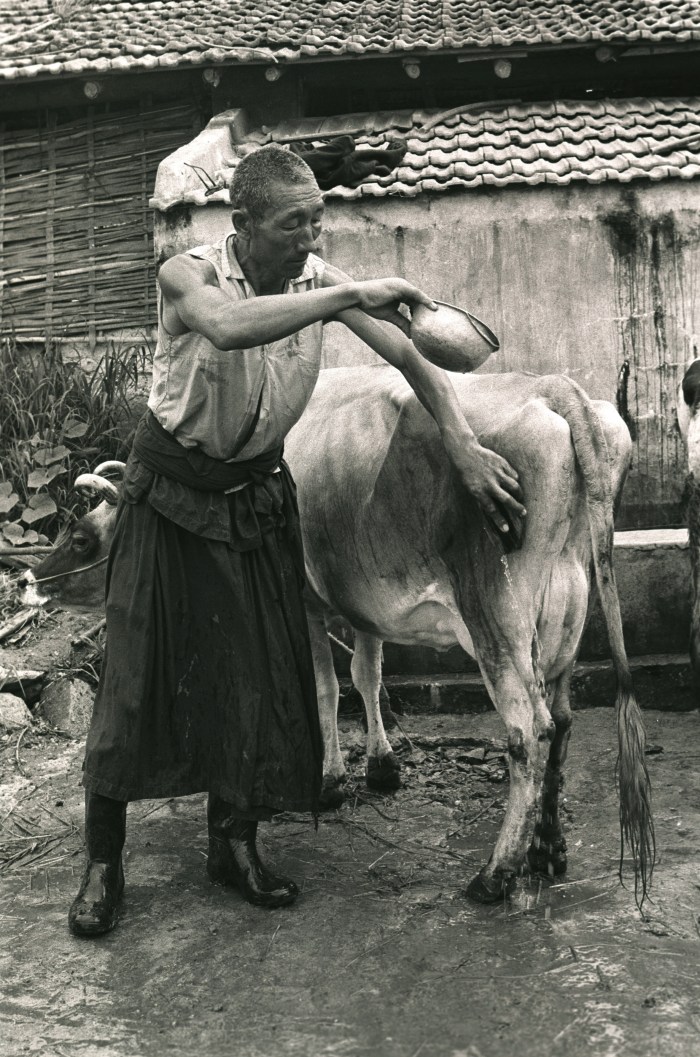
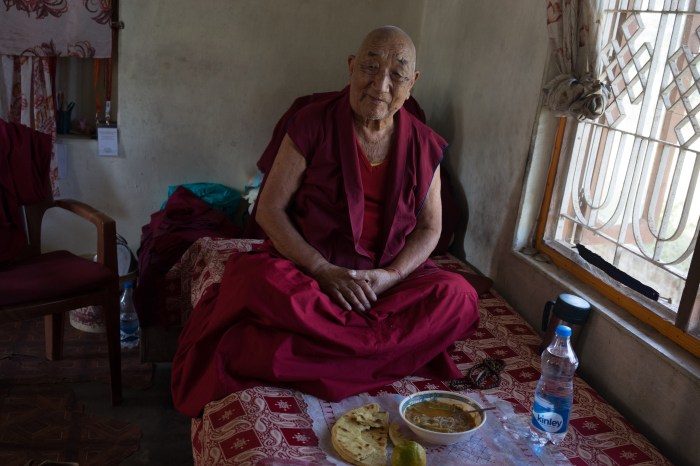
Tashi Paden, Tsoya, Sonam Temba and Lobsang on the porch of the old Nyare Khamtsen in 1978. Of them, only Gen Tsoya, second to the left, survives. He is eighty. Gen Tsoya in his room, with his dog Sengdrup (Little Lion)Gen Rinchen in front of his house, in 1989. At the time he was the Drepung Chanting Master. Gen Rinchen in 2016 in the same, renovated house. Gen Tsesum in 1979, washing a cow. Loseling had cows and buffalos, which they milked. They said the buffalos bathed themselves, but cows had to be hosed daily. Gen Tsesum in his room, eating his lunch. At 85, he is the oldest Buxa Monk reunion; at the Center is Toden Rinpoche, in his mid seventies. To his left, Kalsang Yeshi. Gen Kalsang Yeshi in his room (this is another Kalsang Yeshi)
Gen Tsewang Dondup. In front of him is an array of medicines, Tibetan, aryuvedic and allopathic.
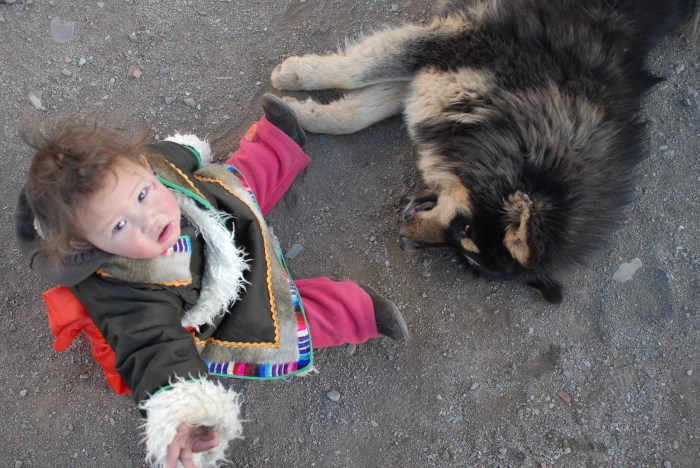
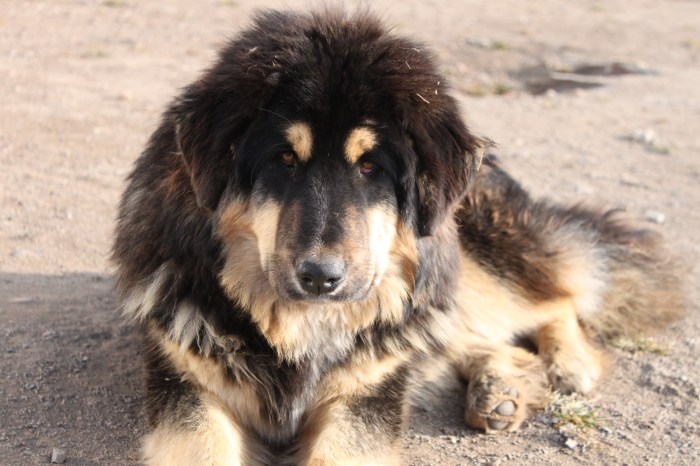
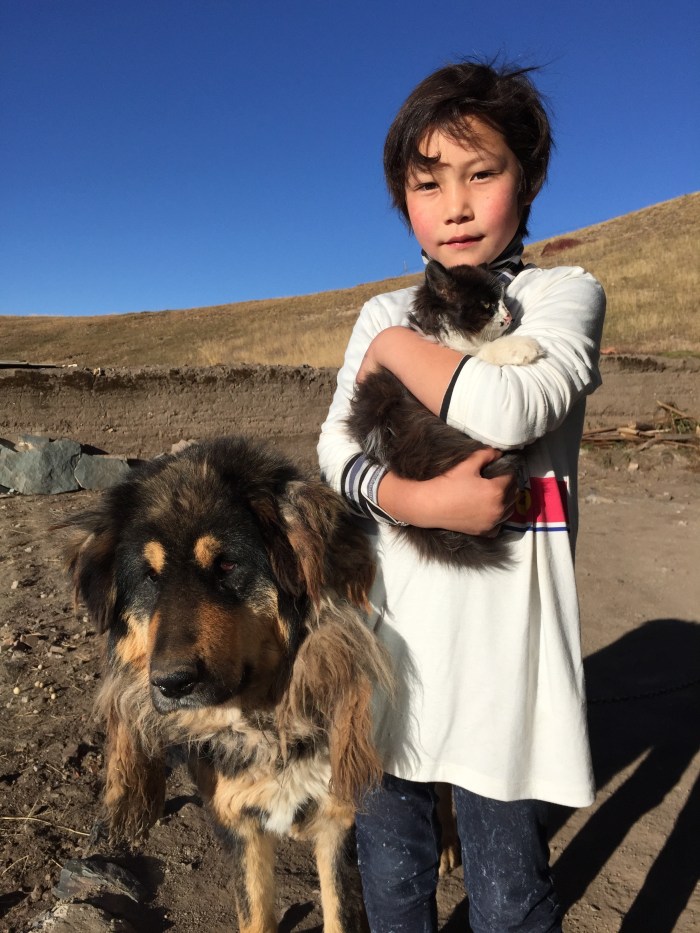
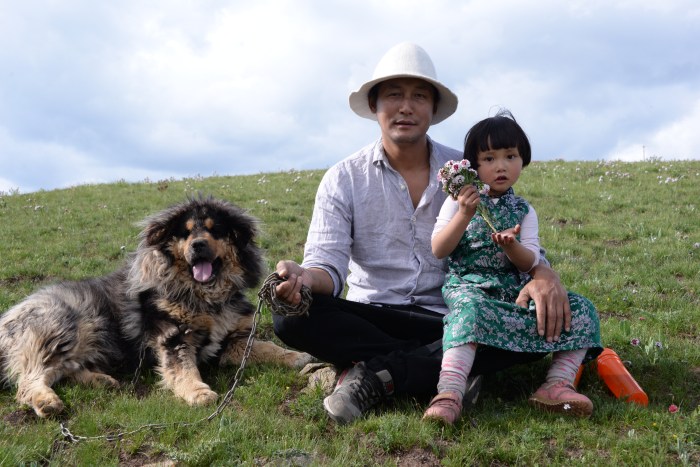
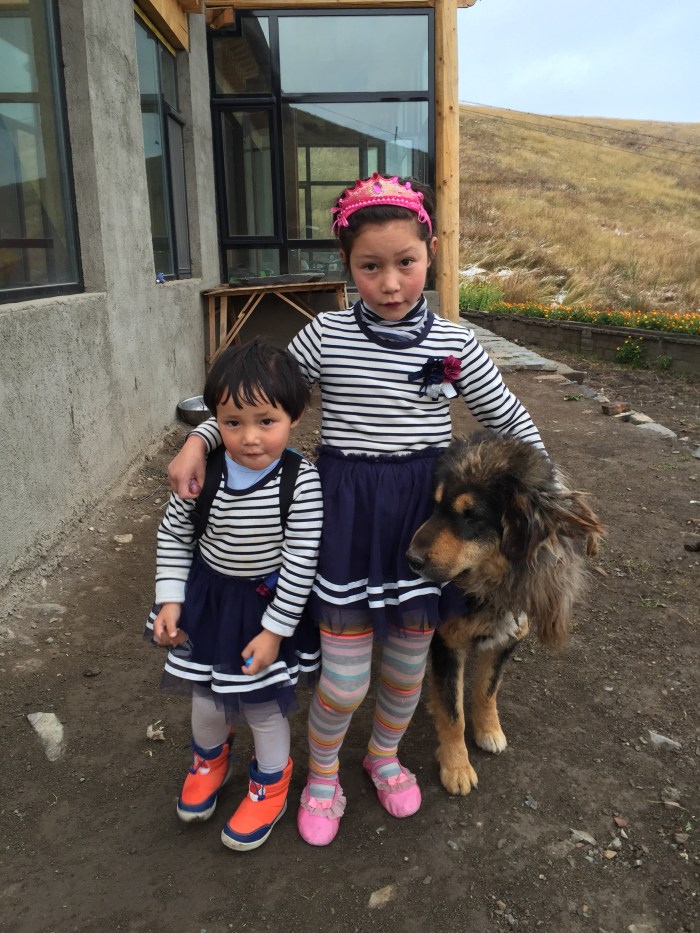
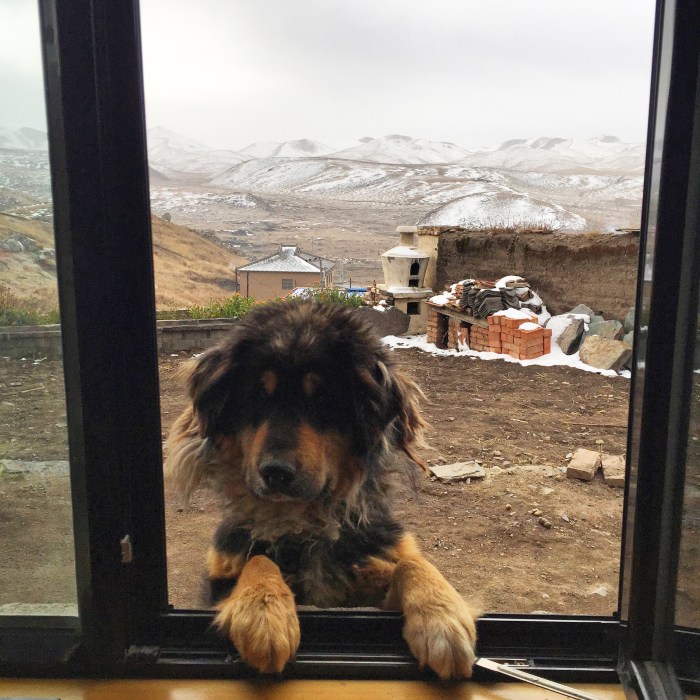
Tibetan mastiffs, guardians of nomadic herds are large and fierce, and stand up to their reputation. One learns to stay clear of nomad camps when on foot and to watch out for dogs when riding a motorbike in the pasture near a yak of sheep herd. We used to take guests on nomadic visits on little motorbike convoys, and I once saw a dog trying to knock Yidam and Dechen, who were riding ahead of me, off their bike. The dog circled them menacingly, trying to destabilize the bike so it could attack. Yidam was a skilled driver, but it was an alarming sight. Norzin’s nanny, who is terrified of dogs except for her own, showed us a scar on her arm, from a childhood mastiff bite. Her niece was bitten in the face as a toddler and her mother had to carry her for hours to get to a hospital where they could save her from being scarred for life.
In Ritoma, every respectable household has a mastiff tied to a chain, to scare visitors. Before we had the Norlha guesthouse, we put up guests at our Production Manager Dunko’s house. Our Swiss guest was intrigued by the plate of dried bread left by his mother on a table near the kang, the heated platform where she slept. She was later told it was destined for the dog tied near the outhouse, to distract it an allow her to pass. The next day, she realized she should have kept some for the return, but fortunately, the dog was still chewing and let her by.
Mastiffs come in all forms and sizes, and ‘perfect’ ones can fetch an astronomical price. When Dechen and Yidam moved into their new house in 2009, Yidam’s parents gave them a puppy they named Thopdan. Dechen loves dogs, and wanted Thopdan to be free to roam at will. He enjoyed life as a puppy, wandering in the house, following her to the workshop and frolicking on the hills with other puppies, but when he reached adult size, she began to feel the pressure. He enjoyed frightening people and would send the workshop women in a frenzy with his ‘friendly’ leaps. In the end, the village ordered her to tie her dog before he caused anyone harm. He was scary, and though he knew our family, even allowing new members into his circle, he could also detect fear and acted upon it. One day, the nanny showed Dechen her arm and lectured her on respecting local customs and Dechen, heartbroken, had to comply.
As the years rolled by, we saw how the dogs behaved. Our accountant Serwo had a ‘nice’ mastiff, one that didn’t try to scare people, and he roamed around free. One day, a man riding through the village on his bike saw, on the plane in front of the village, a child walking towards a group of houses and a fast moving three dog pack running in a beeline towards him. The man redirected his bike to the child, and arrived just in time to interrupt the first dog’s attack. One of culprits was Serwo’s dog, spoiled by bad company; young dogs in a pack turn to being bullies and a lone child is an easy prey.
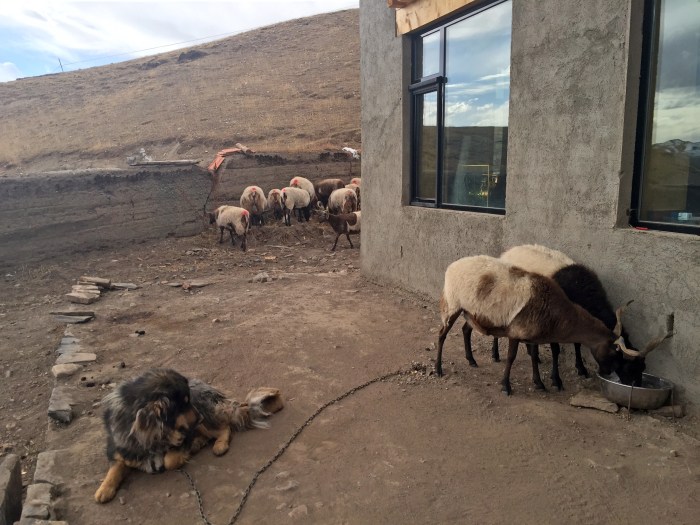
Nearly eight years later, Thopdan is still tied up. Unhappy at first, he grew used to his fate. For two years, he was tied near the guesthouse, and made many friends there. His peaceful disposition towards other animals made him a favorite of little dogs or puppies who came by to share his food and seek his company. At home, he is tied near the front door, terrifying guests with his bark and threatening manner, but sheep are not afraid of him, and sneak around the house to get to his bowl while avoiding the front door. He never minds sharing his food.
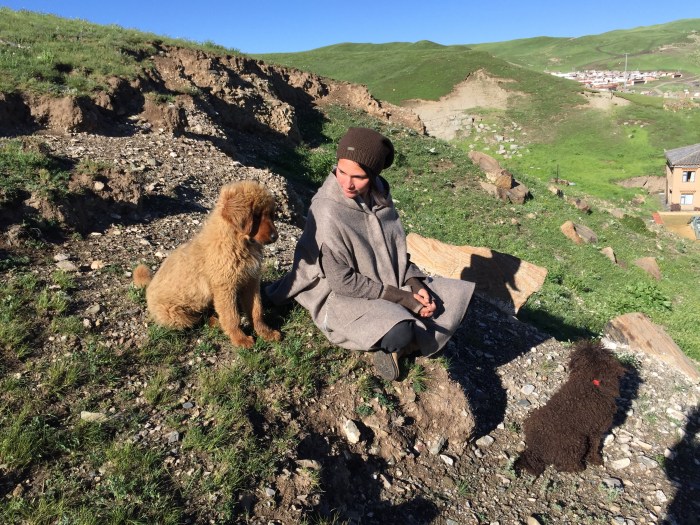
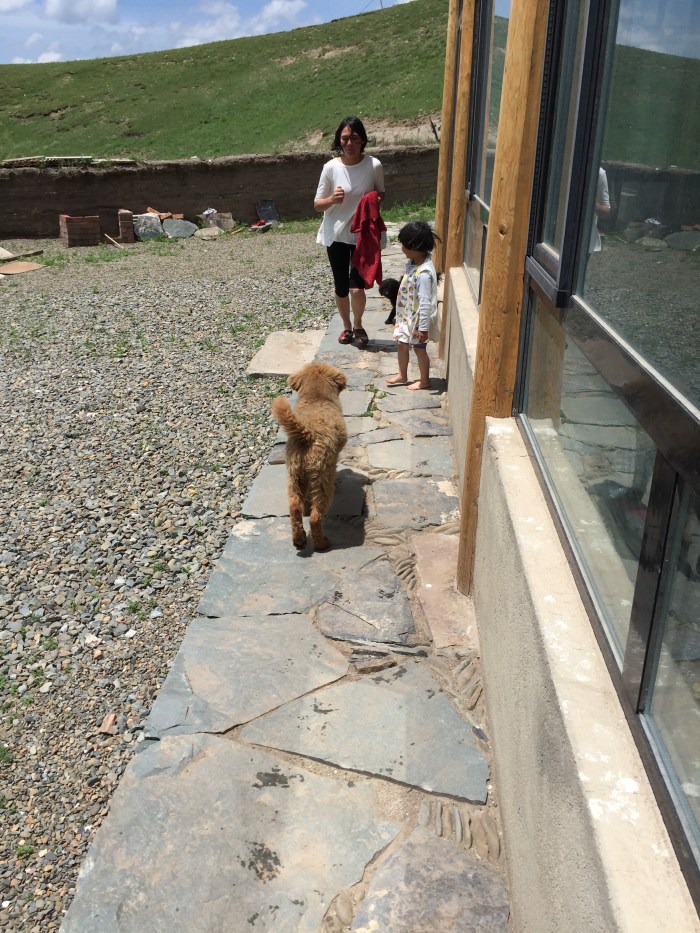
This year, there was Lennie, the neighbor’s yellow mastiff puppy. Dechen decided that Lennie, with his hazel eyes and friendly manner, was cute, and Lennie set his mind on our family, adding himself to the little group trooping up and down to the workshop every day; Dechen, her poodle Norbu, Baby D, Norzin, the nanny Tsering Kyi, or accompanying Dechen and Norbu on their early evening walks. They became inseparable. Lennie, after checking out Thodan’s bowl, also liked to come in the house, to sample the trash bin, scattering around any bones or other interesting content. Countless times I would pick up Lennie, who was getting heavier by the day, and move him from the kitchen corner to the front door until one day, like any other, Lennie stood by the trash bin and growled at me, then barked. Seeing me hesitate, he stared straight at me with his yellow eyes, and moved one step further; he began to attack, biting at my long scarf, that hung loosely. He looked like a child who has discovered something new, and quite pleased about it. The cute puppy had turned into a snarling, dangerous creature that I decided I didn’t want to fight with. I called Dechen and said sarcastically that there was “a huge yellow rat” in the kitchen that was trying to attack me. She took it literally and sounded very puzzled until she figured it was Lennie. She laughed and no one took me seriously, Lennie’s days of freedom were counted anyway; let him enjoy them, said Dechen. The next day, Lennie was back, and life went on as usual. On my next visit, he had disappeared, having taken up his post at the neighbor’s on the end of a chain.
Dechen and Norzin with puppy Thopdan, 2009
With Thopdan in 2010
In early Spring, there is little left of the pasture and sheep are desperate for a mere blade of grass. Thopdan generously shares his dinner.
Sochoe quickly made friends with Thopdan; dogs seem to smell family members as such.
Norzin in her latest outfit in our back yard Taken for a walk on the hill
Looking into the living room window Puppy playing with a tied dog Dechen with Lennie and Norbu on the hill
Playtime with Lennie Gang of humans and dogs trooping up to the house
Games in the fields; Tibetan settlement of Karnataka, India, 1994. Sochoe, Dechen and Genam with friends Kalsang Dawa and Pemba Dolma
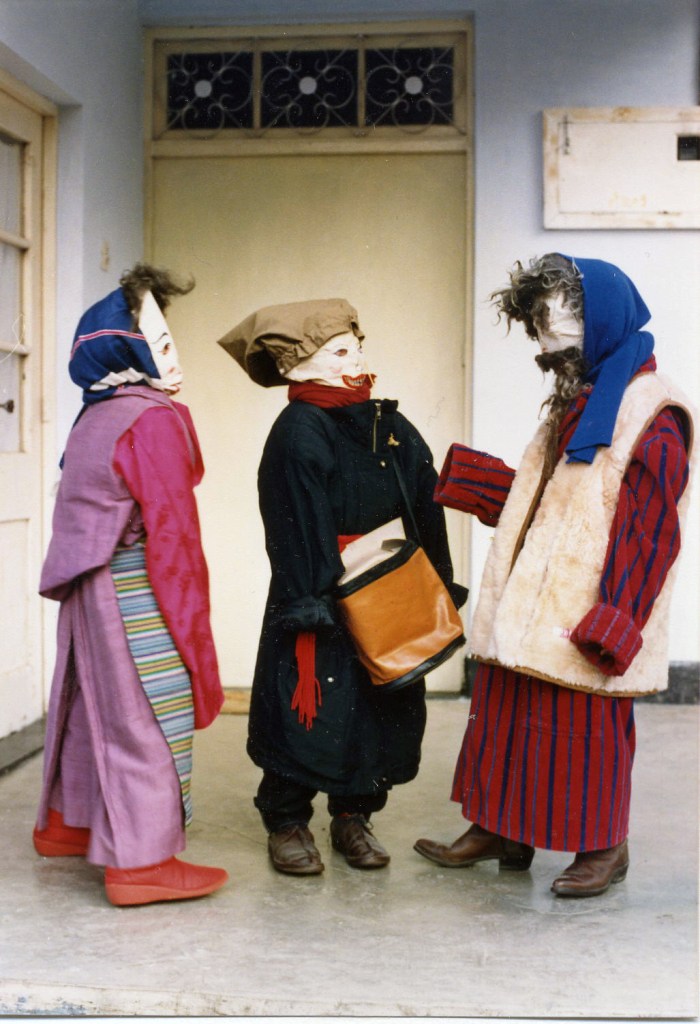
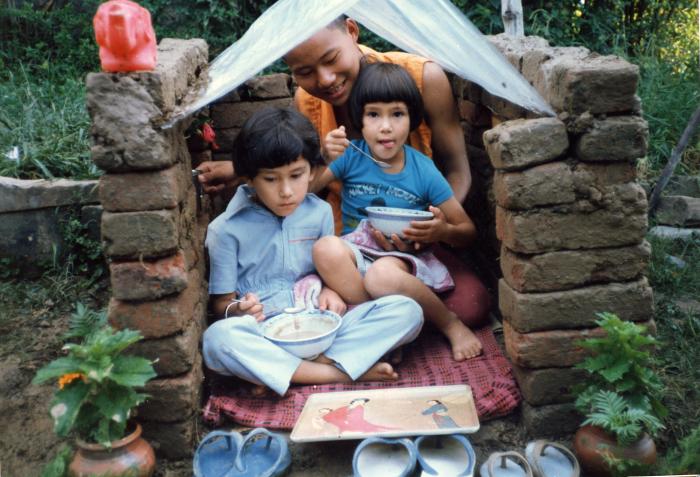
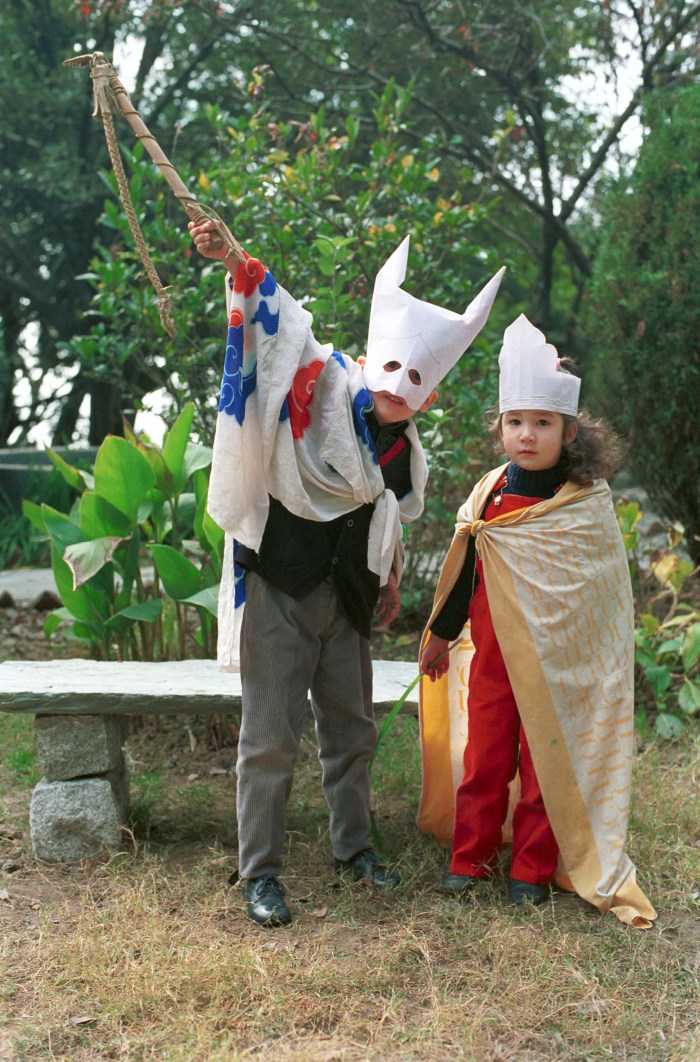
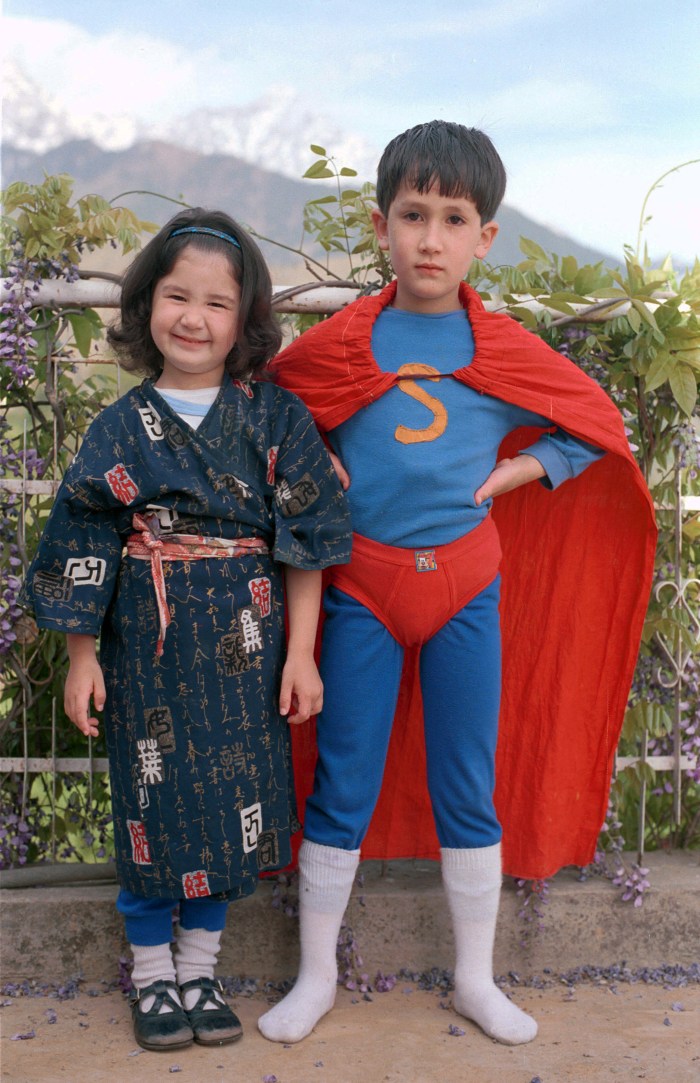
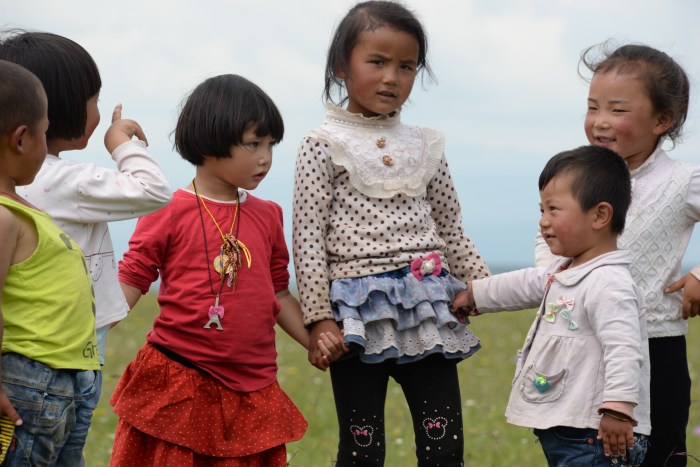
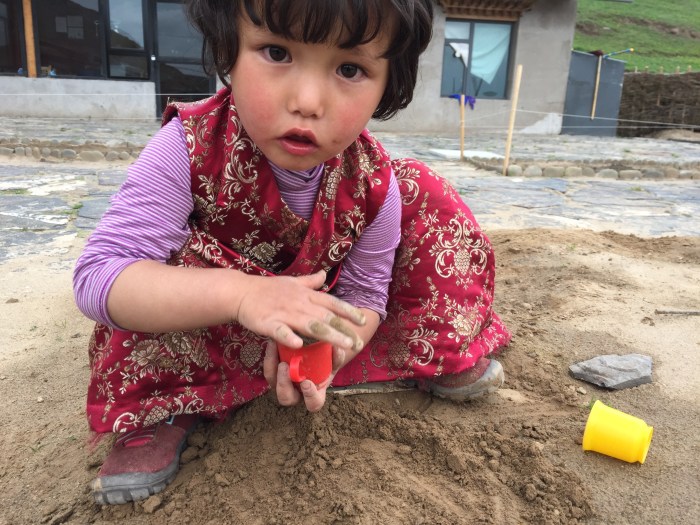
How did children play in my time, in the time of my parents? They played outside with other children, climbed trees, played hopscotch, marbles and jump rope on a dusty playground, invented situations like going to a party, borrowing their mother’s dresses and shoes and smearing on makeup or running a store or a kitchen using play cups, kitchen utensils flowers, leaves and mud which we smashed into suspicious looking brews that we tried to feed to adults. At home, they may have a few toys, dolls for girls, cars for boys, board games, a bicycle or a good set of marbles or a Lego.
I loved buying toys for my children, especially since there were none where we lived and they were part of the excitement of opening a suitcase full of treasures when returning from a trip from Europe, East Asia or the US. Over the years, I noticed that the excitement often stopped there; the toys were unpacked and marveled at, often ending up in a pile in their room, bits lost and scattered, often the prey to rats or puppies. Dolls, cars and logos kept them busy inside in the evenings, but real fun was outside, playing with their friends and pets the same way we played as children.
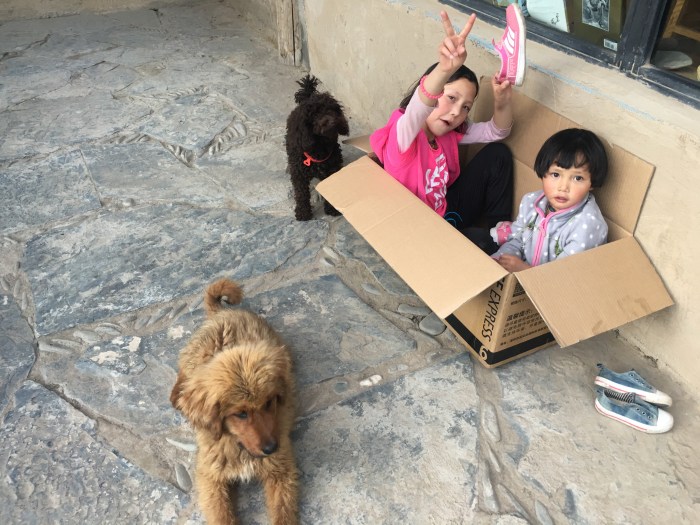
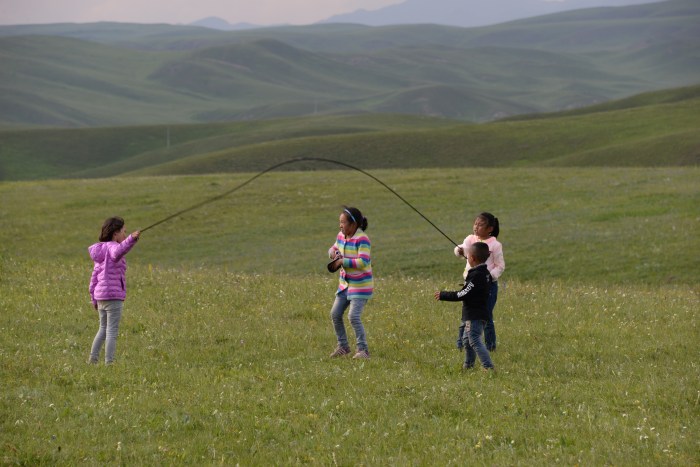
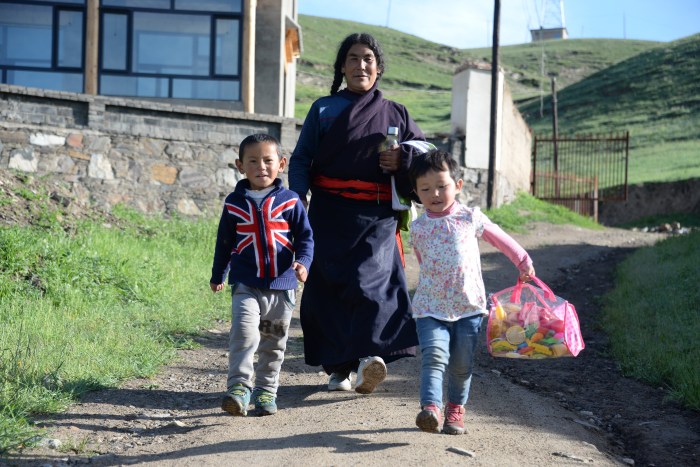
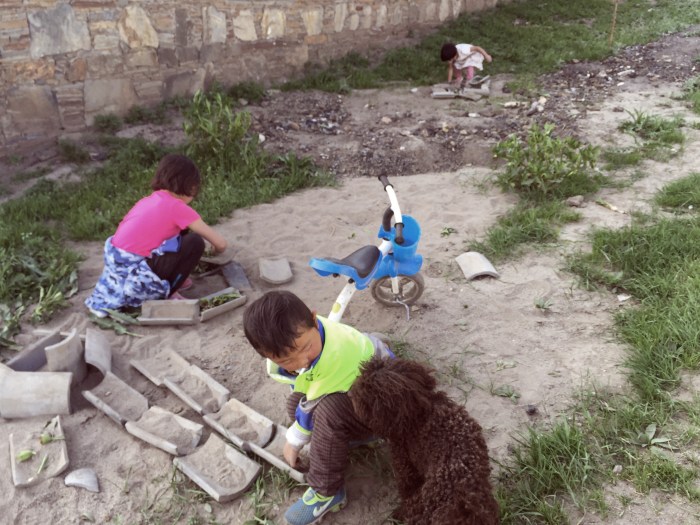
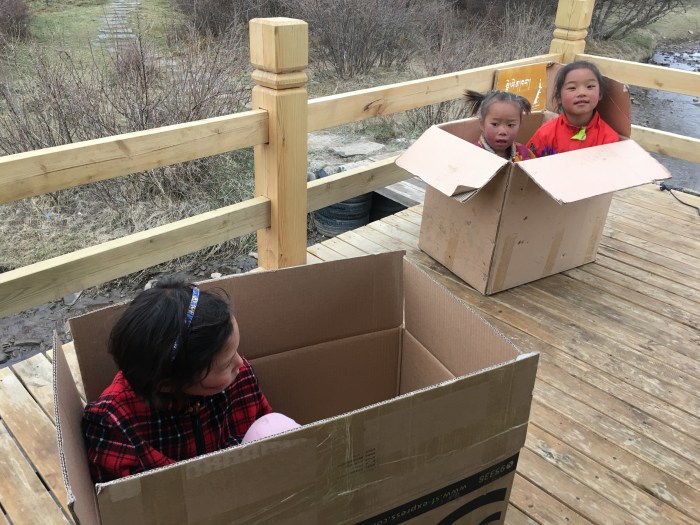
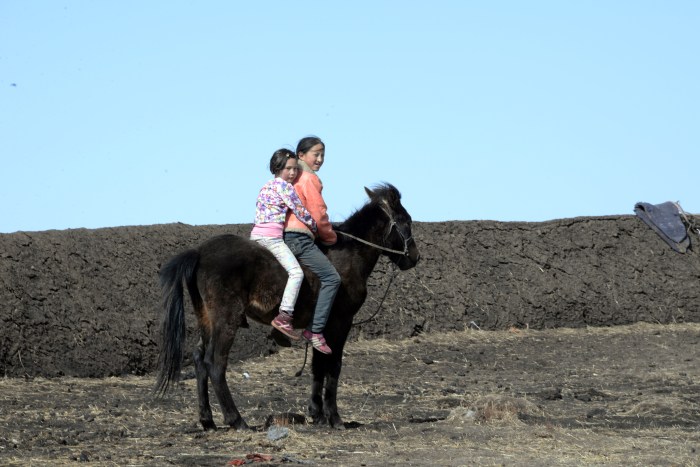
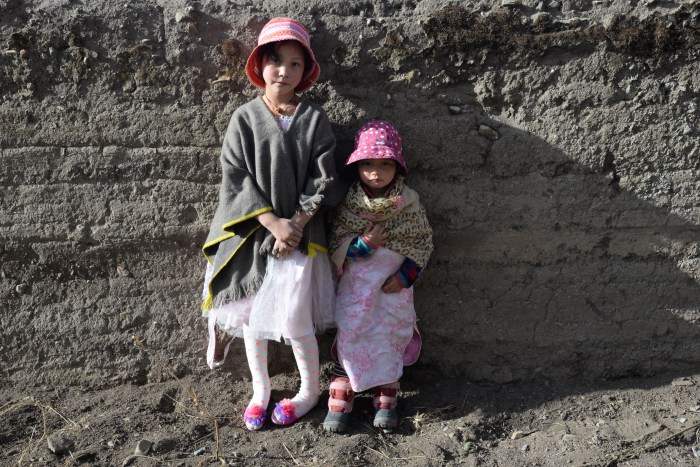
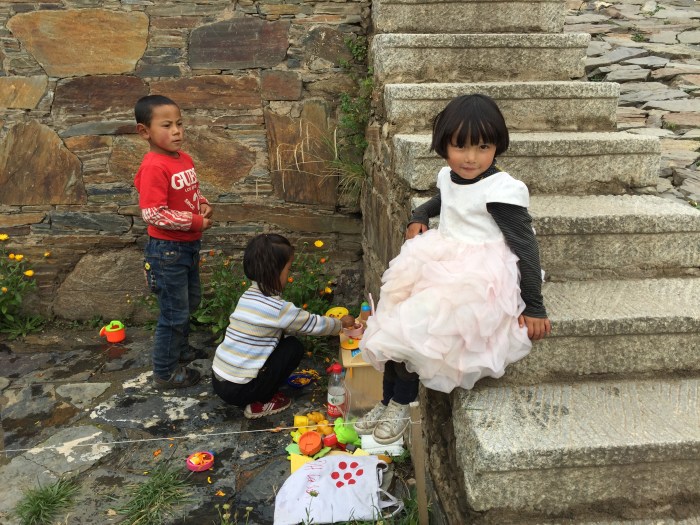
The same goes for my grandchildren. They have toys, all in piles in their room. They play outside with other children, running up and down the hills in Ritoma in little packs, taking over a stone pile and fighting with dung, or settling somewhere and setting up a house, store or kitchen, building a little fire, using stones and bits of toys they collect here for furnish the space or their imagination. Young dogs or a pet sheep will hand around for the company. A cardboard box becomes a house, the mud in the creek, leaves and flowers become food they eat or prepare. Norzin, with her innate sense of enterprise, collects pretty stones from the river and ‘sells’ them to visitors.
Inside, Baby D will pick from the toy pile, add objects gathered around the house and pack shopping bags that she will walk around with, then stash somewhere. If a piece of something goes missing, we know it is in Baby D’s stash. Norzin and her dress up sometimes very creatively and smear makeup on their faces, or dress up the kittens, or both. Toys are mere accessories to be added to all kinds of other objects collected in the house or pasture.
Some say that the way children played for hundreds of years is threatened by the world of television, phones, computer games and IPads and it is certain that these mark the new wave of entertainment for children. They may keep children indoors and ‘safer’ though their remoteness from the real world and nature bring on a different kind of danger, one still very much unkown. I am grateful that I can still see my grandchildren play the way I always knew how to play.
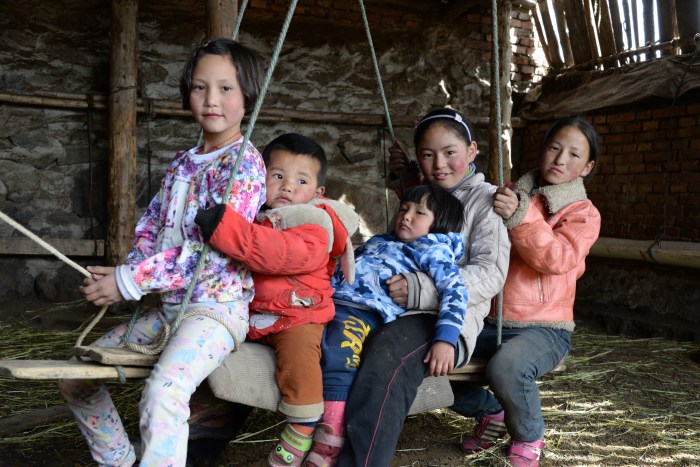
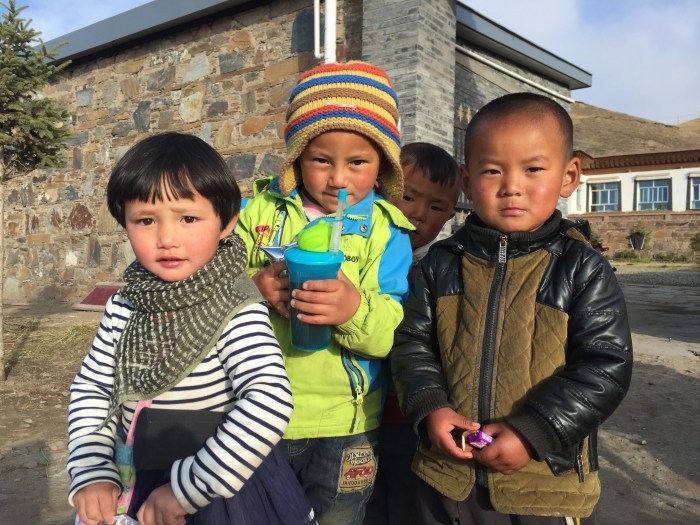
Sochoe, Dechen and Chonyi, their school friend, dressed up in imaginary characters to scare Genam. India, 1991Sochoe and Dechen in their “House for Two” built in our garden. India, 1987Genam and Noryang in their improvised magician’s outfits, India, 1993Genam and Noryang in India in 1993, Genam in his home made superman suitRitoma, Tibet 2016; playing home gamesGetting ready to dance, Ritoma, 2016Timeless jump rope, Ritoma, 2016Gang of friendsTimeless playing with earthBringing favorite plastic kitchen implements to playAn improvised swing in a friend’s nomad shed. Baby D didn’t like it
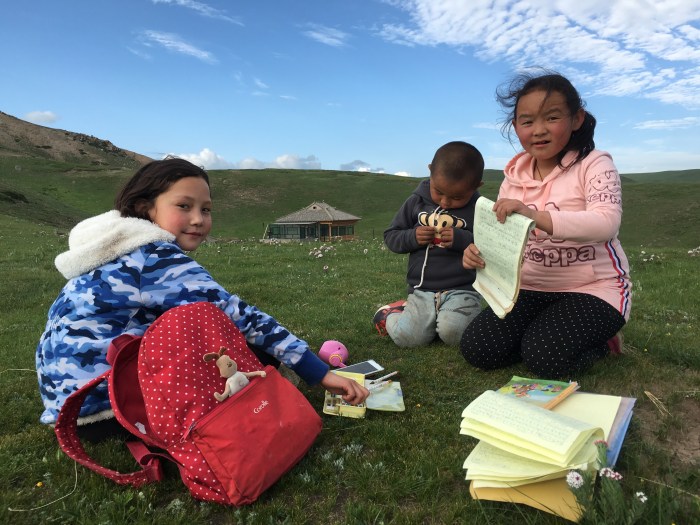
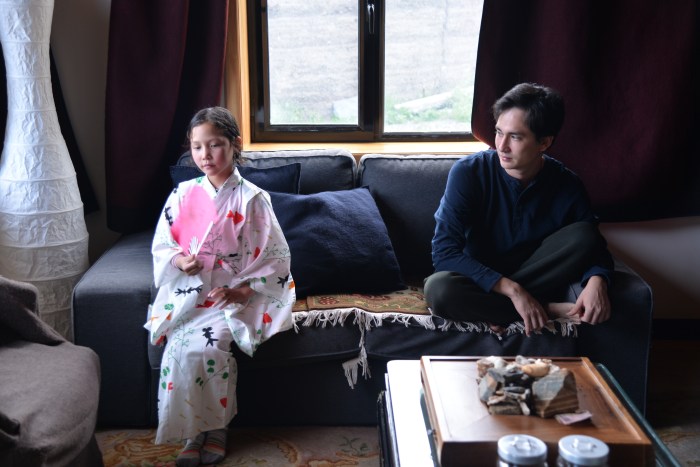
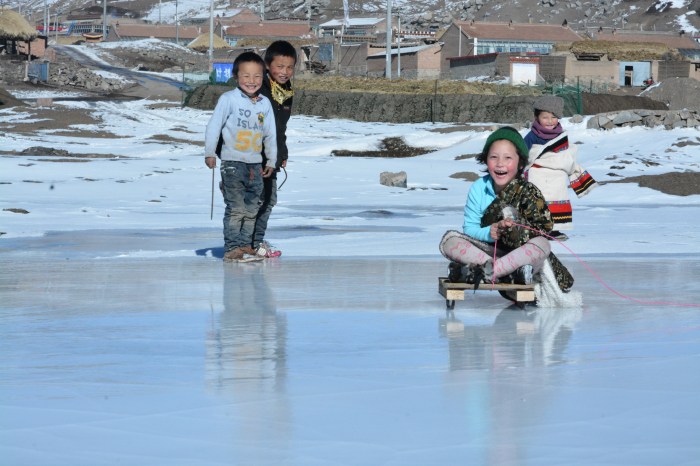
Setting up a restaurant; Ritoma, 2016. Improvised objects, sometimes trash make it all happenDoing homework on the hill, Ritoma, 2016Box Houses, Norden, Norzin in her yukata, wi th Genam. Ritoma 2016Sliding on ice, Ritoma, 2015Norzin’s favorite activity in her friend’s nomad winter houseWhat Norzin and Baby D wear
Favorite pets; Sangmo the kitten was terrified of Thopdan the mastiff, who meant well
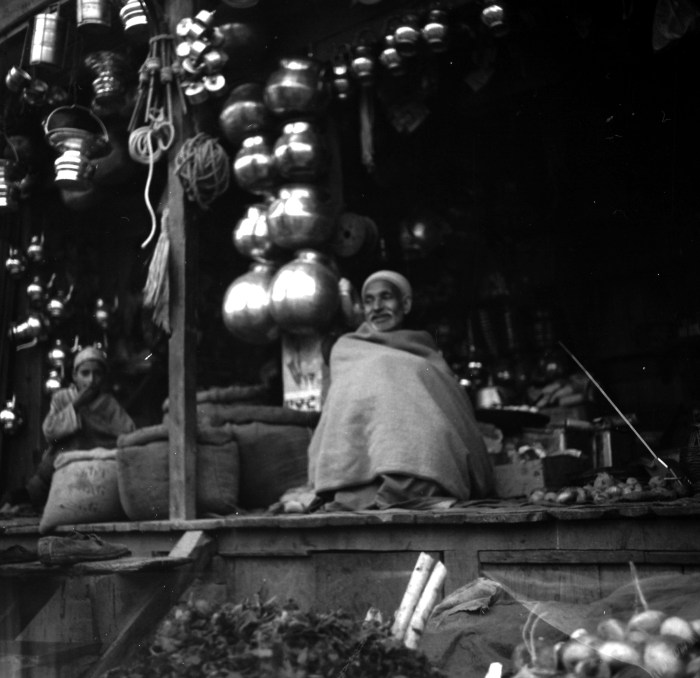
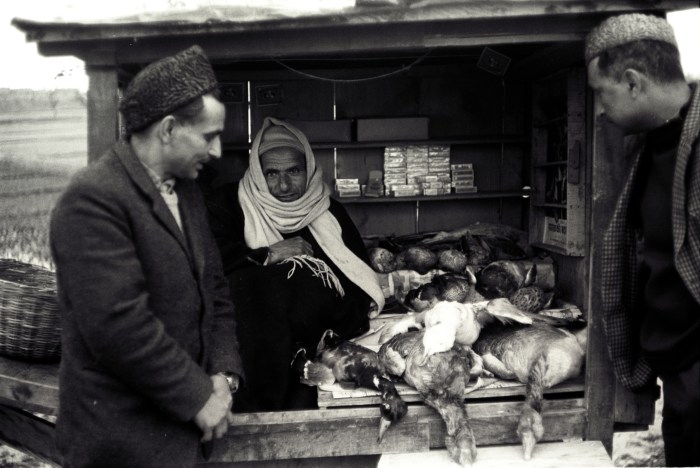
1971, the year of my first trip to Asia, was full of buzz about Nepal. It was the place to go, to discover. For this very reason, my father made up his mind that we wouldn’t go there and sought to be original. He choose to make a two day trip to Srinagar, easily reachable by flight from Delhi.
His Indian associates tried to warn him that the weather there in February was very different from Delhi and Rajasthan, and that the people there very tricky. My father didn’t like people trying to tell him what to do so they went ahead and made what arrangements they could, telling him approximately how much he would need to pay for accommodation.
From the plane, Srinagar looked bleak. On arrival a short man in an oversized coat and astrakhan hat greeted us. He was a little obsequious, which put my father on edge, especially when he started calling him his friend. The first piece of news was that we were coming off-season so the hotels were all closed, but we had the opportunity to sleep on a houseboat. When he stated the price, way over the Delhi estimate, there started a long discussion, something my father was very good at, which seriously deflated the guide’s expectations, while my mother and I watched helplessly.
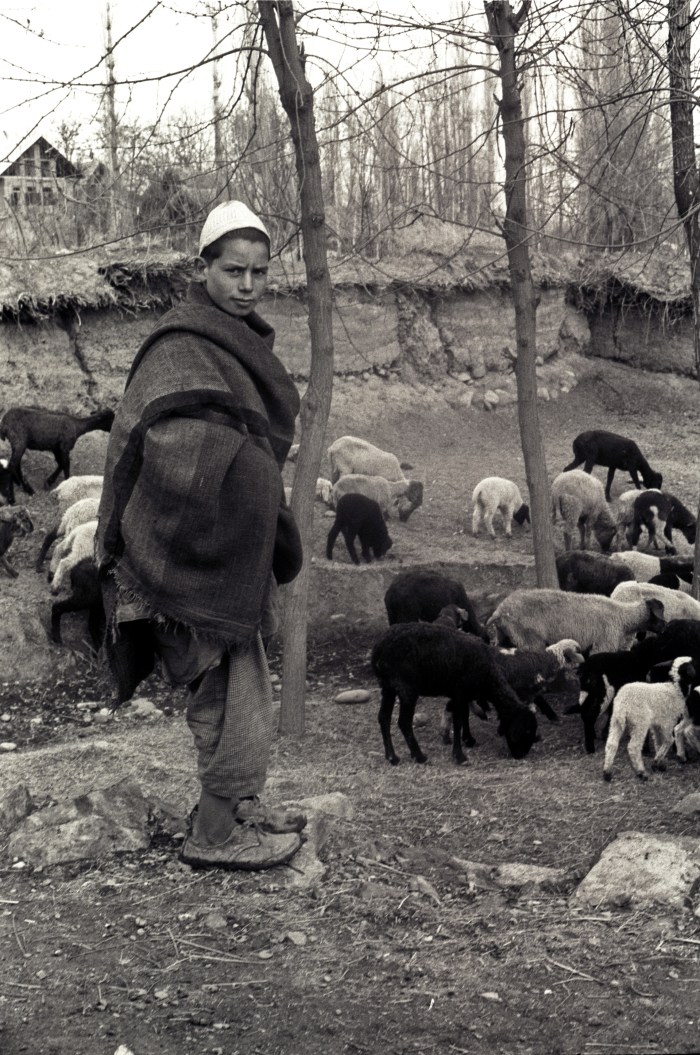
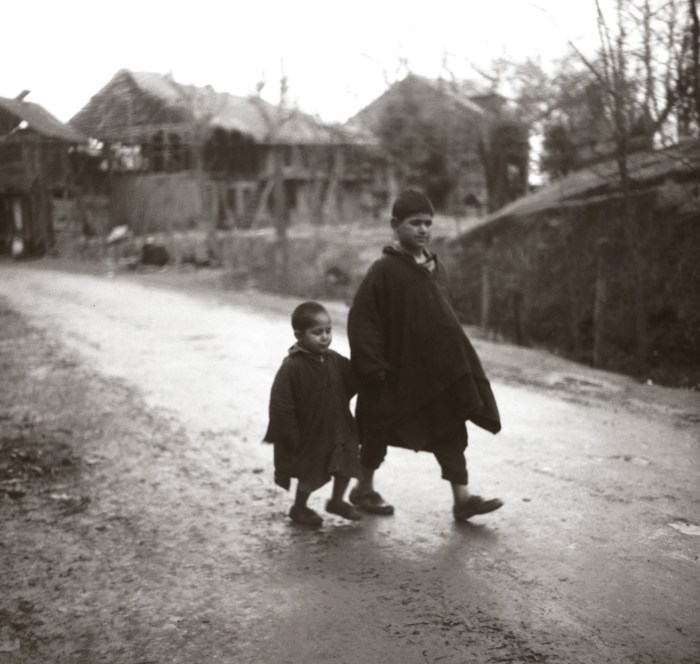
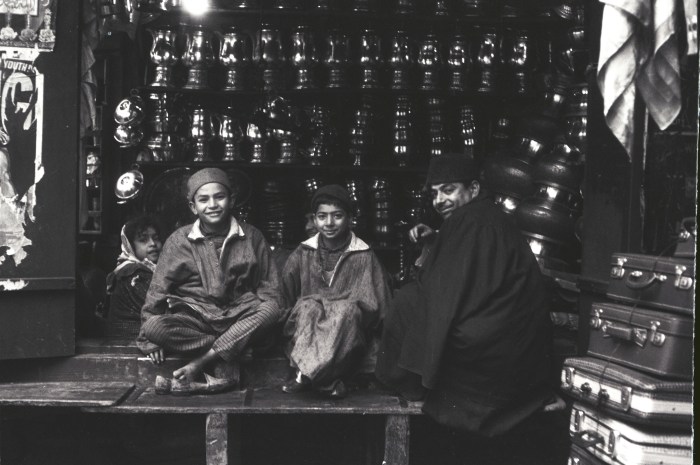
I thought the houseboat was fun, there was another houseguest, an unflappable Englishman in this early forties, who could very well have been a kind of James Bond, my mother was convinced of it anyway. It was quite cold and we seriously lacked warm clothing, so the guide sent off a boy in a wooden boat who came back an hour later with a selection of local garb, woolen formless tops that reached to the knee. They probably had been picked here and there and were not new, but I was soon wrapped in a burgundy one with gold embroidered neckline. My mother declined, choosing to stay in her Dior Spring weight coat.
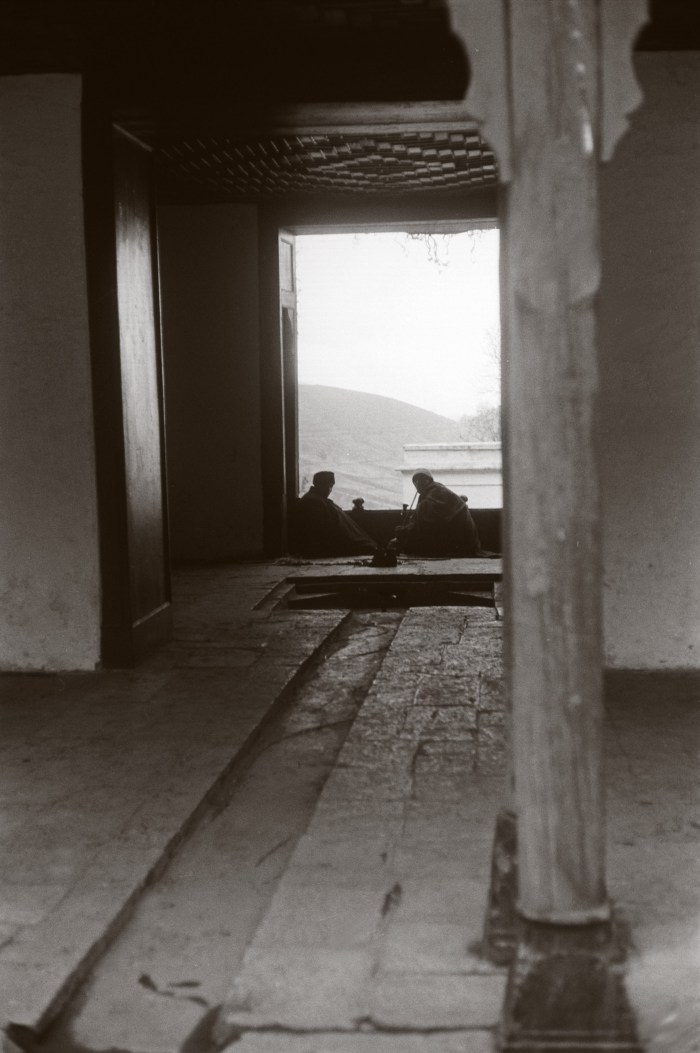
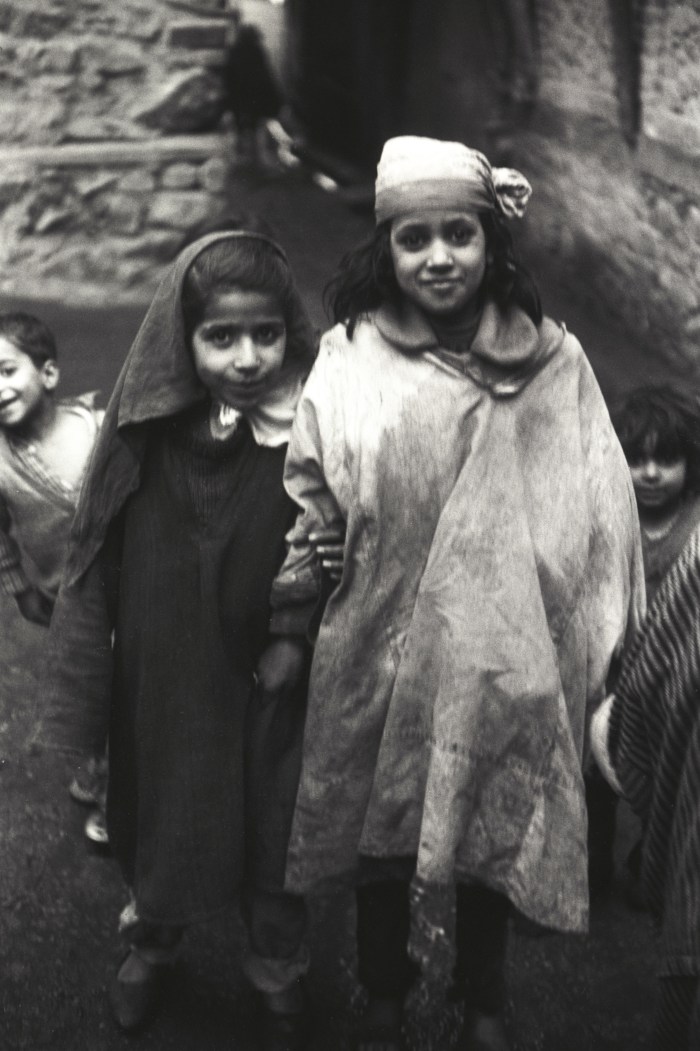
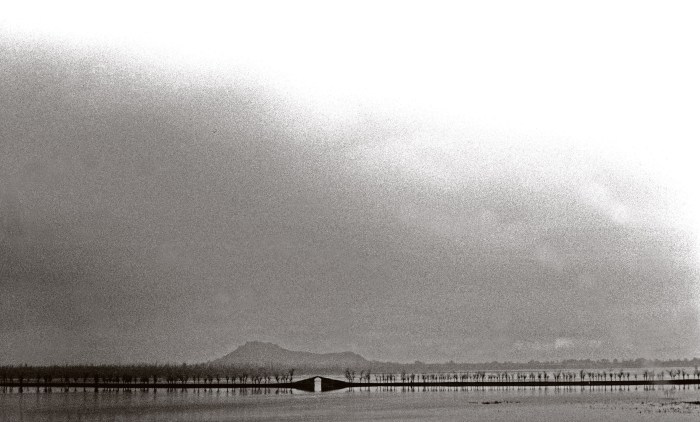
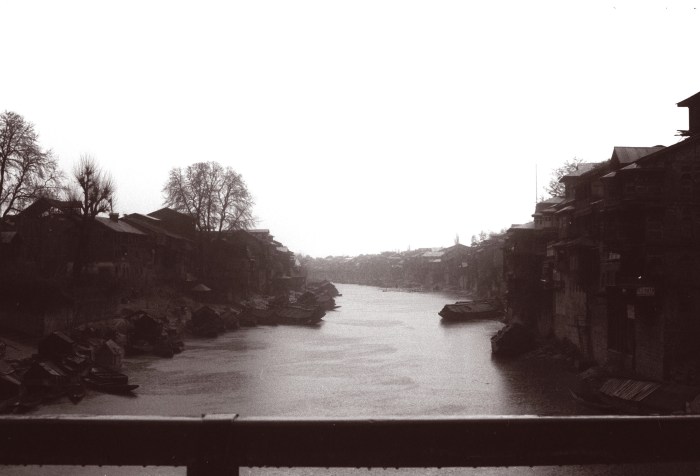
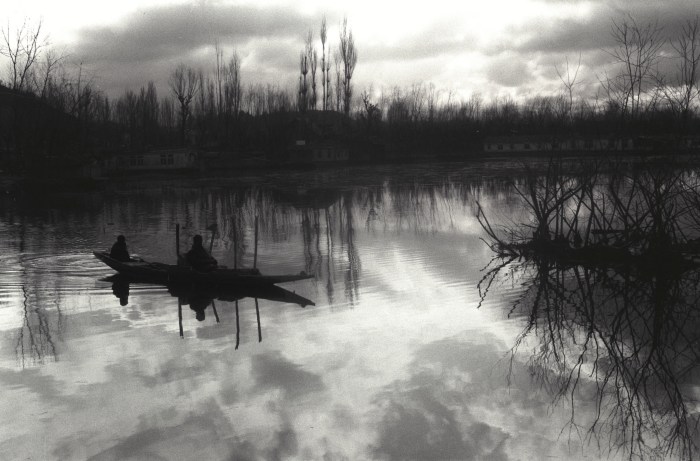
My father had read about the area and said he wanted to visit the gardens. The guide timidly said that we could, but it wasn’t the best time to see them. The main Palace was closed, so we saw a grey flowerless garden after another, driving on bare poplar lined roads in the rain. I got my fill of photographs, though my parents were disappointed. That night, we sat in the houseboat around a stove with ‘James Bond’ telling us stories of his travels. The boat was freezing, though the hosts did their best to keep the fire lit.
We left for Delhi the next afternoon, and when my father expressed his disappointment, the Indian associates restrained themselves to a knowing smile.
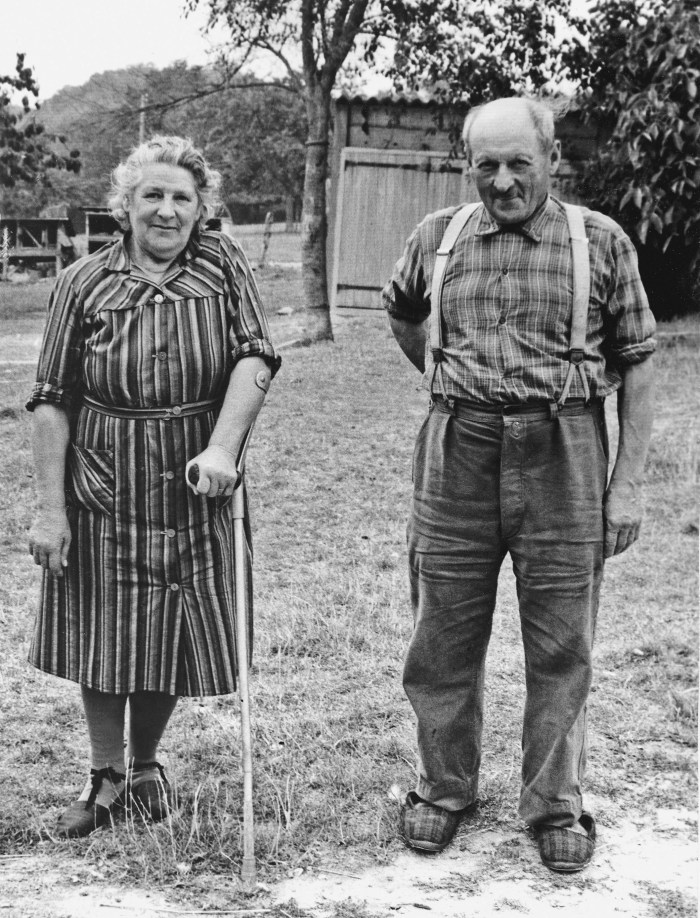
In 1959, my parents bought Le Mont, a small chateau in great need of repair from the Folleville family, who had owned it since the time it was built in the 17th century. We had a common boundary with the Loquets, several fields away, who owned and old fashioned farm, which they ran with their daughter.
When renovating the property, which took several years, my father had the barns nearest to the house knocked down and Monsieur Locquet, as the new farmer neighbor, offered to take the large cider casks. My father asked how much he was offering for them and he replied that he was offering to take them away for free. My father figured we had no need for them and let him haul them away. After a while, M. Locquet informed my father that he had noticed he had a large quantity of apples and requested to have them to make cider. My father said he could, but that they should split the cider. Locquet replied that if he made cider, it would be for himself, and the deal was off. My father took this as an introduction to the Norman way of life.
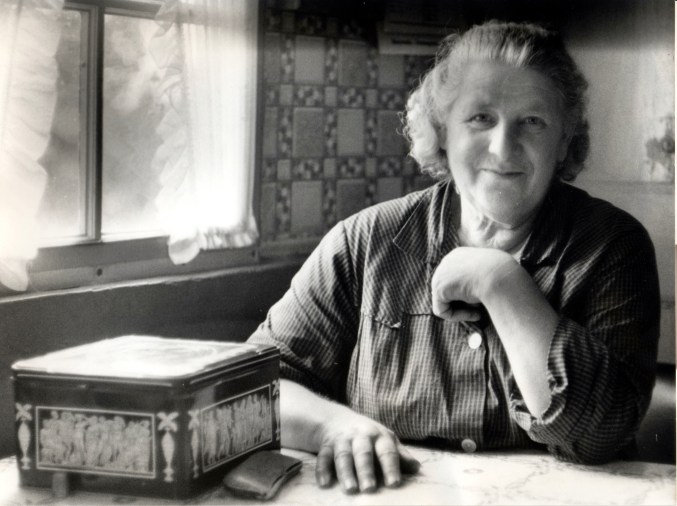
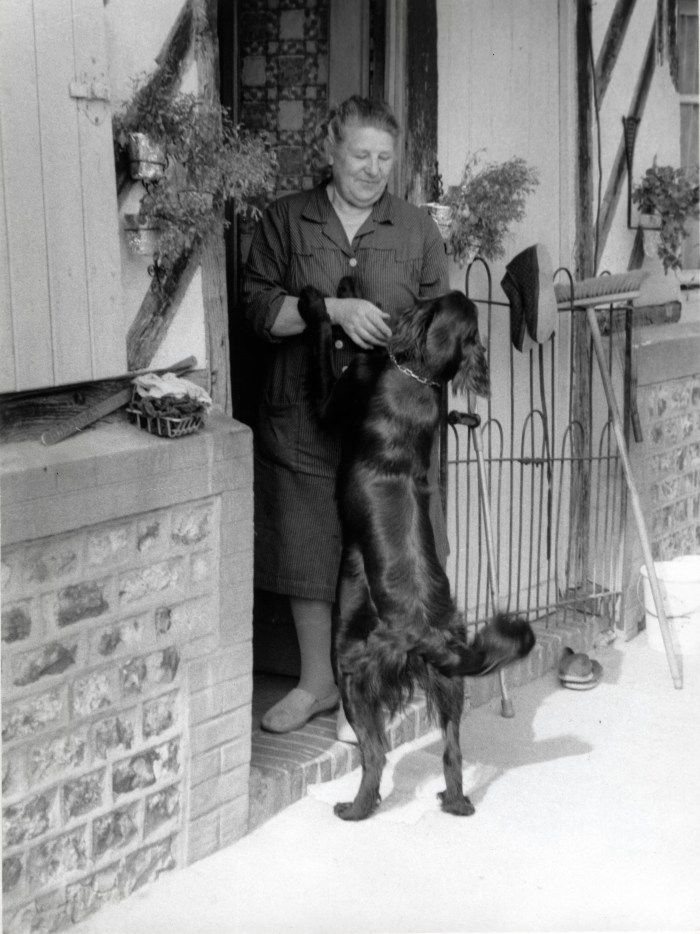
The Locquet were already old, or seemed old to me from my six years. We bought all kinds of farm produce from them, and we often dropped in, for a bottle of cider or a pot of fresh cream, or just to look at the farmyard animals. My sister Christine and I would cross the fields to their little Normand farmhouse which had no running water, and rooms accessible from individual outside doors. We only ever saw their kitchen, which was the main room of the house, dominated by a large stove that heated the space as well as a pot which always simmered with hot water. Madame Loquet, who limped and complained of rheumatism, would greet us, slip into her wooden clogs and hobble over to the farmyard where we would look at the animals. They raised chickens, guinea fowl, rabbits, goats and of course, cows. I found the cows scary, they always seemed to look at you, and once when I crossed the field alone, they all came towards me at once with determined expressions. I ran in terror until I reached the farm. Madame Locquet laughed away, saying that they probably thought I was bringing them a treat. The goats were the most fun, especially the kid goats, that would jump over you if you crouched down. The chickens were everywhere, white hens followed by a more colourful cock. One day, Madame Loquet pointed to a black and grey cock saying he would go to the pot on Tuesday. It was Friday, and I felt sorry for it, with its aggressive cocky manner, thinking he didnt know what he was in for. There were broods of guinea fowl, mothered by hens, who made a better job at raising them than their guinea hen mothers, the farmer explained. I found it fun to chase the chicks, who ran ahead of me with loud squeaks, until the hen came at me in full force and pecked at my calves. I was stunned, and my nanny Germaine, who was getting a pot of fresh cream, made me feel like a bully, explaining that the mother hen cared as much about her guinea chicks as her own.
A visit to the Locquet was always accompanied by a glass of cider, which they brewed themselves and was quite strong, and I often returned home tipsy.
The Locquet had several sons and a daughter. The sons had left for town, where they made a career. They came to visit on vacations with their children, who were younger than me, and the wives would walk across the fields to the Little House where I played all day to sit and talk with Germaine. They made it clear they would never think of making their lives in the country and praised the wonders of Pont Audemer. The Loquet daughter, the only one left at home was too old to be married, and in 1964, she committed suicide by jumping in the well where her father found her. I had never seen a man cry and the sight of M. Locquet, with his little Hitler mustache, in tears as he related the story to Germaine, while his wife silently wiped her tears with her handkerchief stayed etched in my memory. Normandy had the highest rate of suicide in France; men hung themselves and women jumped in wells. This was attributed to the characteristics of Calvados, said to have a depressive effect.
In the mid 70’s as I spent time in the kitchen gossiping with our Russian, locally married cook Vali, she told me stories about our neighbors the Locquet. She said Madame Locquet was a tyrant, and though she couldn’t move around much due to gout, she managed to keep control of the money, denying M. Locquet any freedom. I had already heard the gossip that she had always been like that, and that she had been quite attractive in her youth with a very fulfilled love life, Madame Bovary style minus the debts and the suicide. Vali told me that Monsieur Locquet’s biggest wish was to own a transistor radio, to listen to his favorite programs while tending his vegetable plot. I had recently bought two ducklings, a spontaneous gesture, a reaction to seeing them being pecked at in their market stall and when she saw me coming home, not really knowing where to put them, she suggested that I give M. Locquet an old radio and ask him to look after them, that he would be so pleased he would forsake eating them.
Madame Locquet in her kitchenMonsieur and Madame LocquetMonsieur Locquet in his cider/ calvados home brewery
I showed Vali an old radio I had upstairs, and she suggested I give it to him myself, without Madame Locquet knowing or she would take it from him. I brought him the radio and the ducklings. He was delighted and promised he would look after them with his life. When I came a month later to visit him and the ducklings, with a Madame Locquet who didn’t suspect about the radio, they looked happy enough in their movable cage. A few months later, my mother took a picture of them, dawdling around in his yard. One looked a little like a turkey. Unfortunately the turkey looking one came too close to the edge of the woods and was eaten by a fox.
The little wood below our house teems with life. First we had coyotes, then leopards, who turned out to be civets, colorful pheasants, throngs of winged creatures, including bats who came to inhabit Sochoe’s terrace, and most of all, monkeys, both macaques and langurs. The coyotes are long gone, the leopards have moved higher, and the civets seem to have moved on too, a good thing because they both ate our dogs. Now, more than ever, the monkeys are the kings.
Macaques typically move in bands composed of a few males and many females with babies. They jump from the trees below the house onto the terrace, where we had to give up leaving flower pots. Our neighbors chase them with BB guns, slings and what not, but we just let them be and we share the terrace. At night we can hear them grunting and whispering from our roof or in the nearby trees.
I never tire of watching monkeys. The other day, a whole band of ‘women and children’ came on the terrace. They saw me watching them behind the glass, and leaving their little ones a few paces behind, took on a defensive pose. Then, they ascertained the glass was between us, and became quite relaxed, grooming each other one tending to a leg sore a foot from where I stood, glass between us.
India was the last and longest stop on my first journey to Asia. We boarded a small plane out of Rangoon which stopped over on what was not much more than an airstrip in the middle of nowhere, probably Western Burma. Soon after takeoff, we flew over the most extraordinary landscape, rivers in formations that looked like thousands of blood vessels that converged into a triangle that poured into the ocean. It was the Bay of Bengal.
We landed in Calcutta, my first experience of India. I had heard about Calcutta from our family pediatrician, Dr Lamy, who had his practice in an Art Deco building somewhere on the side of the Invalides. His waiting room was full of modern statues from the early part of last century, zebra skins and other objects that attract the attention of children, which meant in retrospect that he was a traveler. One night when I was burning with fever, my mother called him and he came and sat by my side. As I cooled off, I guess I wasn’t that ill, he relaxed and told us about his experiences in Calcutta, during the great famine in Bengal. My mother, Germaine and my sister Christine all gathered around my bed, listened mesmerized as he described the streets of Calcutta, explaining that people slept outside and that every morning, so many failed to rise, having died of hunger during the night, that trucks had to come by and pick up hundreds of bodies. After that, I always thought of India as Calcutta and the frightening scenes that Dr Lamy had evoked. By some twist of fate, Calcutta turned out to be the first I saw of India, the country where I was to spend most of my life.
After Shri Lanka, Burma and Thailand, which in spite of their relative poverty, exuded a relaxed charm, Calcutta was a shock. The city was vast, it’s buildings, some grand and crumbling, others, products of the 60’s, new and already worn by mildew, had a look of exhaustion. The number of people was staggering, the crowded buses, the beggars, the anguish I saw everywhere, the rawness of all this put together was of an intensity that I found hard to take in, though it evoked more fascination than revulsion.
We were taken around by a representative of my father’s Indian partners, the Firodias, and I was to discover that everywhere we went was a Bajaj or Luna man to greet us and take us around, appearing at the airport, arranging cars and hotels. This one told us a little about Calcutta, saying that there were at least twelve political murders every day. It was February, but the air was tepid, and vegetation sprouted everywhere. We had an Indian lunch in a dark restaurant and I told my father my film supply was getting low, that the twenty rolls of large format film was down to one. I still had the Leica, but had largely ignored it until then, preferring the Rolleiflex’s large format and comforting viewfinder which saved me from pointing the camera at people. My father grumbled that we should have bought film in Hong Kong, and the Representative took us to a shabby photo store where we only found 10 rolls of Agfa aged film, carefully extracted from a wooden cabinet. My father bought those and I said I needed more, so we settled for what he had, a choice between Check and Polish imported film in equally shabby packaging. This film, which was very poor in quality and the fact that I had a real problem with under exposure, resulted in my two weeks in India yielding much less that what I would have wished. There were very few personal photos, as I was trying to distance myself from the Kodak Instamatic that my mother still used, which commanded that one pose in front of each and every building. My photos were for art’s sake only, I had decided, though I did manage to dig out a few photos of my parents posing. Too few, I regretted over 30 years later.
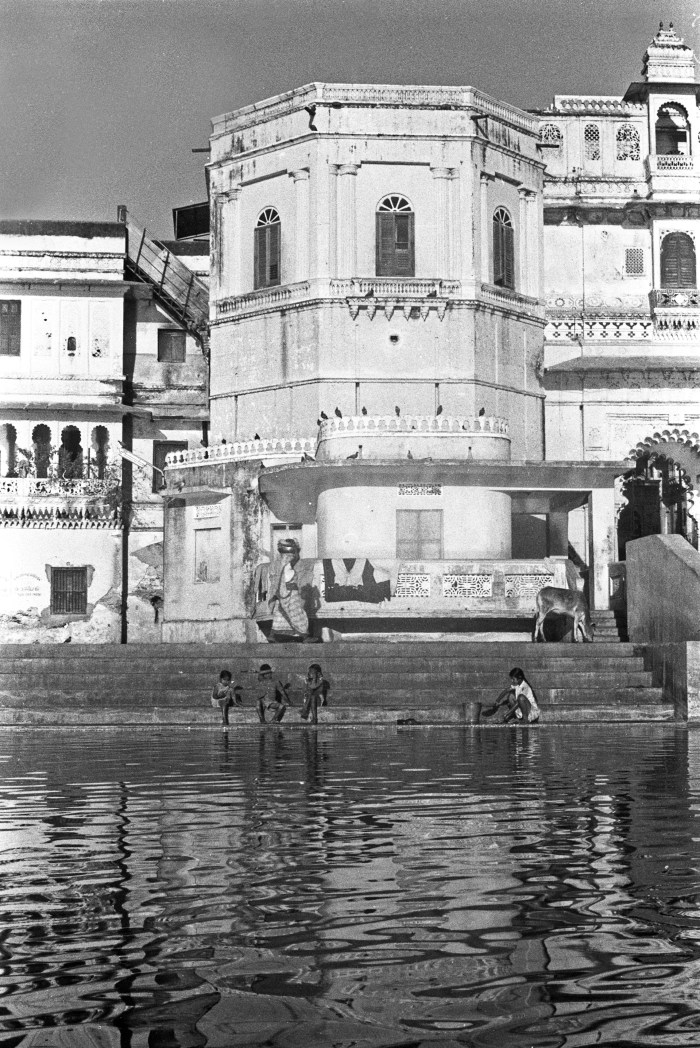
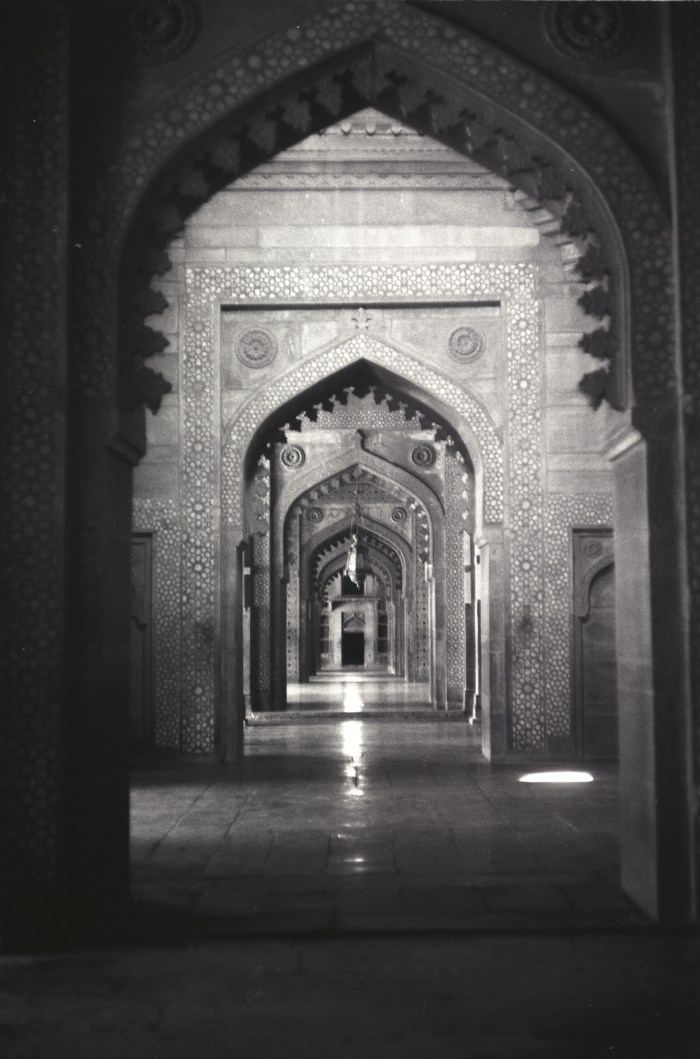
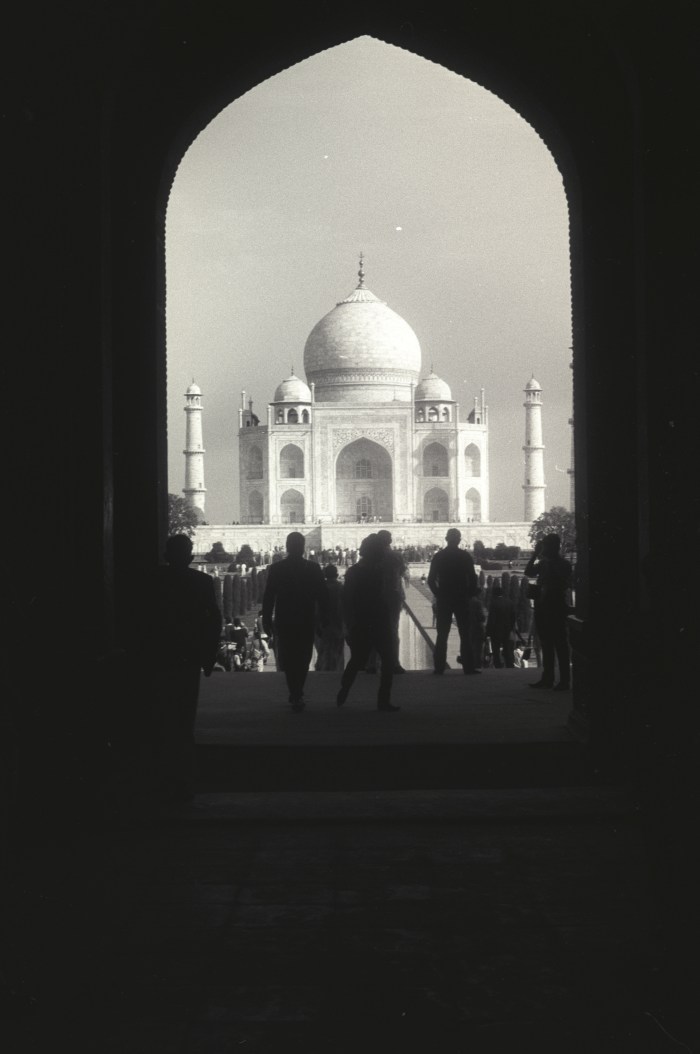
In spite of this rough beginning, India fascinated me. Nowhere was as intense as Calcutta, and I settled into the noise, the color, the realness of what I saw around me. We did the usual tour of Delhi, Agra, Jaipur and Udaipur, a short jump to Kashmir, finishing with Bombay and Pune and the Ajanta and Ellora caves. I left swearing I would be back, and I was.
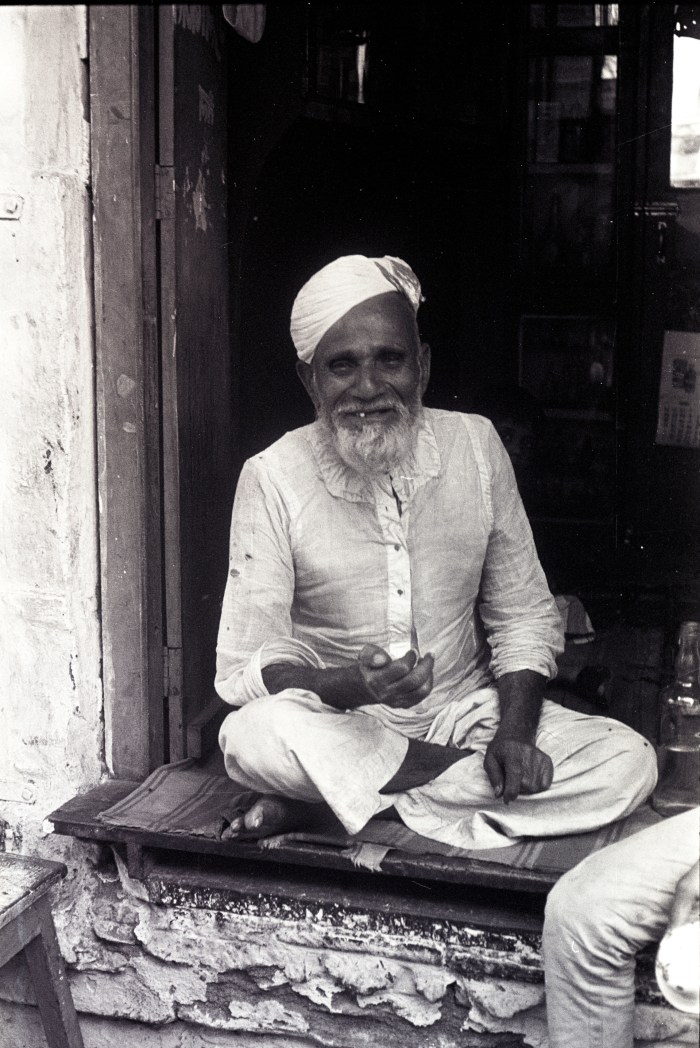
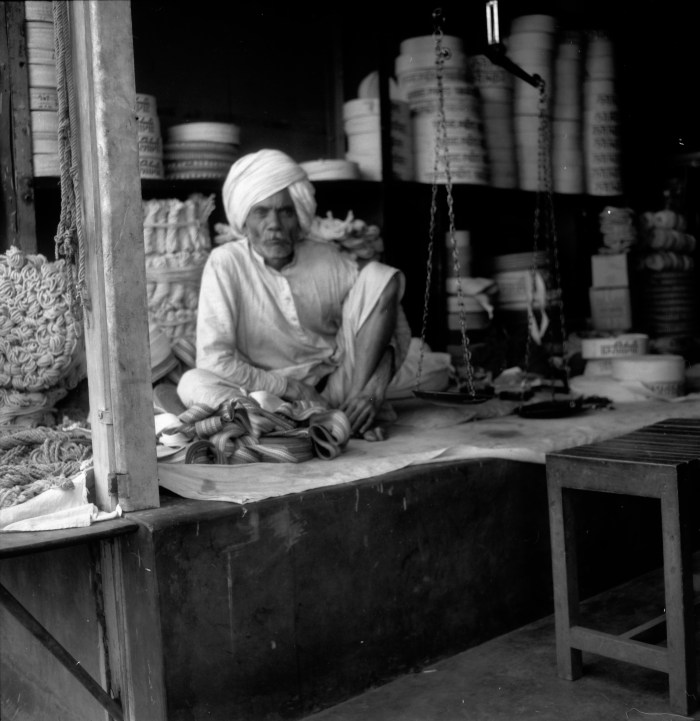
Rajastani merchants
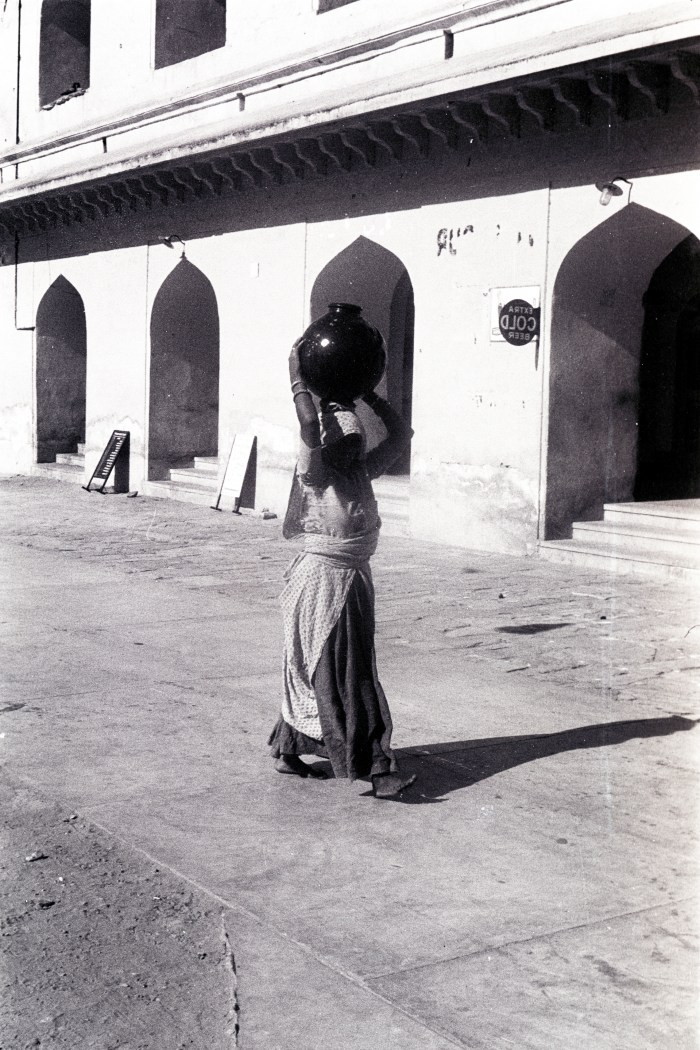
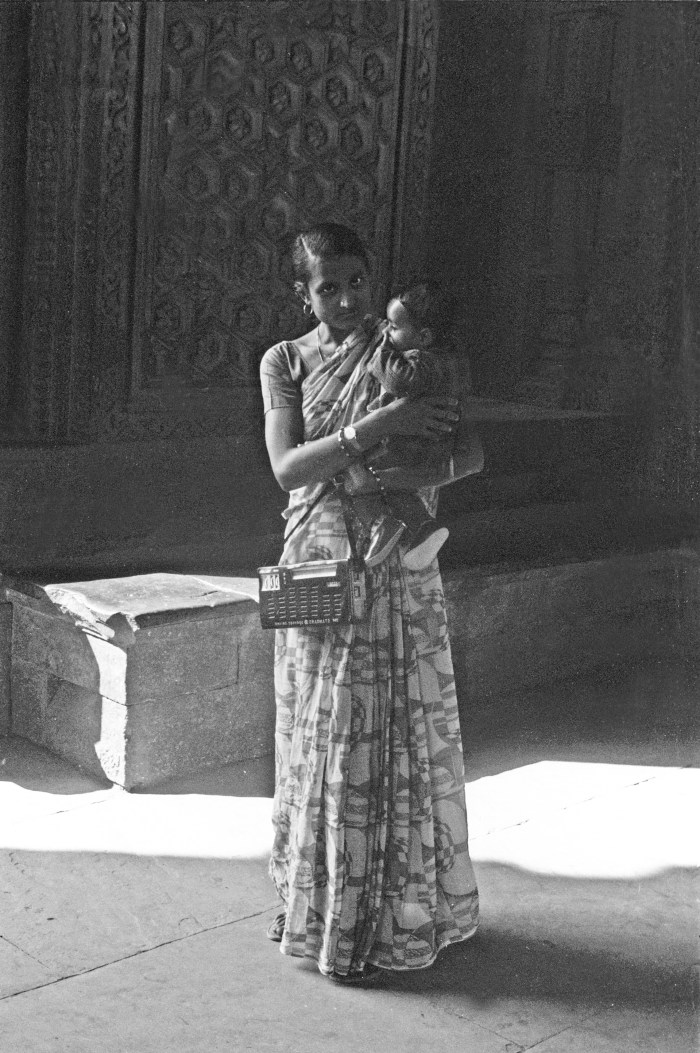
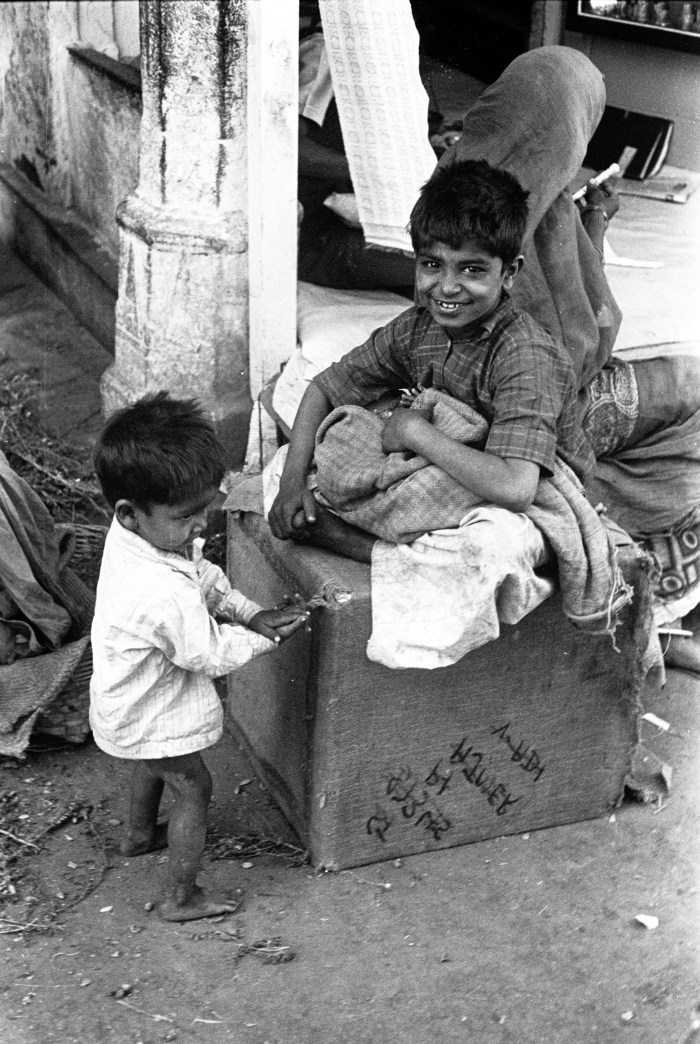
Woman carrying water, RajastanWoman in a stylish purse, holding a child. Jaipur or UdaipurUdaipurLittle girl in a Rajastani bazaar
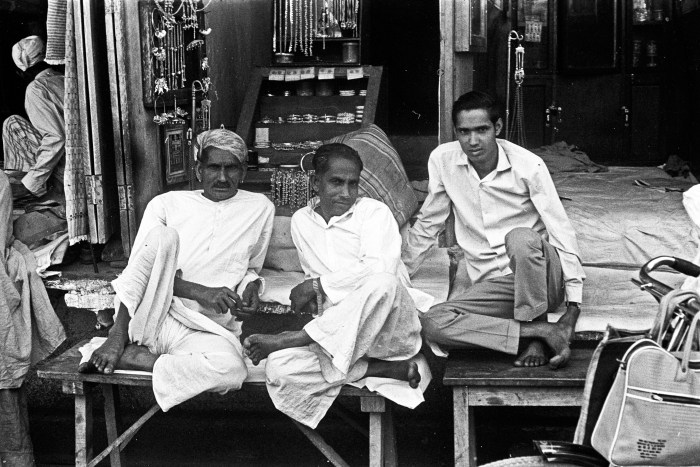
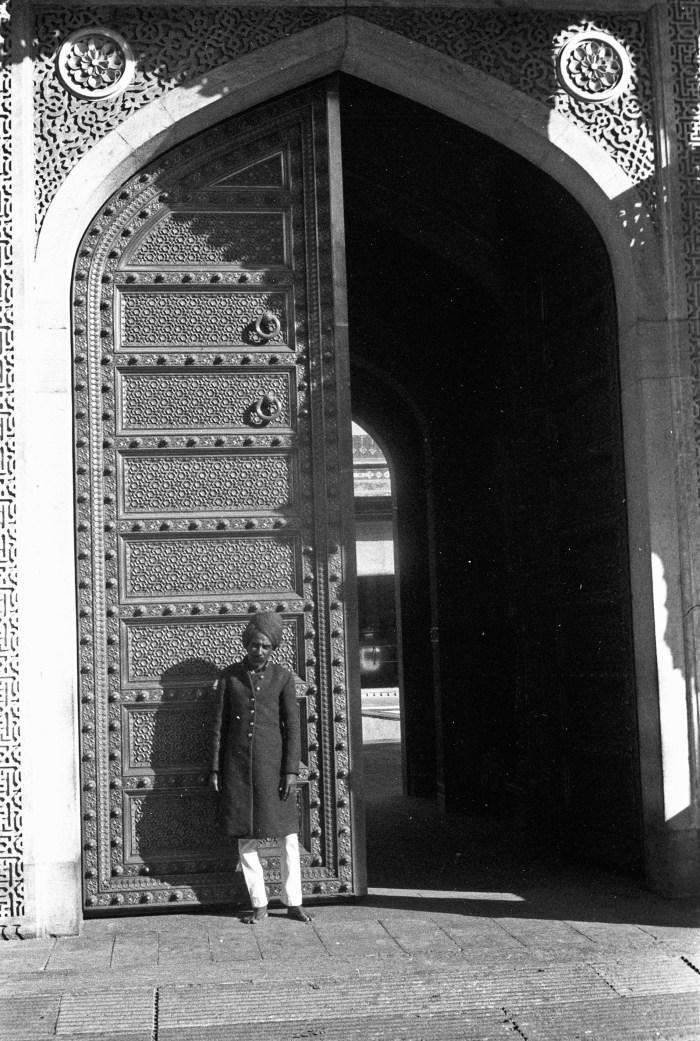
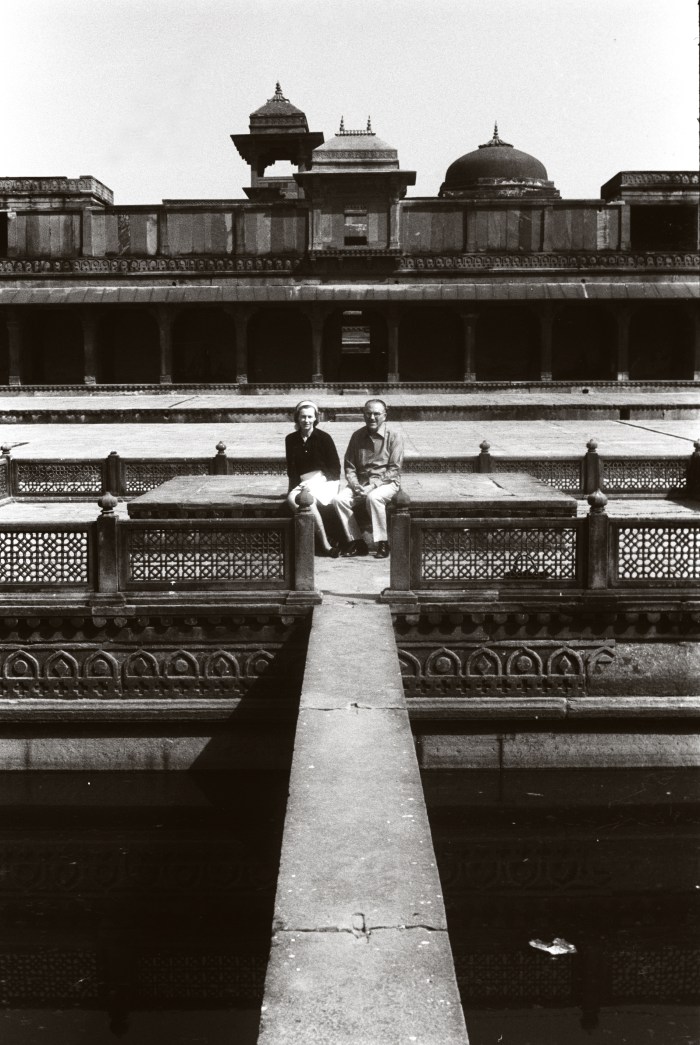
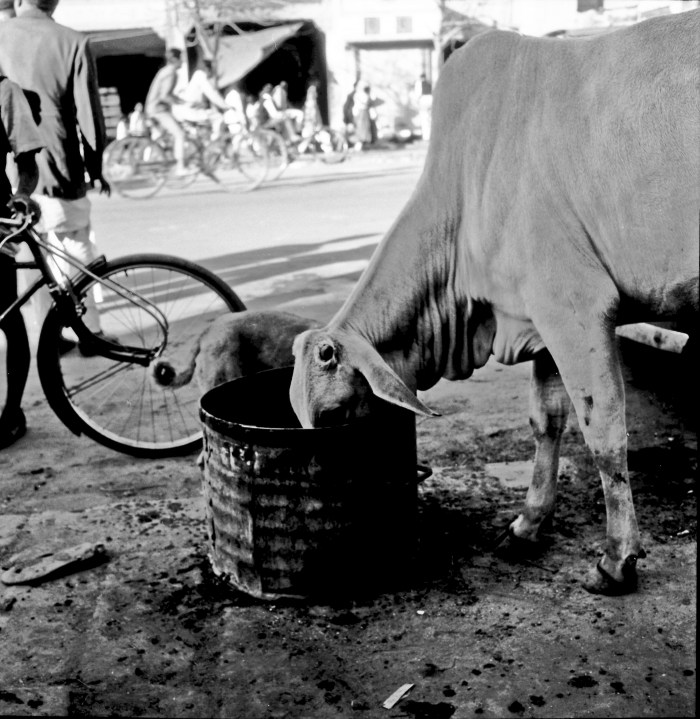
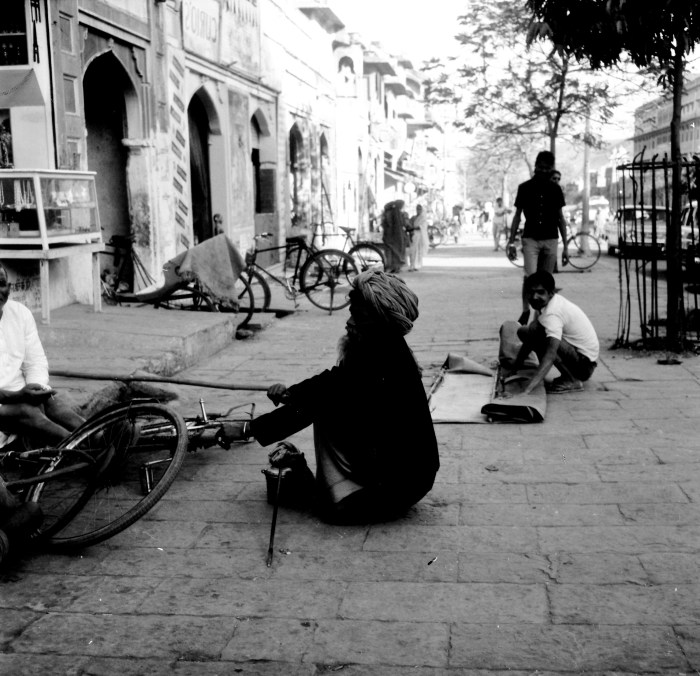
Jaipur BazaarBazaar Babus in JaipurA group of Rajastanis on the road to JaipurWoman with her vegetable stall, RajastanPalace door, RajastanMy parents in Fatapur Sikri, near AgraFatapur SikirView from the Taj MahalInside the Taj MahalTaj Mahal, AgraTaj MahalView from the Taj MahalDelhi, cow eating from the garbageOld Delhi streetRajastani BabuRajastani Babu
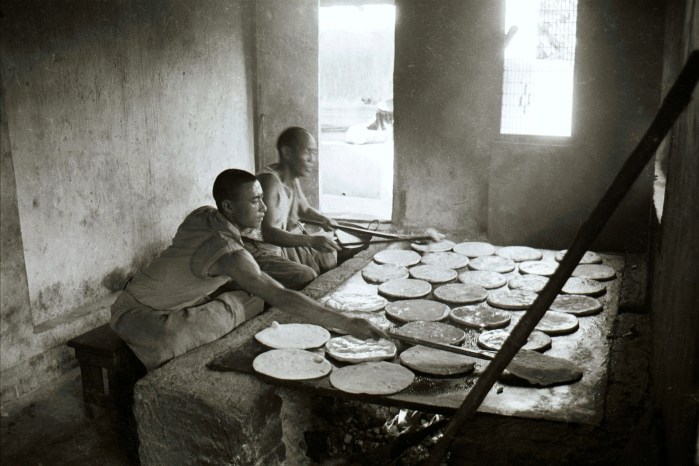
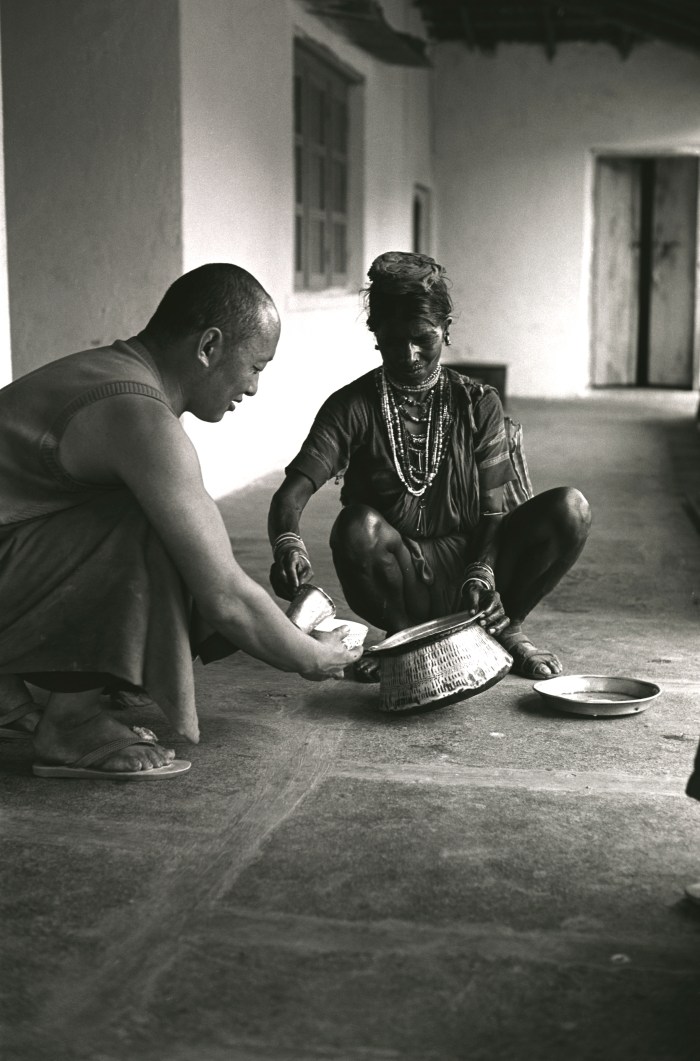
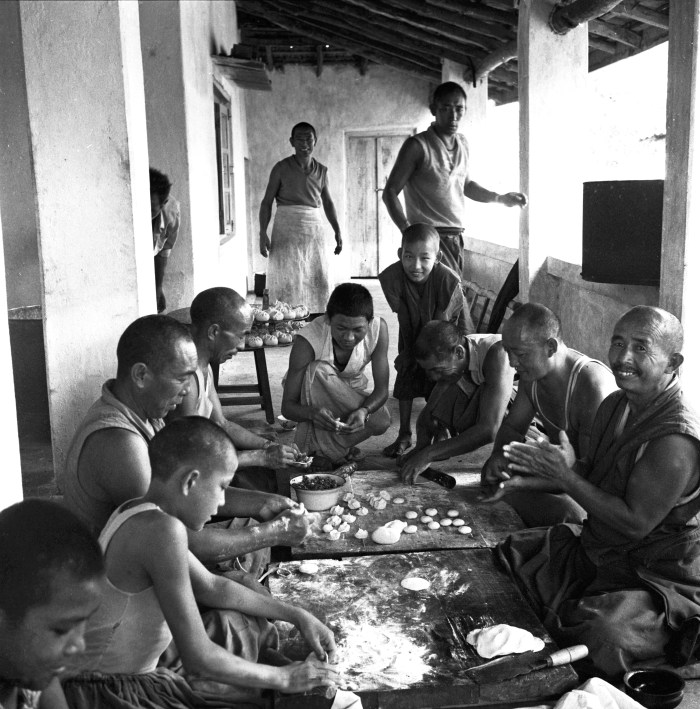
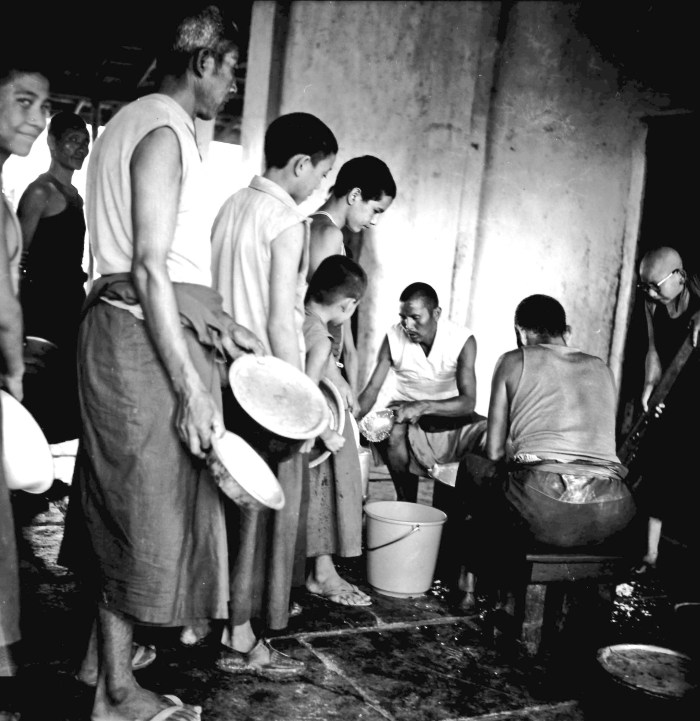






 When I returned to Drepung Loseling in 2016, the bread was still the main feature of the morning meal, but vegetables were well integrated into the diet and the evening thukpa was full of them. I visited the kitchen, serviced by the monks in rotation. Vegetables were bought in bulk and piled high on metal shelves and noodles came from the College’s own noodle machines. Diabetes was still rampant among the older monks, but I found all of them watching their diets with care and lauding the benefits of exercise. Boils and ringworm were a bad memory of the past.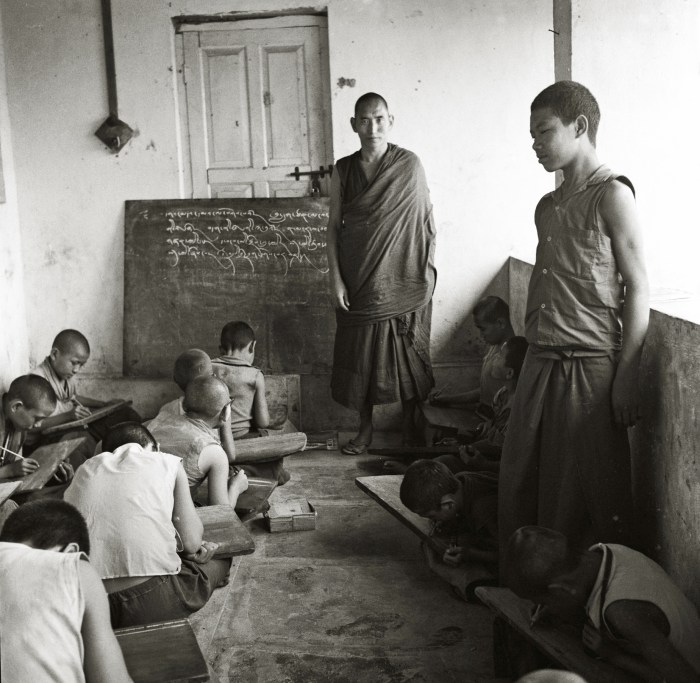



























 Kim Yeshi