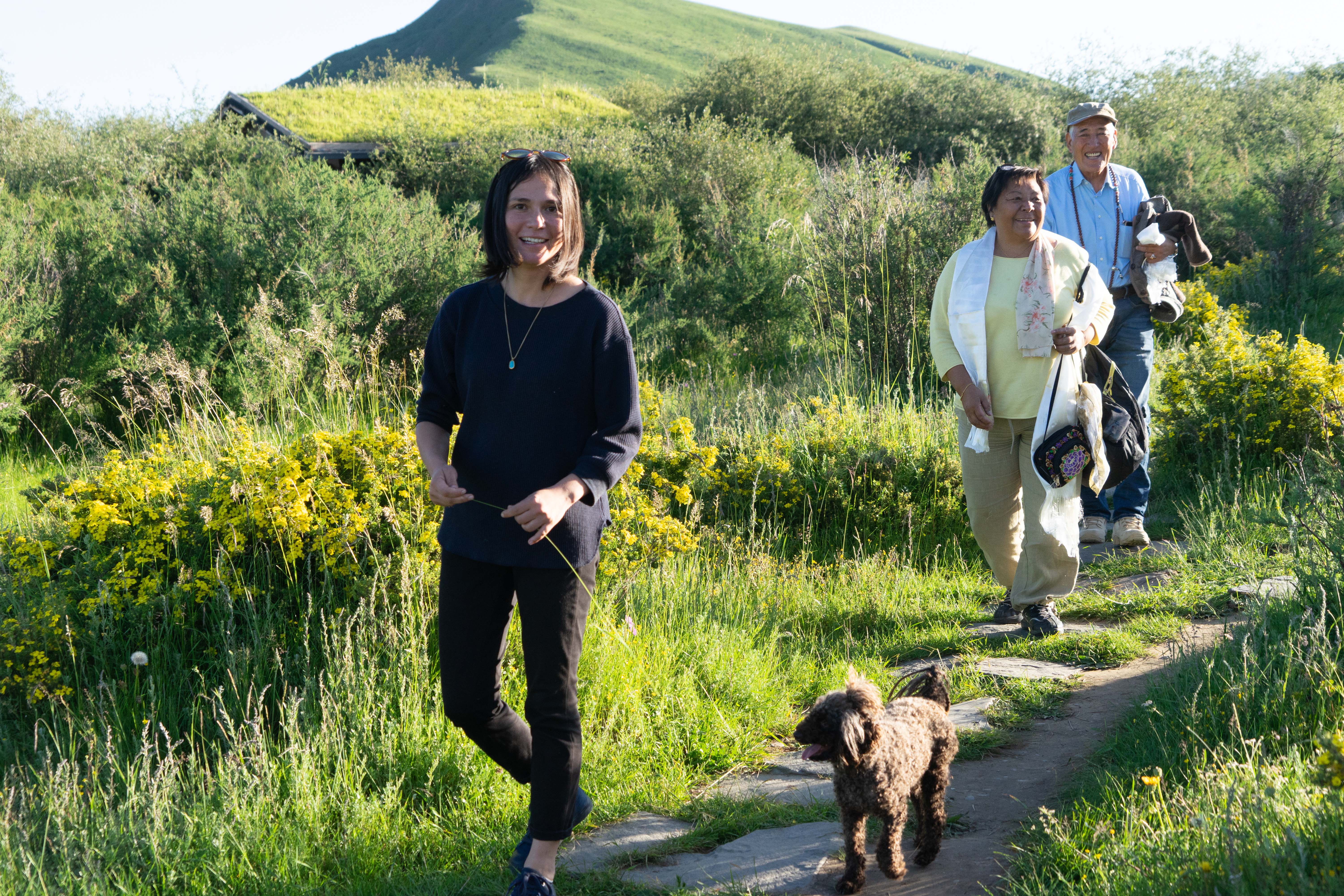
Goodbye, ChiChi

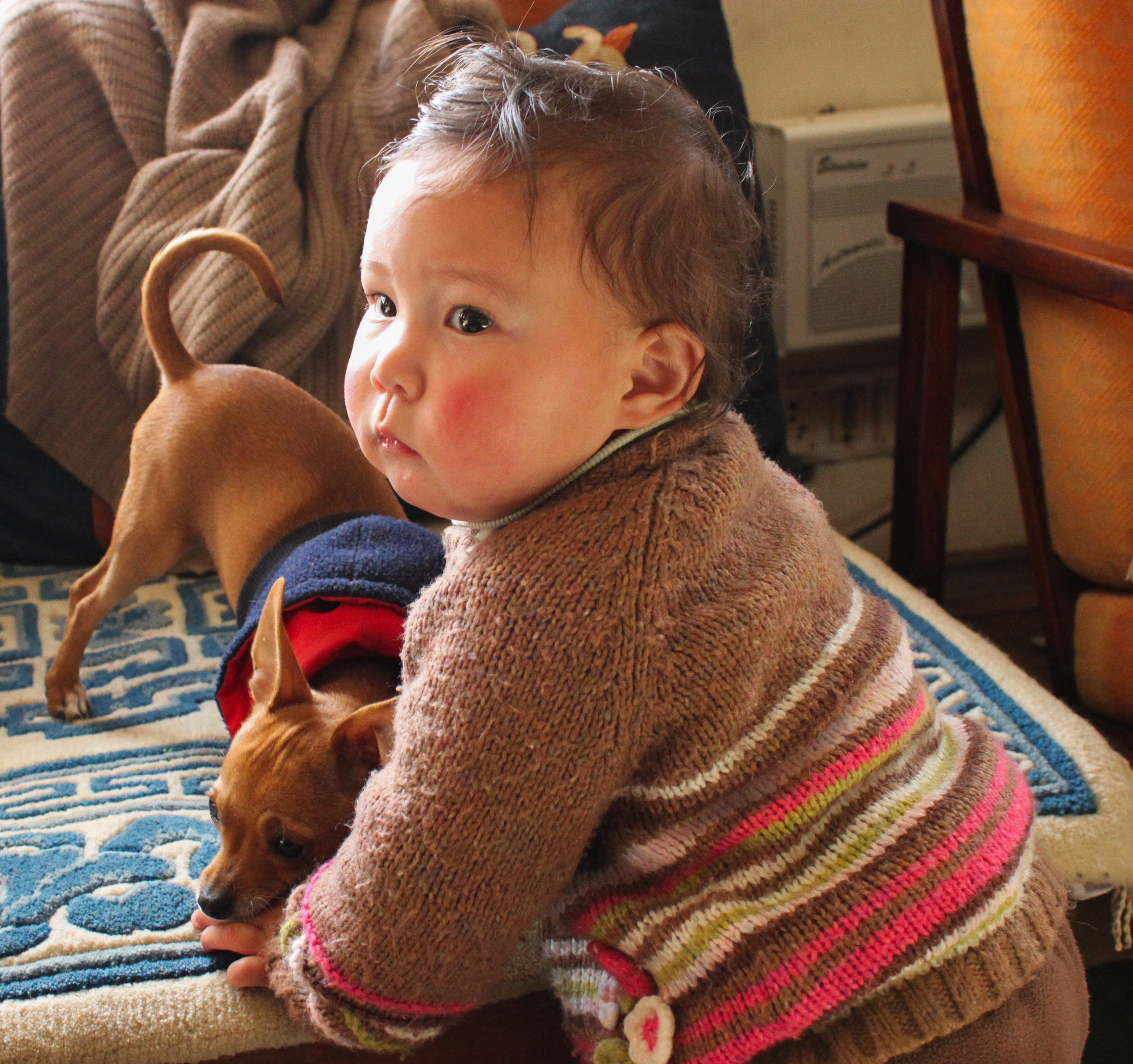
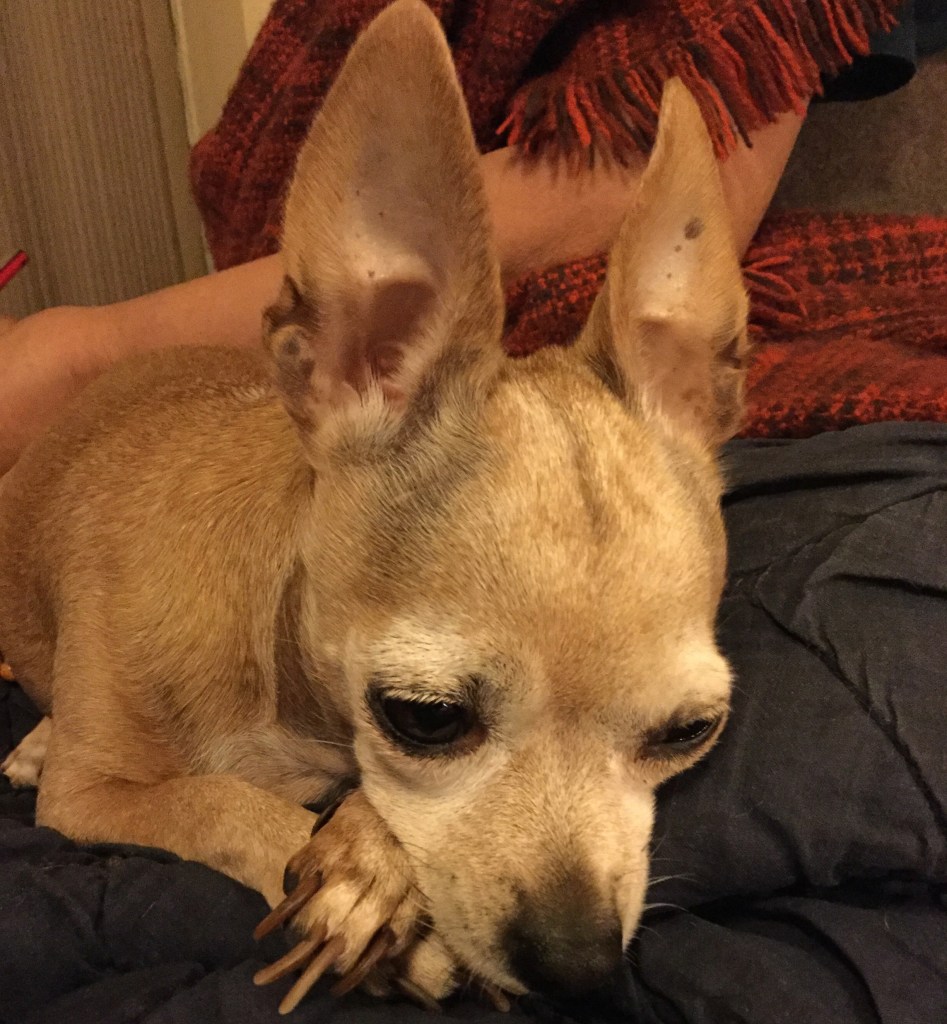
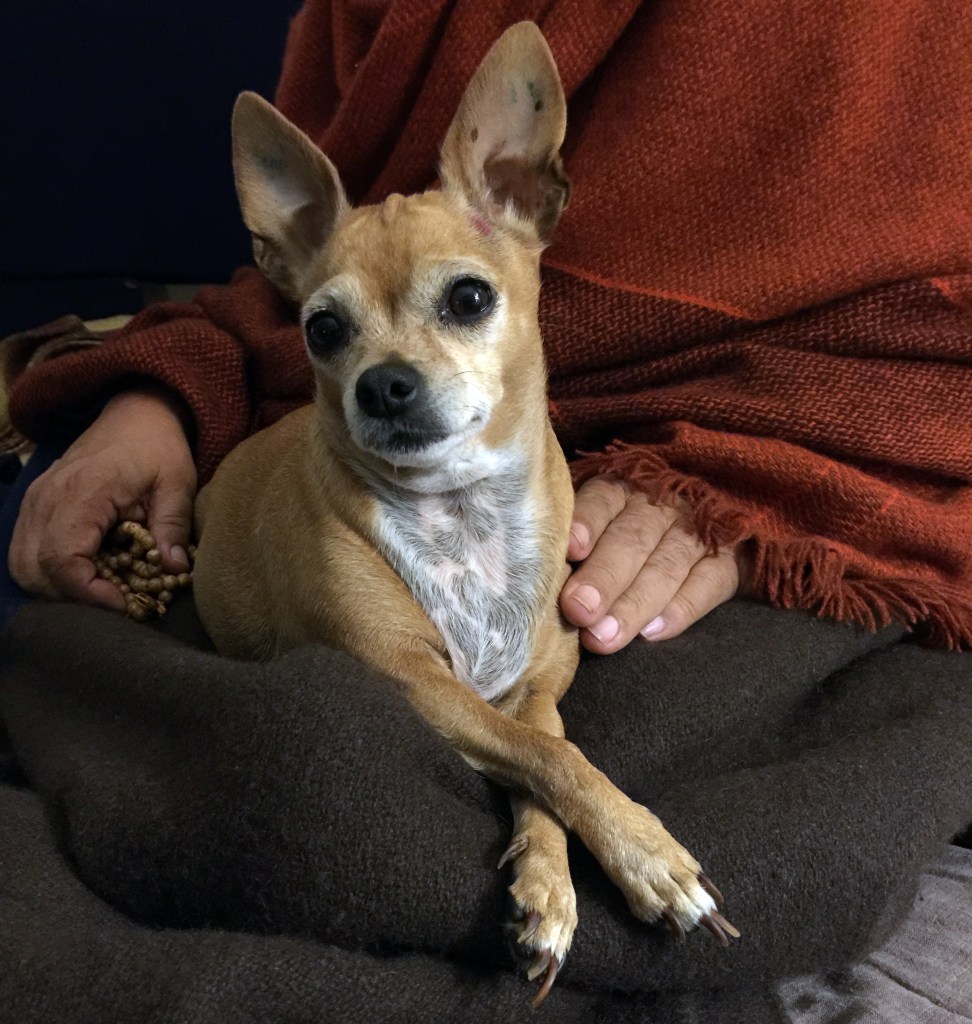
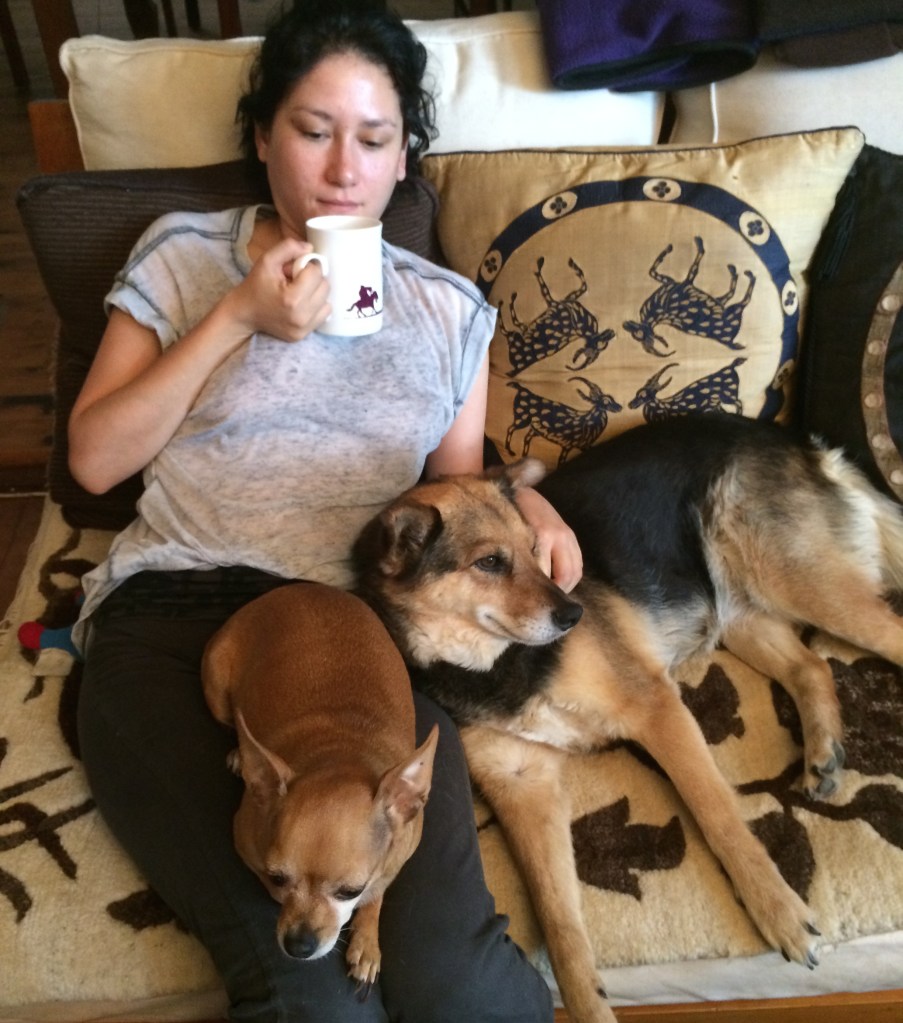
Chichi 2009-2024

Another dog obituary. I hope there won’t be any more for a while.
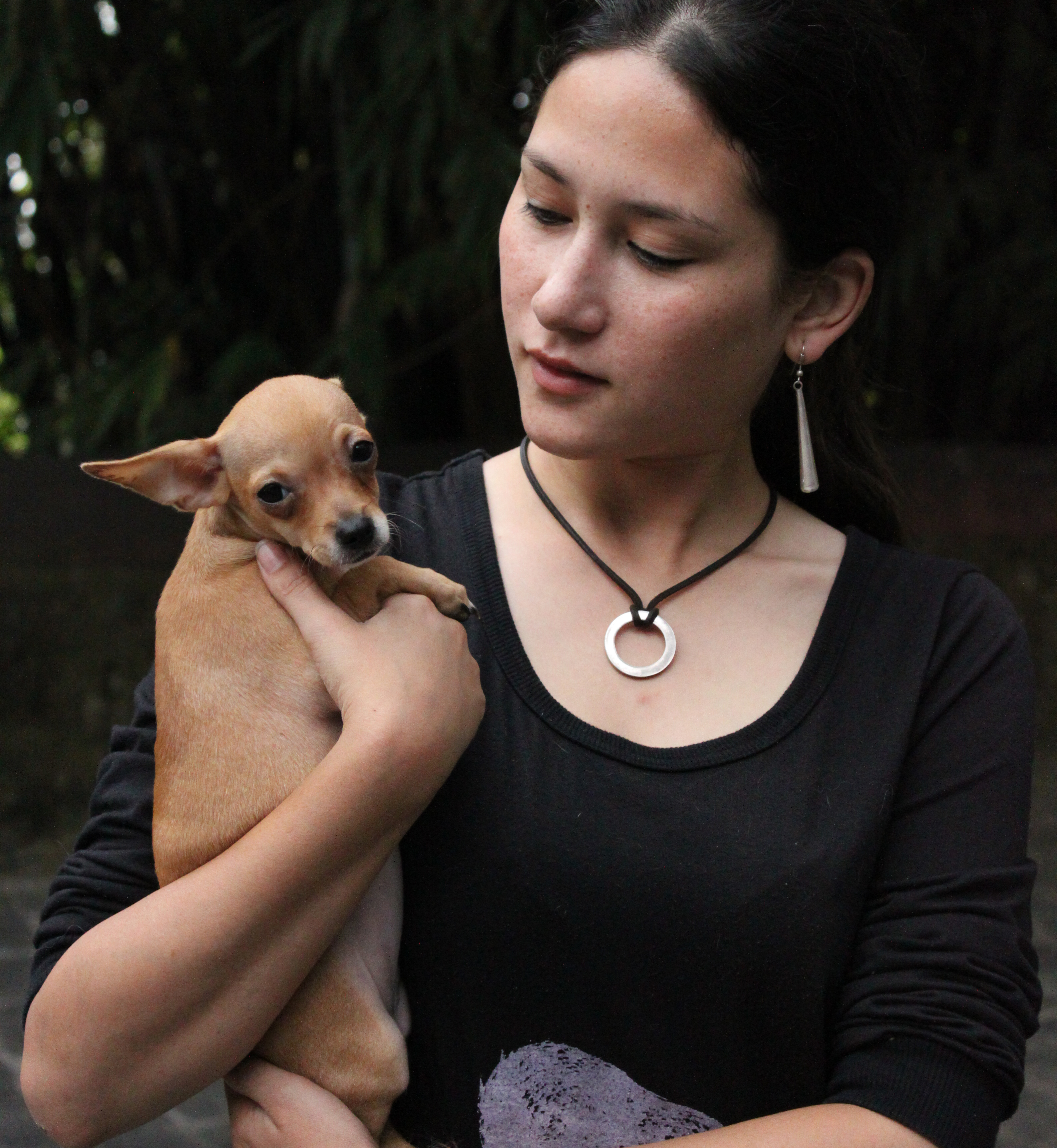
She came to us in July 2009. Kalsang said he wanted a small dog to keep near him, and Sochoe suggested a Chihuahua. I was often absent from home at the time, busy with Norlha and constantly traveling. All I could remember of Chihuahuas were these tiny rolls on spindly legs and red coats that stood trembling on their leashes while the owners, chic Neuilly women with their hair just done, stood talking to each other in their upper-class French, waiting for their daughters to emerge from the school gates. I had always looked upon these delicate creatures with distaste, wondering how they survived being so small and vulnerable.

I responded to Sochoe’s idea with a protest, imagining our tiny dog being carried away in five minutes by a) a civet (we had lost at least ten dogs to predators), b) a teasing monkey, or one having recently lost a baby, c) a kite or large bird. Sochoe insisted, saying it would be closely watched, and I finally gave in.
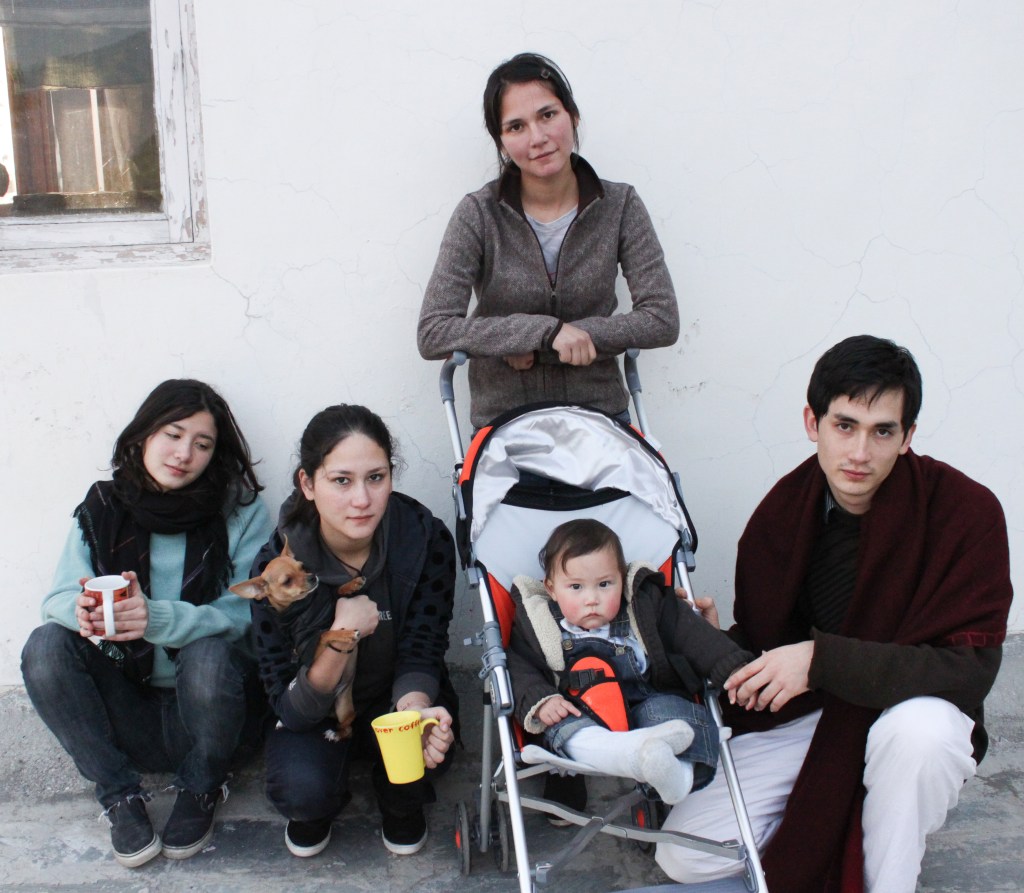
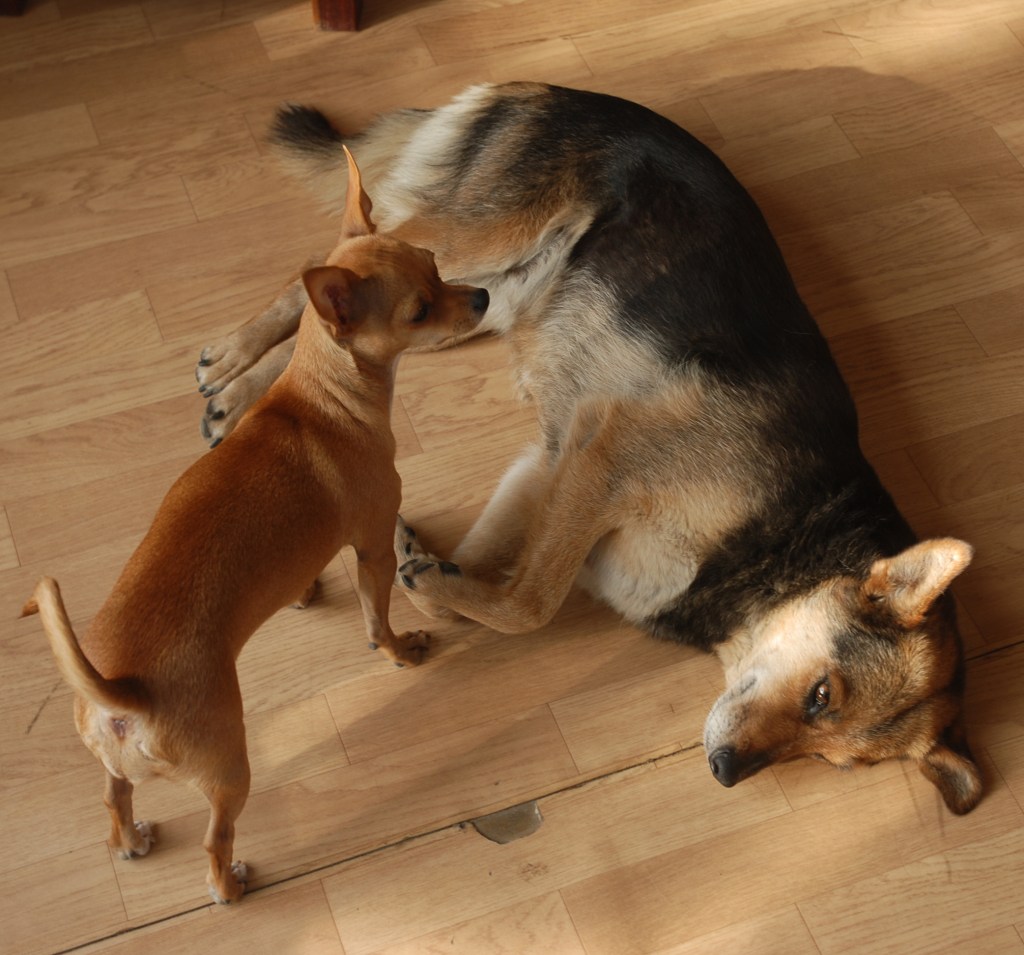
After a careful study, she bought Chichi in Delhi and brought her to us in a bag. She was a tiny, perky thing, and Kalsang was delighted. I cared for her, and then she became Sochoe’s dog, my being away so much. She became best friends with Sochoe’s dog Daisy. This highly intelligent and class-conscious (former) stray highly valued Chichi’s pedigree and ensured she didn’t associate with others like herself.

As Kalsang’s mobility decreased, she stood by her master, spending more and more time lying next to him and accompanying him wherever he went. There were negotiations with hotels and problems with restaurants that didn’t allow dogs, angry words were spoken, followed by the whole party storming out when a manager suggested we leave her in the car.  She shadowed him in his discomfort, stopped eating when he was ill, and showed signs of deep distress. She had to have him in her sight at all times, and two years ago, she temporarily became unable to walk on four legs, hopping on three, then hobbled the way he did.
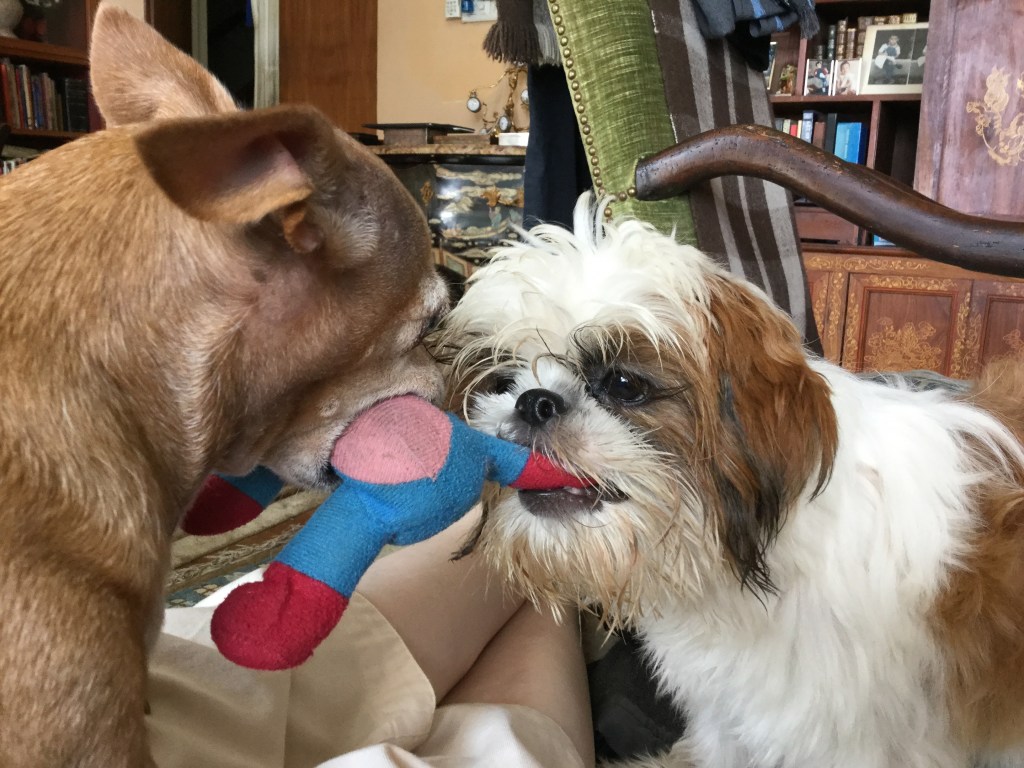
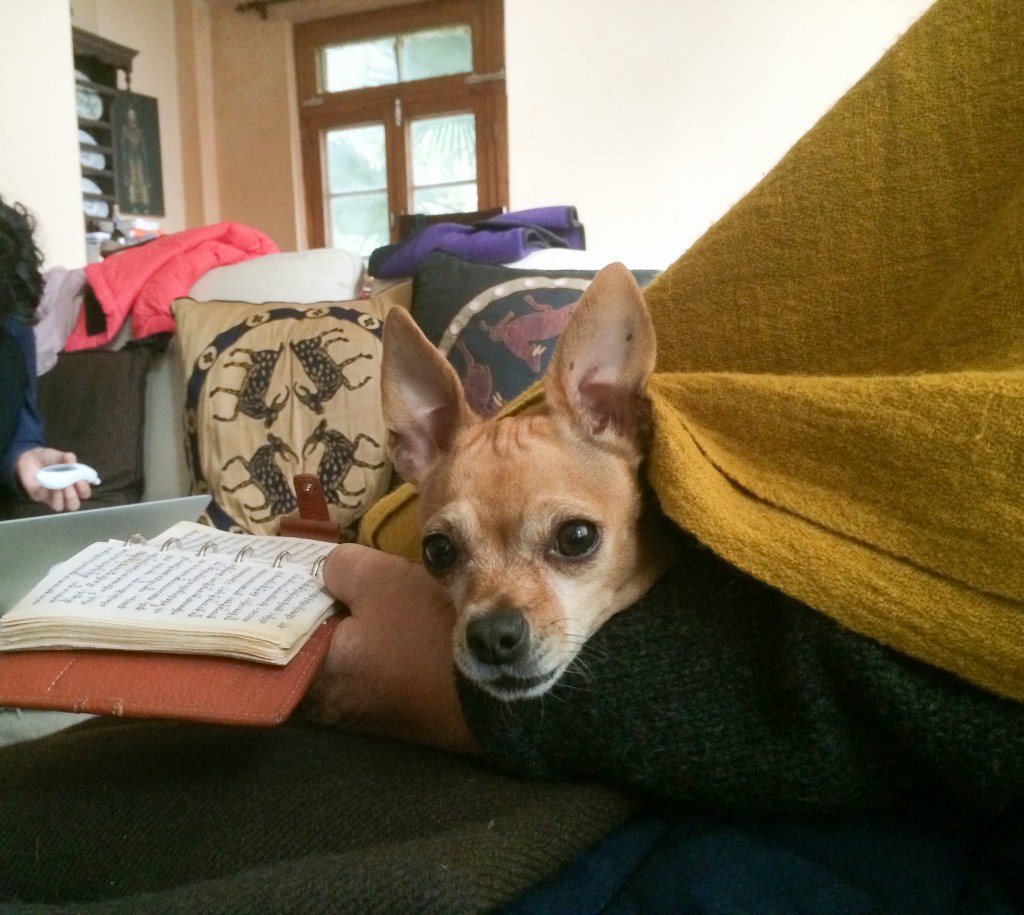
She was a quiet little thing who rarely barked. She got along with our many other dogs, displaying a laissez-faire attitude, only protesting when they infringed on her space and their proximity to her master. She shared her favorite toy with Luna, Sochoe’s Shitzu, and let her clean her ears.  The lack of movement and the frequent snacks Kalsang doled out to her made her look like a barrel on sticks, and we had to struggle to convince Kalsang to hold back. She spent her time on his lap, sometimes hidden under a blanket, bursting out of cover to attack anyone who dared to approach him or hold out their hand. She was jealous of the increasing number of grandchildren, her only true competition, and barked threateningly and nipped at them when they came for a goodnight kiss, though she did show good will when Kalsang was not involved. 
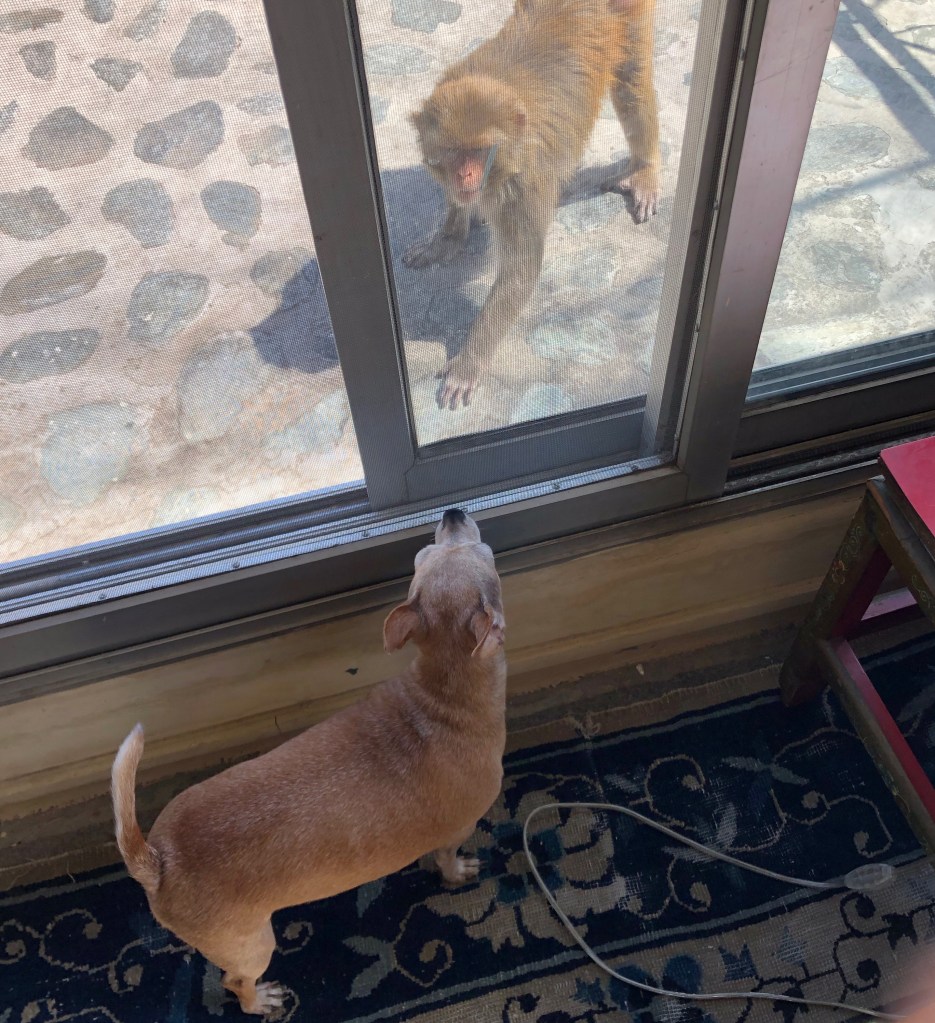
In the last few years, Chichi made it clear that Kalsang belonged to her and her only. I liked to tease her by coming close to him and laugh at her displeasure expressed with a growl and a yap, though she never went to the extent of biting and would retreat with a guilty look as if she couldn’t help herself.

During my last trip to Delhi, she stopped eating and could no longer stand on her legs. When I saw her, I understood that there was no return. Kalsang kept her on his lap and watched her drift away. She spent a few nights on painkillers and finally drew her last breath on the morning of May 23rd, Vesak day, around 10 in the morning. It was a cloudy, heavy day, and suddenly, it began to pour. Within those five minutes, she was gone.

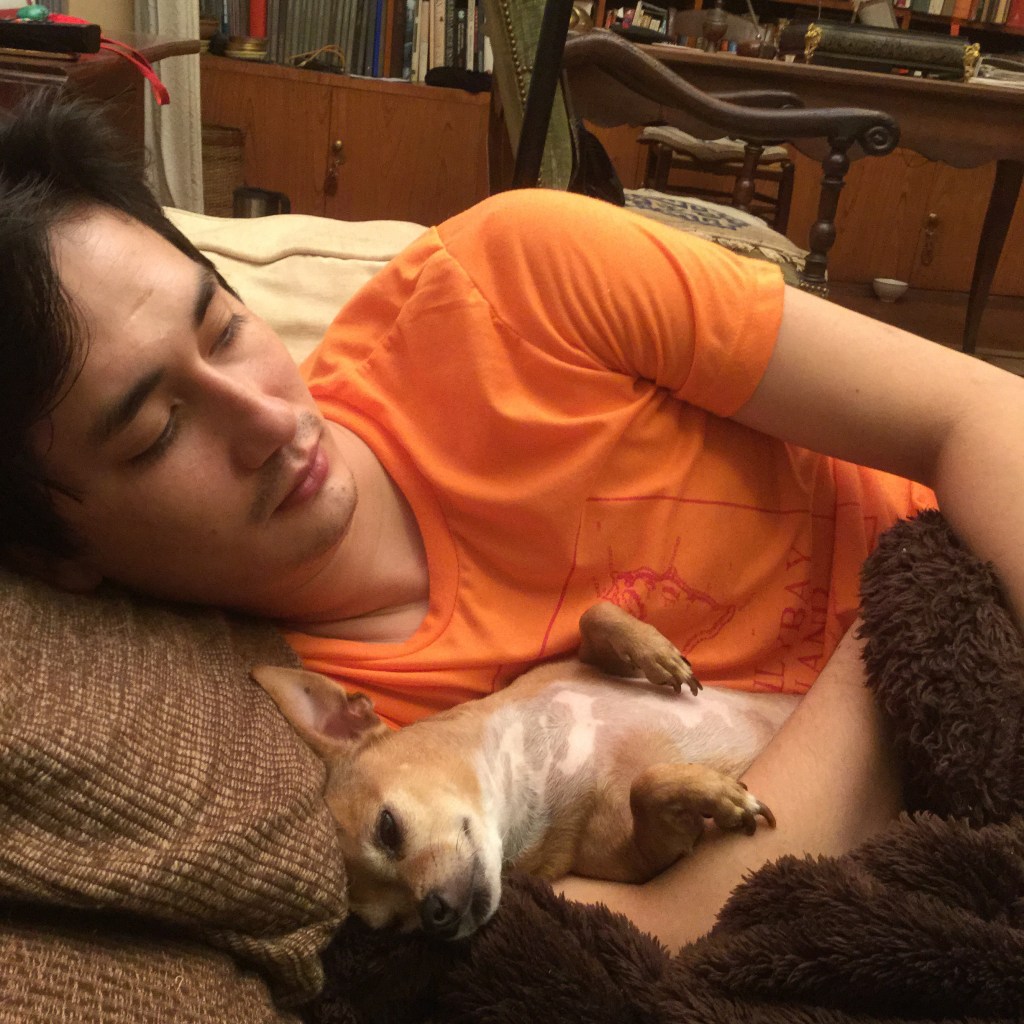
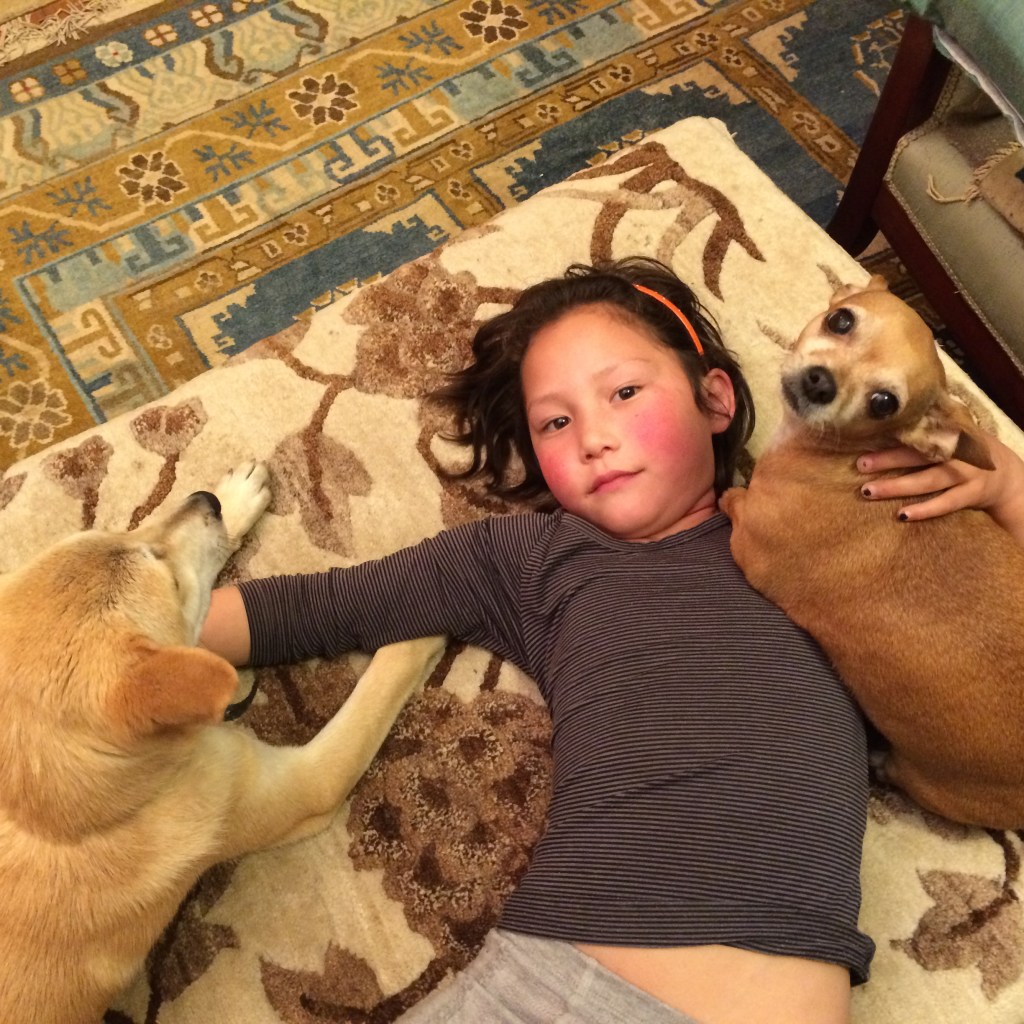
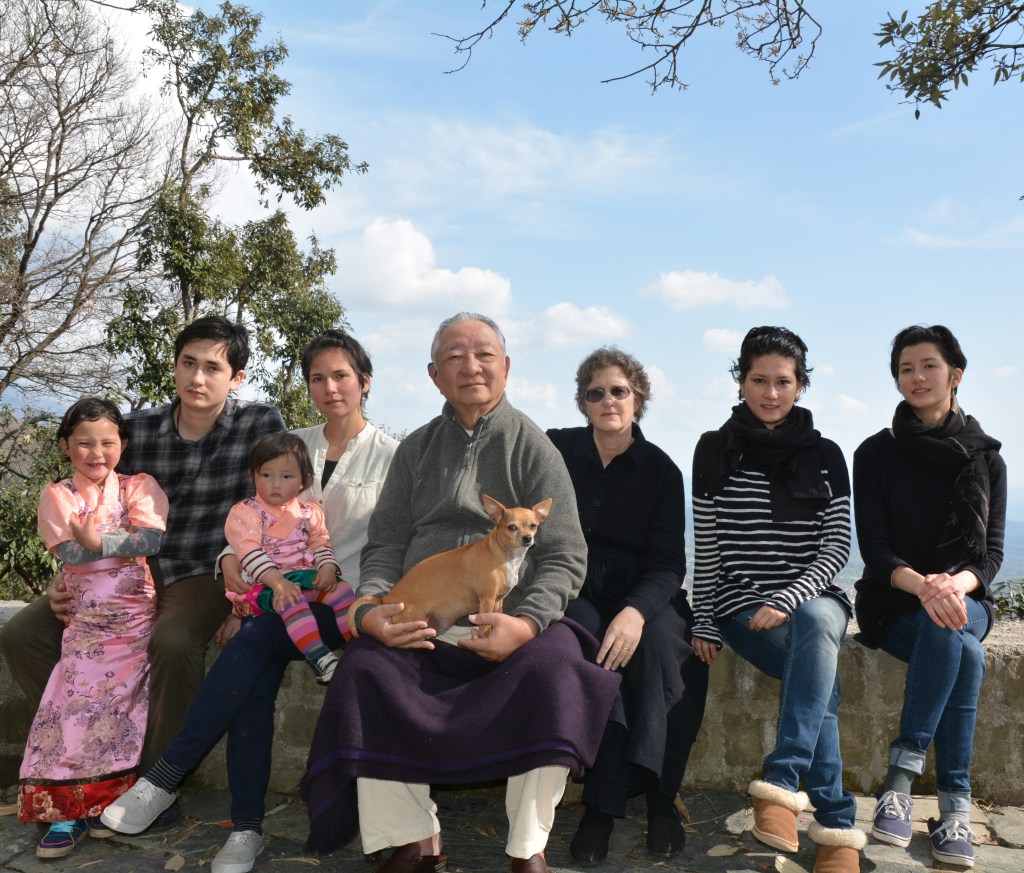
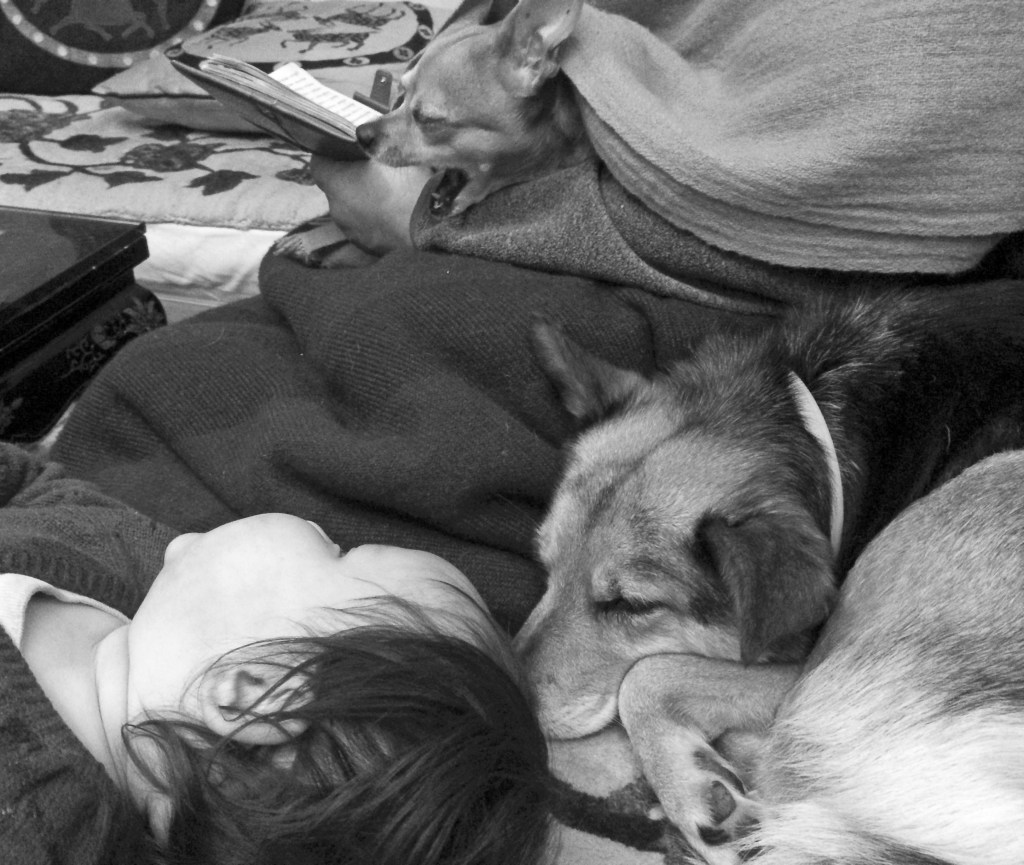
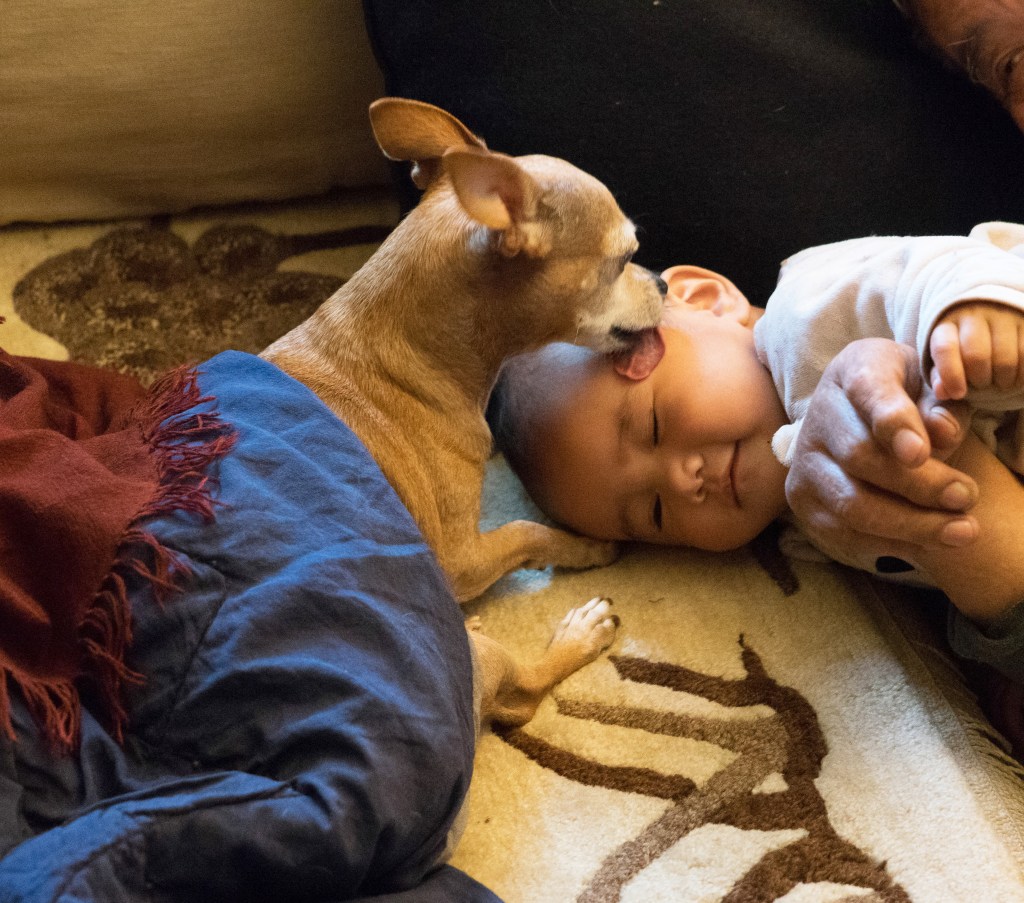
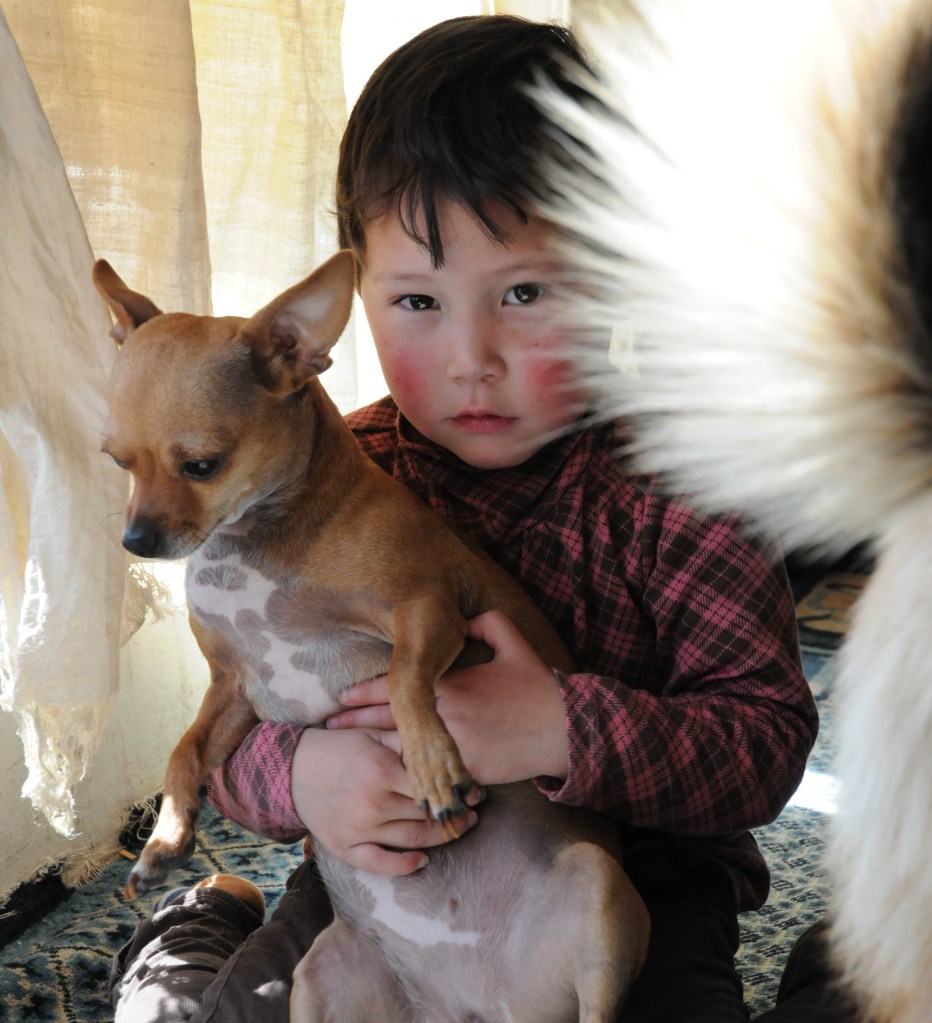
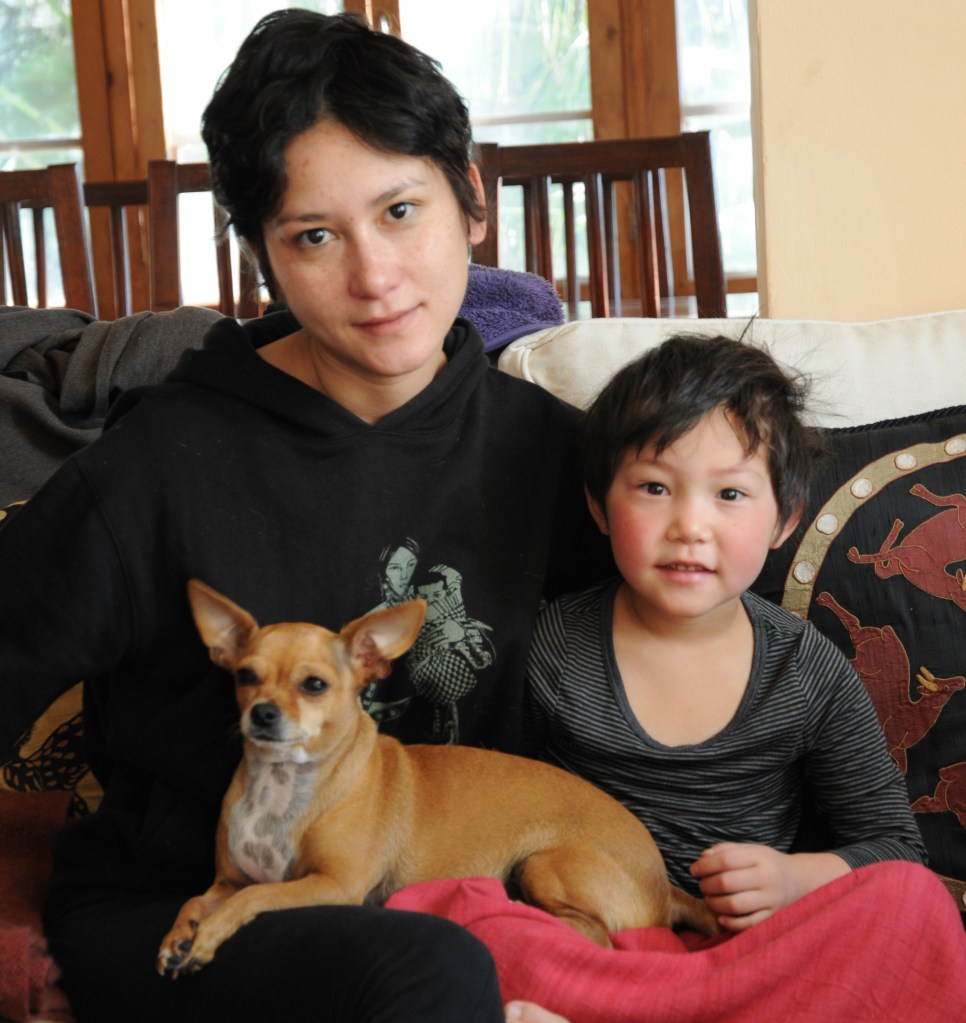
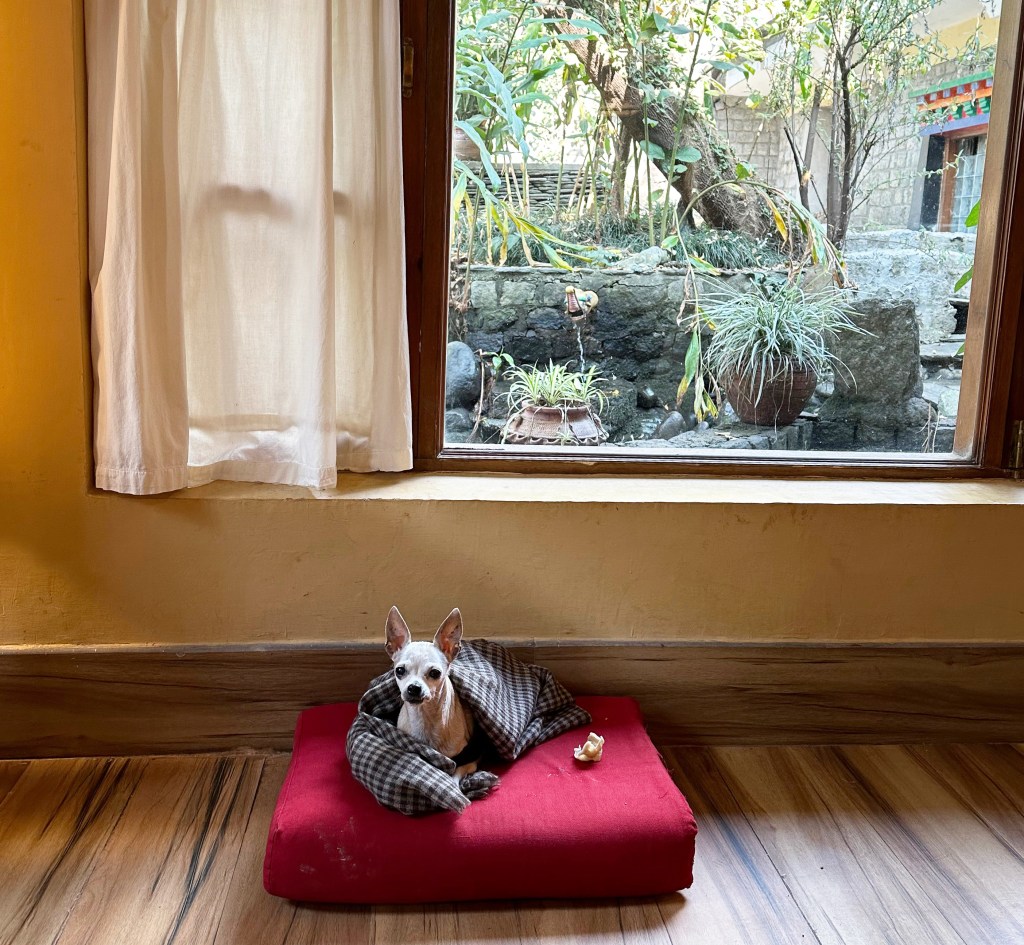
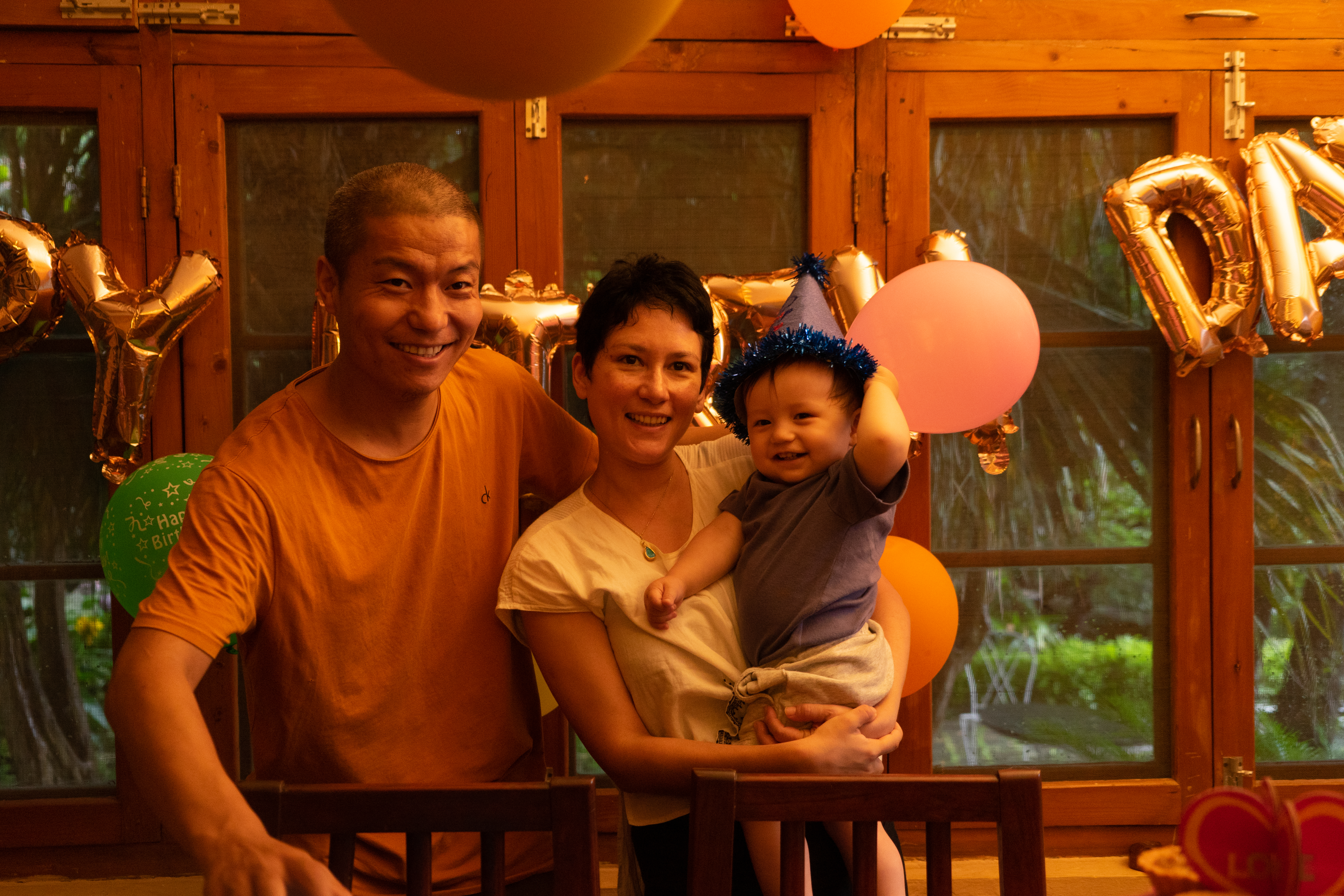
Looking at the following pictures, one will notice that most are taken inside in relaxation situations. That is what she did best: accompany humans in their most restful moments. 

Goodbye, Norbu

When Dechen began living in Ritoma in 2007, a village of nomads where people’s view of animals was predominantly utilitarian, pets were limited to cats who made themselves useful, catching rats and mice.  Dogs were mastiffs whose job it was to guard. They were large, fierce, and had to be chained. Apsos and anything cute were labeled ‘silly dogs’ and ridiculed.

Dechen and Yidam started with a mastiff, a gift from Yidam’s brother. Thopdan, as they named him, was the age of their eldest daughter Norzin. Dechen didn’t want to tie him up, and he ran around free until the village complained after he became too ‘friendly’ with the workshop workers. Nomads fear dogs, and since most are trained to ward off intruders, rightly so. Thopdan led a sad existence tied next to the house, barking at strangers and scaring people. He loved his family and let other animals eat his food; Rago, the neighbor’s pet sheep, and a neighboring fox would help themselves to his bowl. Dechen was sad about Thopdan and didn’t want to hear of having another dog, especially a silly one.

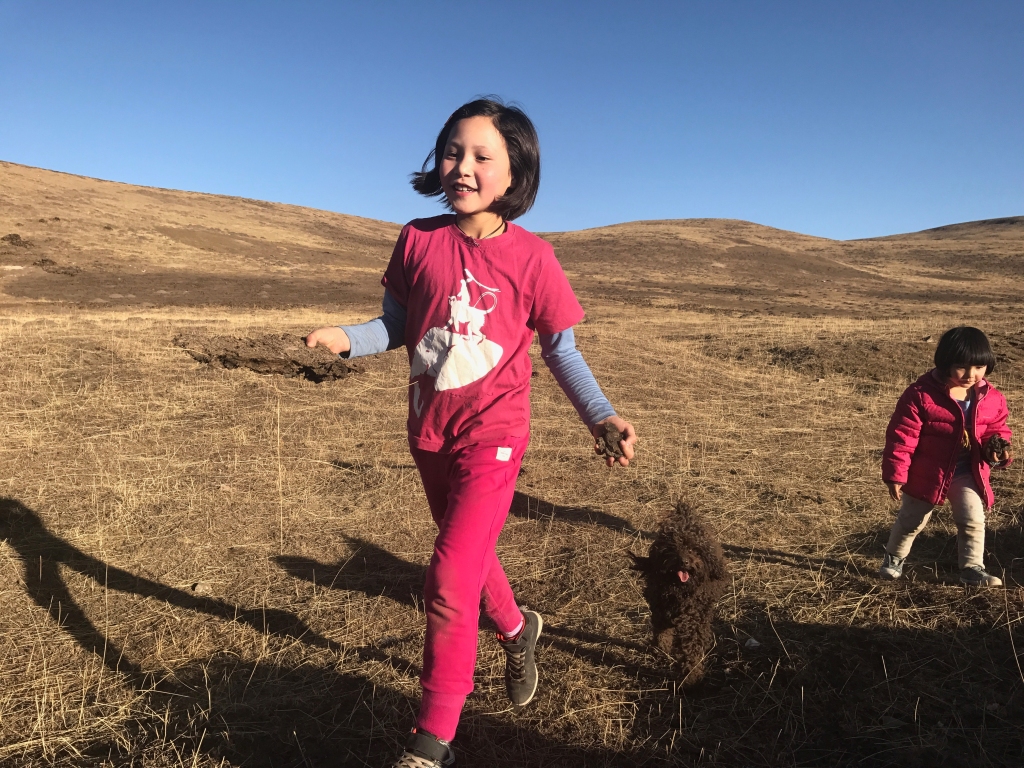
In 2016, nearly ten years after moving to Ritoma, Norzin and Deyang began clamoring for a small, ‘silly’ dog. They had been seen everywhere for the last few years, and chihuahuas, promenading in wooly coats, were now a common sight in nearby Tso. In the village, little white fluffy dogs began appearing, and within a few years, the village was full of ‘semi silly’ dogs, that formed little packs of their own. Yidam started talking of a small dog, and Dechen softened. Messages like “What do you think of poodles? A Pomeranian, or a pug? Photos of various fluffy puppies began to drop into my phone, announcing the imminent arrival of a new dog. I was in Beijing on my way to Ritoma, and Yidam was in Lanzhou pet shop, choosing a dog. Suddenly, the deal was done; a scraggy, sad-looking, full-grown brown poodle in a tiny cage appeared on my screen. Called ‘Chokoli’ he was taken to Ritoma and renamed Norbu, meaning Jewel.

Dechen and her family were away when I arrived a few days later, due an hour after me. Dechen told me Norbu was in a box on the porch, warning that he was not friendly and would surely nip at me. I found him retreated into his cardboard refuge, barking wildly. I approached him, and he nipped at my hands for a full five minutes before letting me touch him. By the time Dechen and Yidam arrived, we were nearly friends.

Yidam said he had chosen him, the least likely to be taken home. He had looked at all the cute pugs, chihuahuas, toy poodles, and Pomeranians and noticed a fully grown poodle who acted like the boss to the other younger dogs when taken out. The pet shop owners explained that no one wanted him, as he had a slight defect to his back leg and was now one year old. Yidam made up his mind and sent us his photo as he readied to put him into his car.

At first, Dechen didn’t know what to do with Norbu, leaving him on the porch when she went to work at Norlha, situated at the bottom of the small hill where her house is perched. I told her she should try taking him with her, though she didn’t look too convinced. When she returned to work after lunch, I saw him launching behind her, a tiny dot following her down the hill. From that moment, they became inseparable; he followed her everywhere, sitting under her chair or warming her back, sleeping in her bed.

A few days later, we took him to Norden Camp. Suddenly, he dashed off, soon becoming a disappearing speck on the plain. We asked the nomad family who had a store tent on the road if they had seen him, and they said he had rushed by at top speed. The camp Manager set off on his bike, soon found him several kilometers away on the empty plain, and brought him back. He never did this again.

Poodles are said to be intelligent, love children, and are playful and loyal; he was all that. When Yiga, the youngest of Dechen and Yidam’s three girls, arrived in Ritoma at the age of one month in the summer of 2017, he stood guard by her. He loved balls and would help himself to one from a shelf if in a toy store. When Dechen of Yidam returned from a few days away, he peed for joy, the highest mark of his affection. He even did that for me a few times after a long absence.

During COVID-19, he was separated from his family for over two years, looked after by the housekeeper, a former employee of Norlha, who loves dogs. Then, his family returned, and he shifted his attention to

During COVID-19, he was separated from his family for over two years, looked after by the housekeeper, a former employee of Norlha, who loves dogs. Then, his family returned, and he shifted his attention to Yiga, whom he followed everywhere. There was a little over a year of happy moments. A dog’s life is short, and our closeness to them can be intense, creating a painful vacuum when they leave us. He departed a month ago, losing his strength in stages; our dear, chocolate-colored Poodle on the Plateau is no more.

Goodbye, Big Boy

In the summer of 2013, while I was away somewhere, Sochoe bought a Saint Bernard puppy, to add to our dwindling collection of dogs. We already had Shishi the Chi Wawa, Kalsang’s personal dog, Sochoe’s very dear Daisy, a medium size beagle look alike mongrel whom we all loved dearly, and a black dog called Traga, who wouldn’t let anyone touch him. We were talking about a new dog before I left, and I came back to Sangpo.

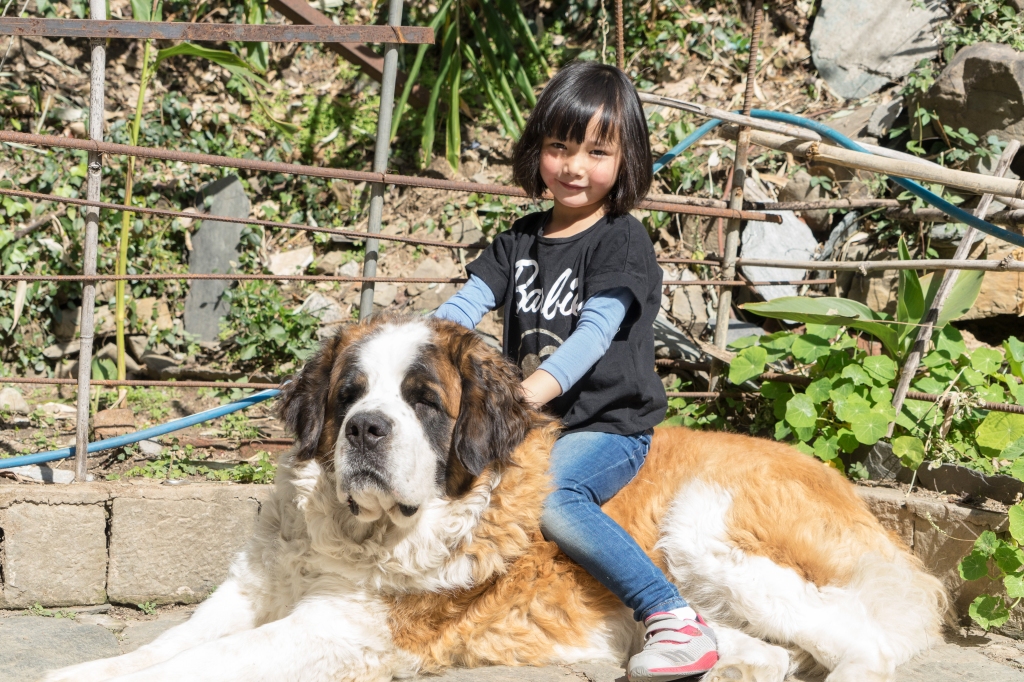
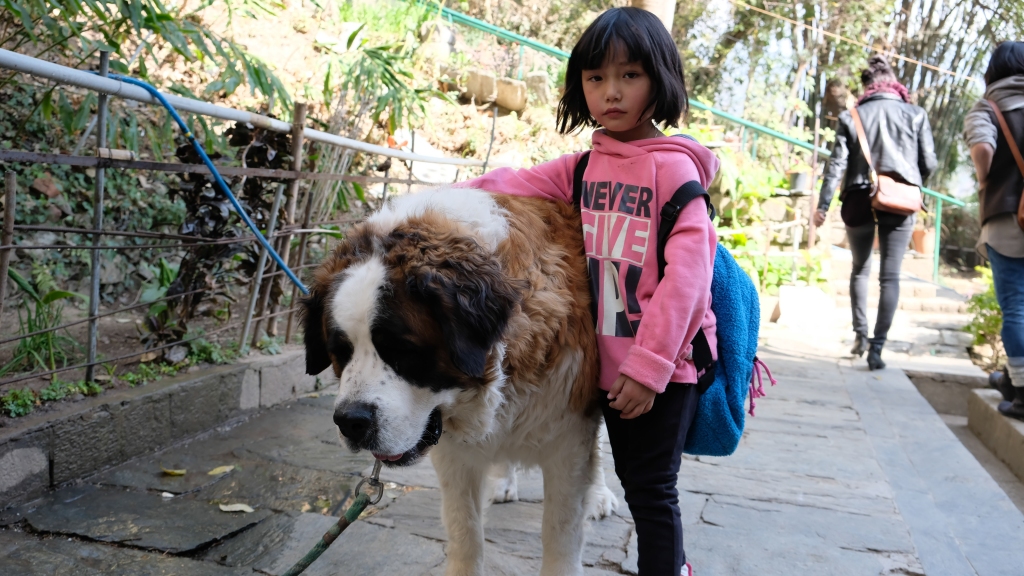
He was small then, well not so small for a three month old, but he grew fast. He was very smart and learned to open most doors, and got along with the other dogs. His gentle personality and endless patience with the many children who visited every year, earned him his name well (Sangpo means kind in Tibetan). His size terrified visitors who sometimes had to step over him to enter the house, and he had a deep bark that resounded in the night, but he never hurt anyone or anything. Even the monkeys, whom he distractedly chased when they got too cheeky, knew this. He was terrified of thunder, and would rush about the house in fits of terror, which was disquieting for everyone, especially since there are so many storms here. When he was younger, he would seek refuge on people’s lap, anyone, and once barged into the living room and installed his 60 kgs on one of our guests lap. I couldn’t resist a laugh, but no one else thought it was funny. Saint Bernards don’t live very long, but he was healthy, and in July, Sochoe pointed out how well he was aging. The monsoon brings strange ailments and he dwindled in a mere two weeks. It was a traumatic time, when we ferried him to vets in various places, none of whom managed to figure out what he had. He passed peacefully night before last and we buried him in the garden and all remember him fondly.

Covid-19 Chronicle 7

Vaccination Outing

In March, I began to receive warnings that things were getting worse in India. The news was coming from outside, and as much as I looked around me, I couldn’t see it happening. The hospitals were not full and the ghats were not busy. No one I knew was sick. I always told myself and anyone else that death was not easy to hide in India, and from my terrace I could scan the horizon for a column of smoke by the river. So, like everyone else, I rode the myth that India must have escaped the terrible outbreaks that shook Europe and America, and our lives almost went back to normal.

Then, suddenly, it was upon us. All the images I had conjured over a year ago, on that fateful day when we went to the bazaar, looked at the comings and goings telling ourselves that the storm was imminent, were there. The hospitals were full, and nearly every acquaintance we knew in Delhi was either sick or someone in their family was. Every week brought news of someone close dying. There was no oxygen to be had and bodies were burning everywhere. On April 27, we decided to do our own lockdown and on May 7th, the whole area went under. Even going out for a drive in the countryside seemed a risky luxury and we stayed put.

All during that time, the vaccine rollout had begun. It went smoothly and efficiently for the two older age groups, but supplies ran out on May 1st, when the 18-45 phase began. The few doses that were delivered to Himachal State on May 17th sufficed for about 10% of the population and had to be obtained on the Internet. Tenor spent hours fishing on his phone, and finally got a spot for Sochoe and himself in two different places near Kangra, for the next day. We decided to make it into an outing and drove through the deserted towns with their shut down markets. The injections took a few minutes, they may have been scarce, but at least their distribution was organized. The recipients all looked techy and like Tenor must have spent hours on their phones to get their spots. We wondered what the computer illiterate, the majority of the state’s population, would do. Wait, I guessed, until supplies were ramped up.

We then drove on a bumpy road to the near top of a hill crowned by a mango grove that belonged to a local Maharaja. It was more like a forest, with guava trees, silk trees and the remnants of tea bushes. The trees were old, gnarled and majestic, and little unripe mangoes lay on the ground, intermittingly plopping down onto the forest floor, breaking the silence. We walked up a path past a mud house, and a few cows grazing until we got to a clearing with a little half-fallen house, with wooded shutters and a door closed by a chain and lock. There was a veranda with flat stones and the remnants of a fire, probably the cow herders. It was a perfect picnic spot and we unpacked our sandwiches and poured ourselves tea from our thermos. On the way back, we met an old man, the owner of the mud house, and he asked us if we had picked mangoes. We said they weren’t ripe yet, and he suggested we return in a month.

Covid-19 Chronicle 6

Here we are, entering the 29th week since the lockdown. The weeks rolled by, every Monday feeling like a new beginning, a fleeting illusion that Monday will last longer than it did last week, only to be overrun by the rest of the week rolling by. The passing of months is marked by haircuts, and I ordered proper scissors on Amazon. Saturday is the walk up to Mc Leod Ganj bazaar, a steep 2 km climb. It was hot at first, then drizzly, and now sunny again. We shop for vegetables, mangoes have come and gone, apples are the fruit of the month, accompanied by guavas and persimmons, a local novelty grown in the hills, and referred to as ‘Japan fruit’. The Kashmiri vegetable seller likes to show off his Tibetan, and sends Dechen to the back of the shop for the best choice.

The empty stalls in Mc Leod Ganj
Enjoying the rain

The monsoon came and went. It enveloped the house in mist, bringing with it windless downpours that kept our clothes in a permanent state of floppy wetness. Norzin and Baby D ‘s cries over the proliferation of spiders, which they claimed were getting bigger and more numerous eventually caused an exodus from their room into Dechen’s. Scorpions joined in, and were taken more seriously. I found one lingering in the hallway late one night, trying to look small against the wall and had to plop a glass over it and evict it into the garden. It was about an inch and a half long, fat, and of mousy grey color. Yiga refers to them as crabs and everyone is careful to check their shoes. Outside, there are leeches, the first time I encounter them in my garden after 41 years. Kalsang remembers them from his Assam jungle days, when he first came to India, where they dropped off trees and were removed with salt. I came in one day with one in my pant leg and he found it hilarious.

Baby D asked Dechen to check the bathroom for spiders, and she came back with a grin, saying she needed help to remove a snake. It had peeked at her under the door, dark, thin and the length of a tall man. Sochoe, who can handle any creature, was called in and swung it into a wastepaper basket with the help of a broom. It made several attempts at escaping, its undulating body emerging out of the basket, only to be pushed back in and rushed into the garden.

The new treehouse

Now the sun is here all day and the cicadas are screaming, crowding around the screen of windows at night, craving for light. They will die off, the final phase of their lives coming to an end with the coming of winter. We built a treehouse for the children, a solid metal and wood contraption around an enormous tree. The monkeys love it too.

A carpenter’s house
The local, livelied up garbage truck
Now, the two of them are running everywhere
Reading …
The shoemaker’s nap
Yiga’s second haircut. She had a nun’s haircut when she arrived nine months ago
uninhibited and relaxed
Losel and Luna
The vegetable shop
on the terrace

Covit-19 Chronicle 5

Week 14

Spring came and went, a rather cold one, then the thunderstorms. Today, the monsoon moved in, fog floating in from the plains bringing with it a thick, heavy rain that descends like lead. No wind. We are now where we hoped to be since the beginning: The state closed to outsiders, but open inside. Our town has taken on a new face, the small town it was 20 years ago, absent of tourists from the plains. People play cricket in the street, and friendly shopkeepers offer all kinds of takeaways. There is a profusion of vegetable sellers, all hotel owners turned to other occupations, who talk about their Israeli guests with a tinge of nostalgia.

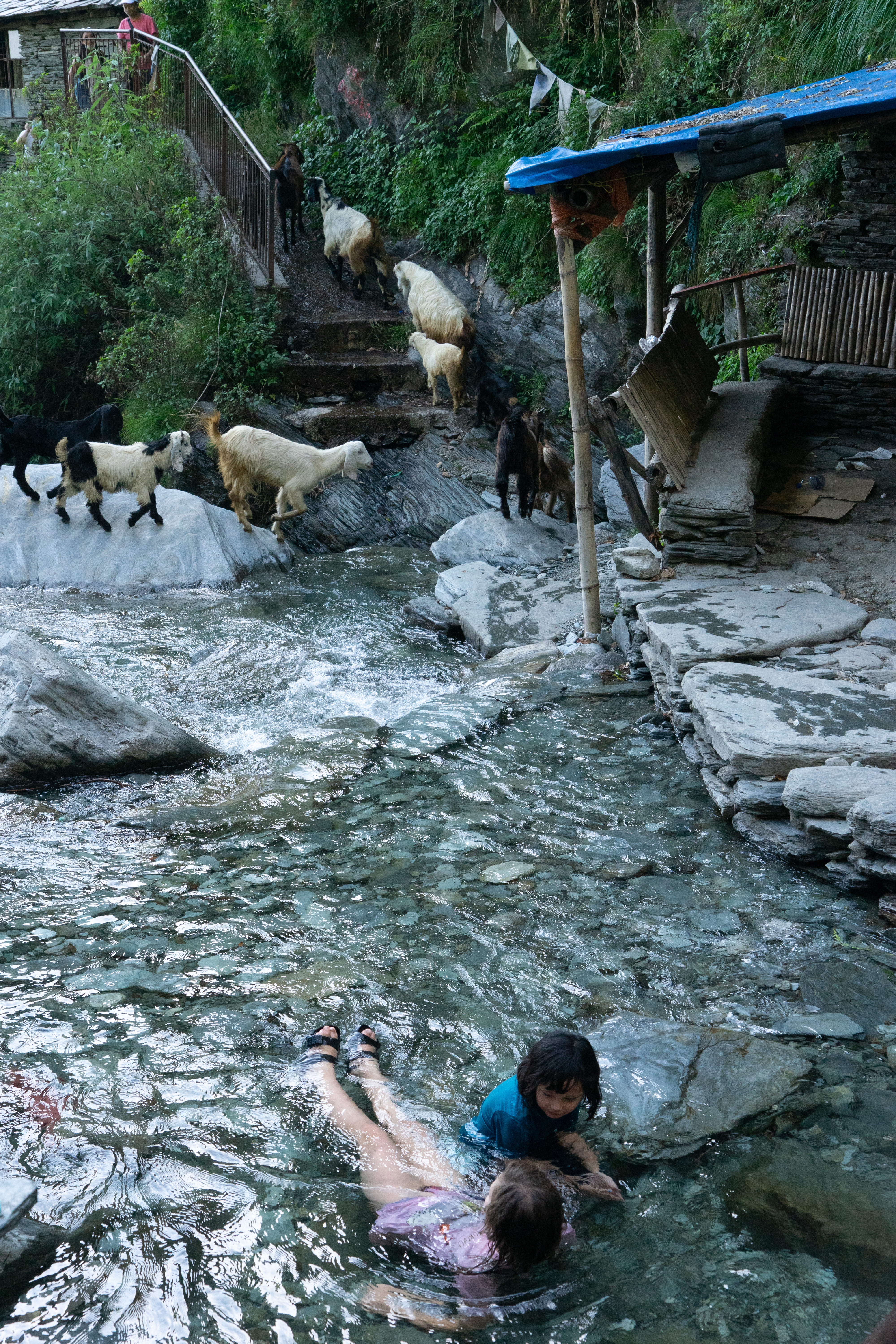
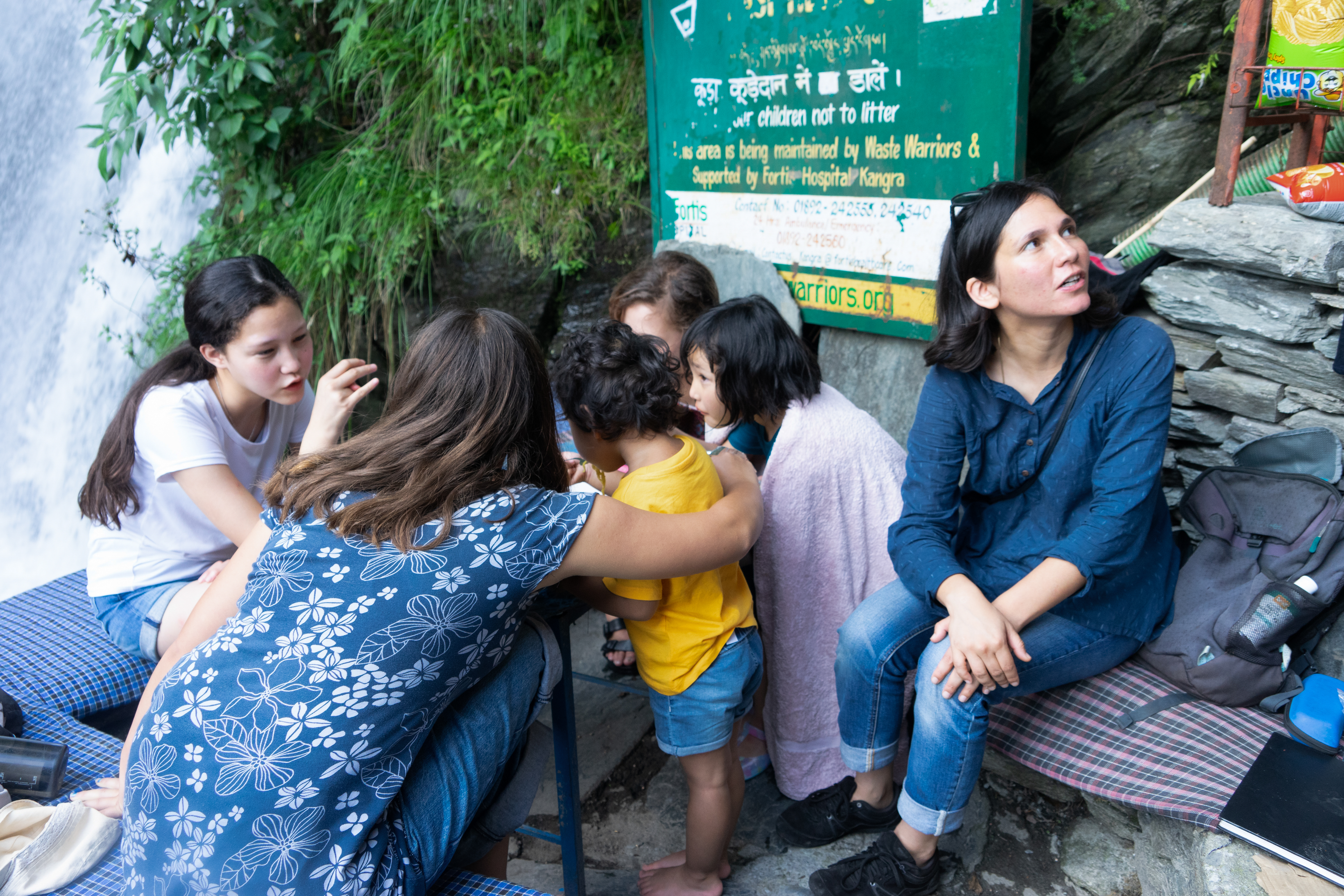
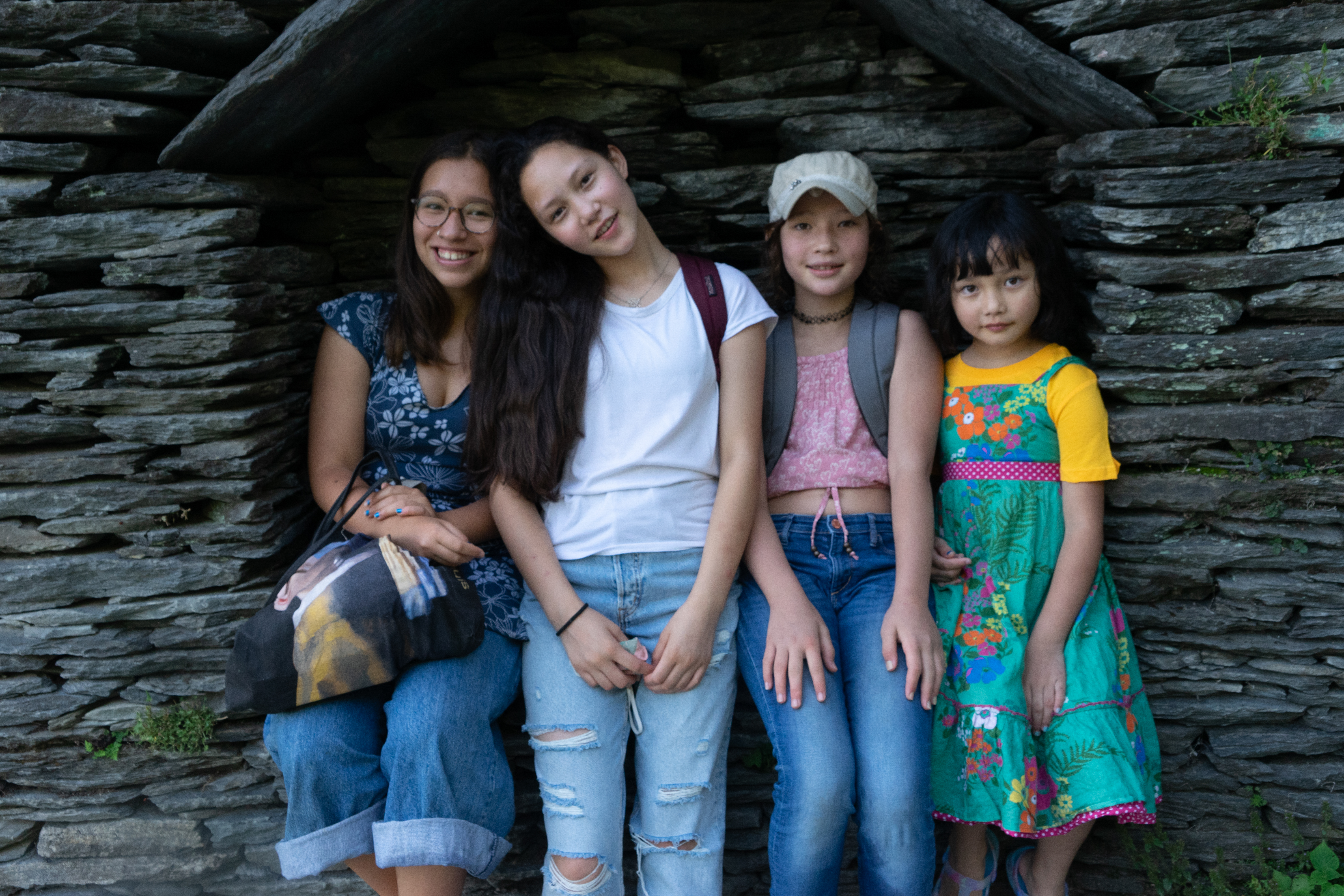
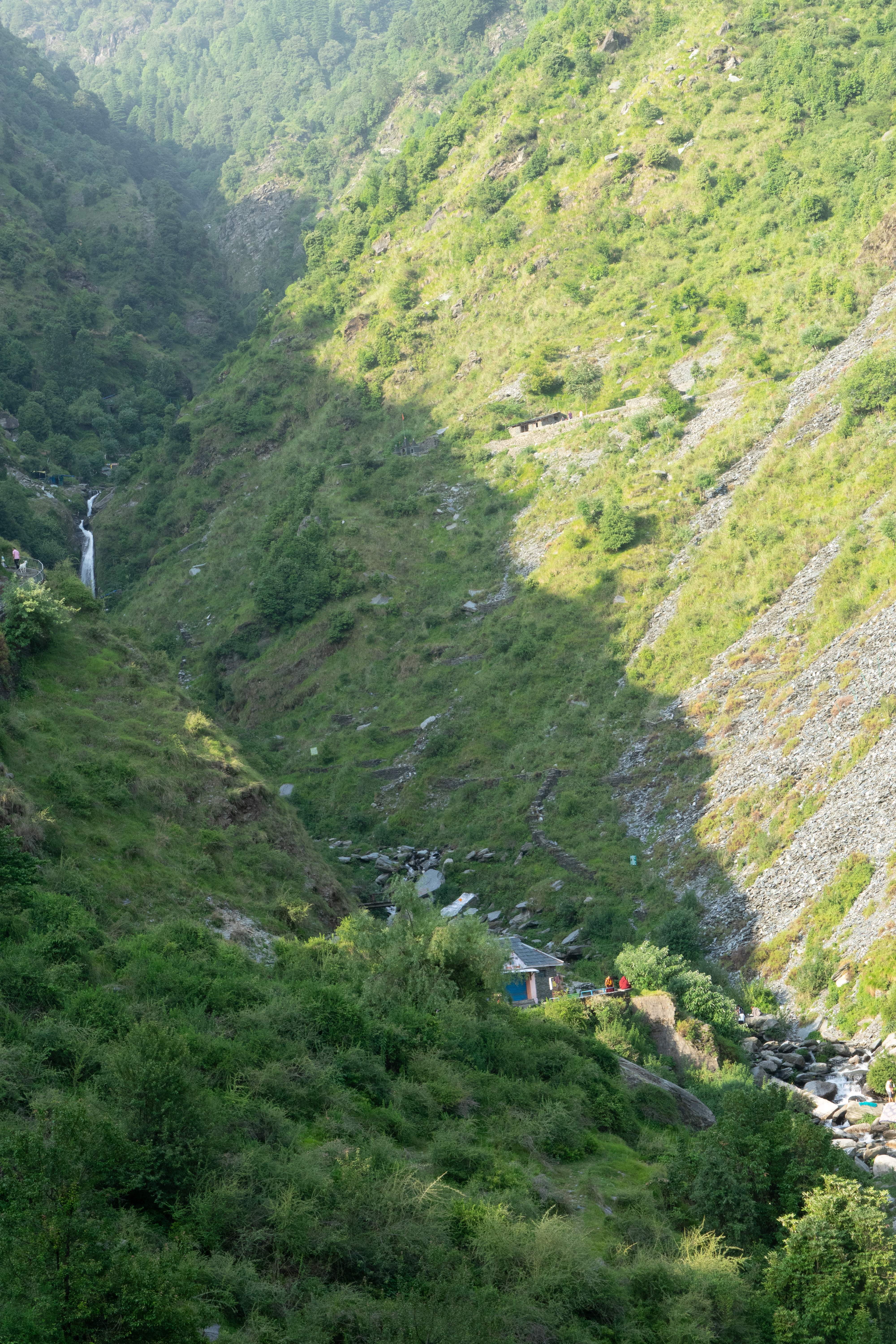
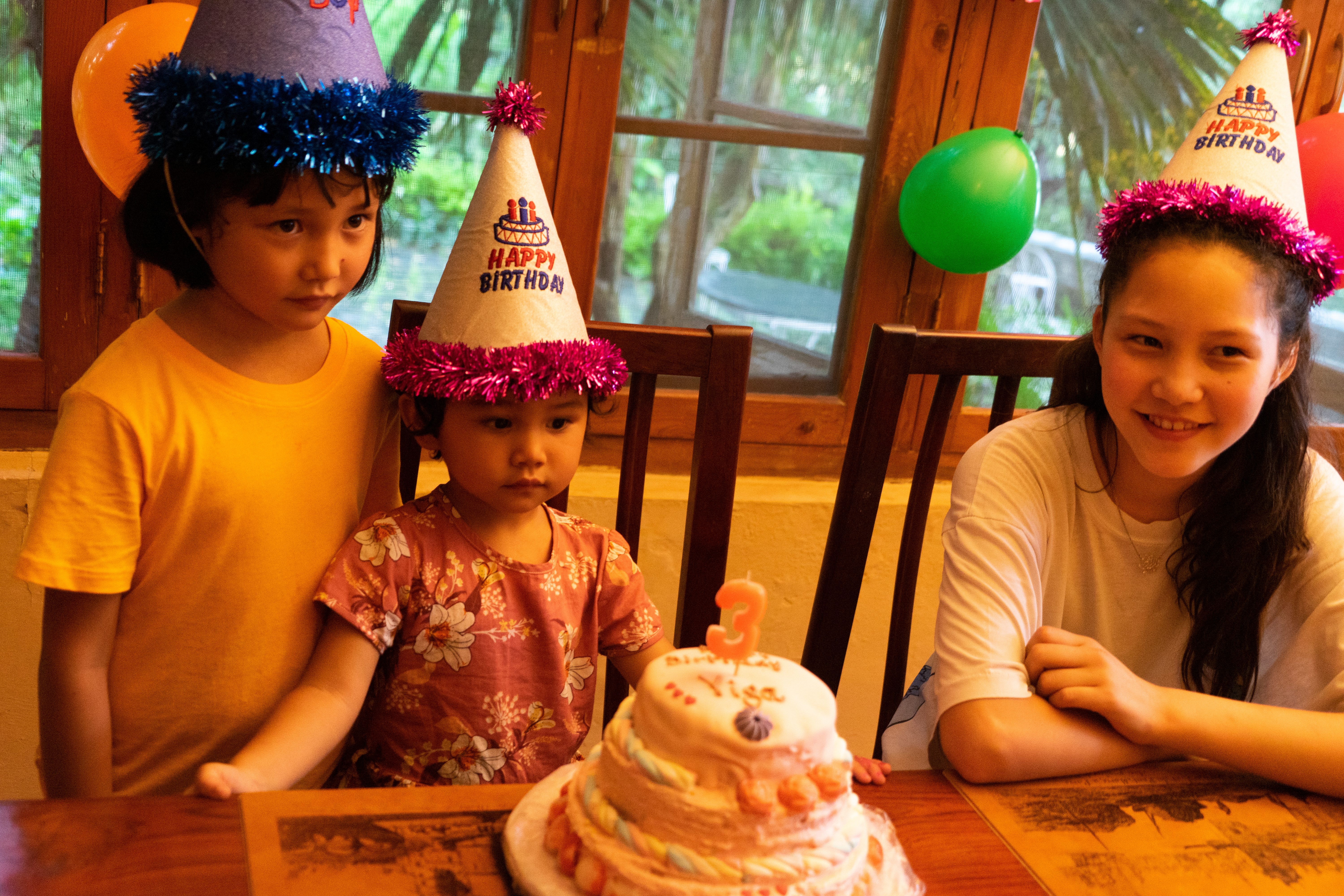
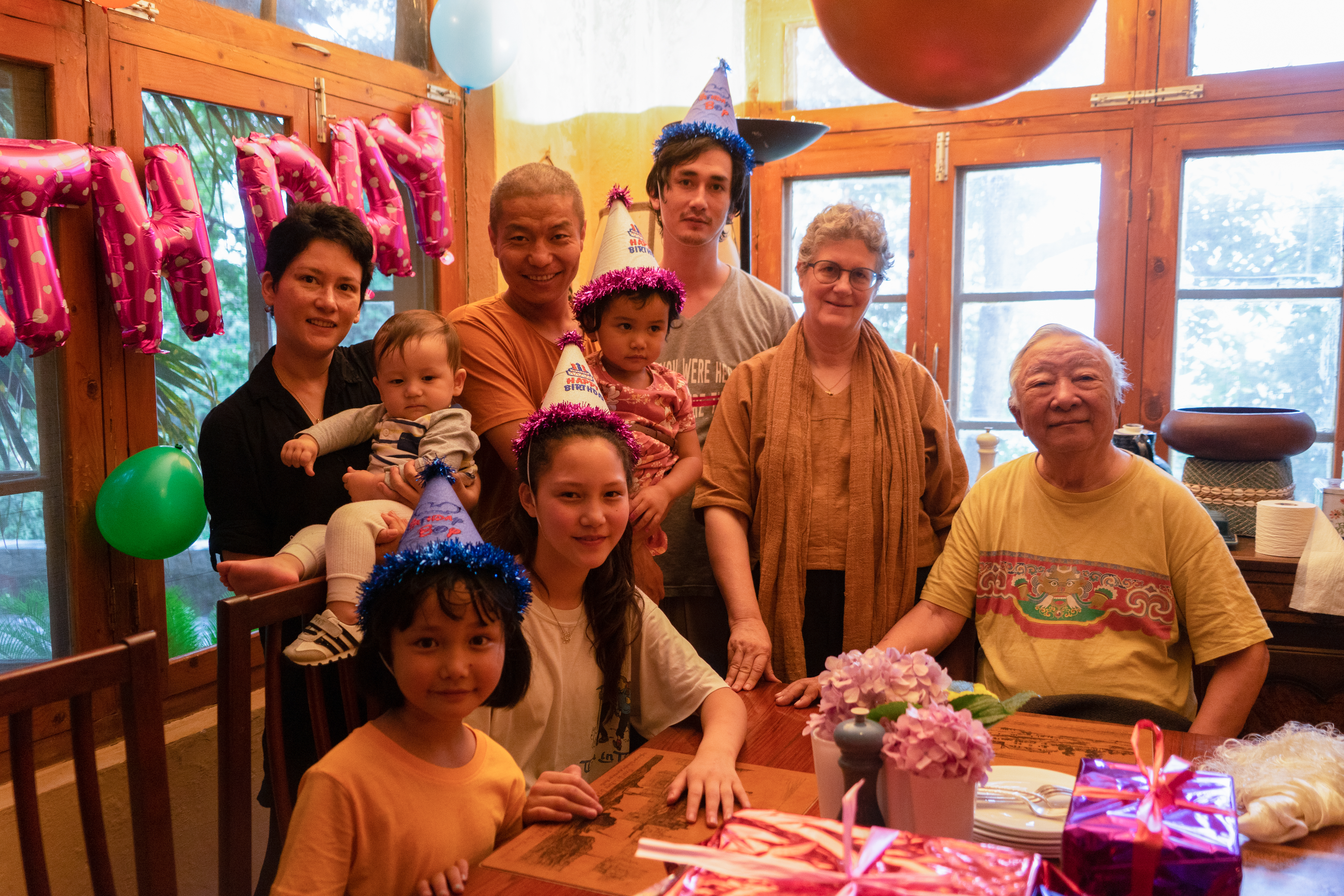
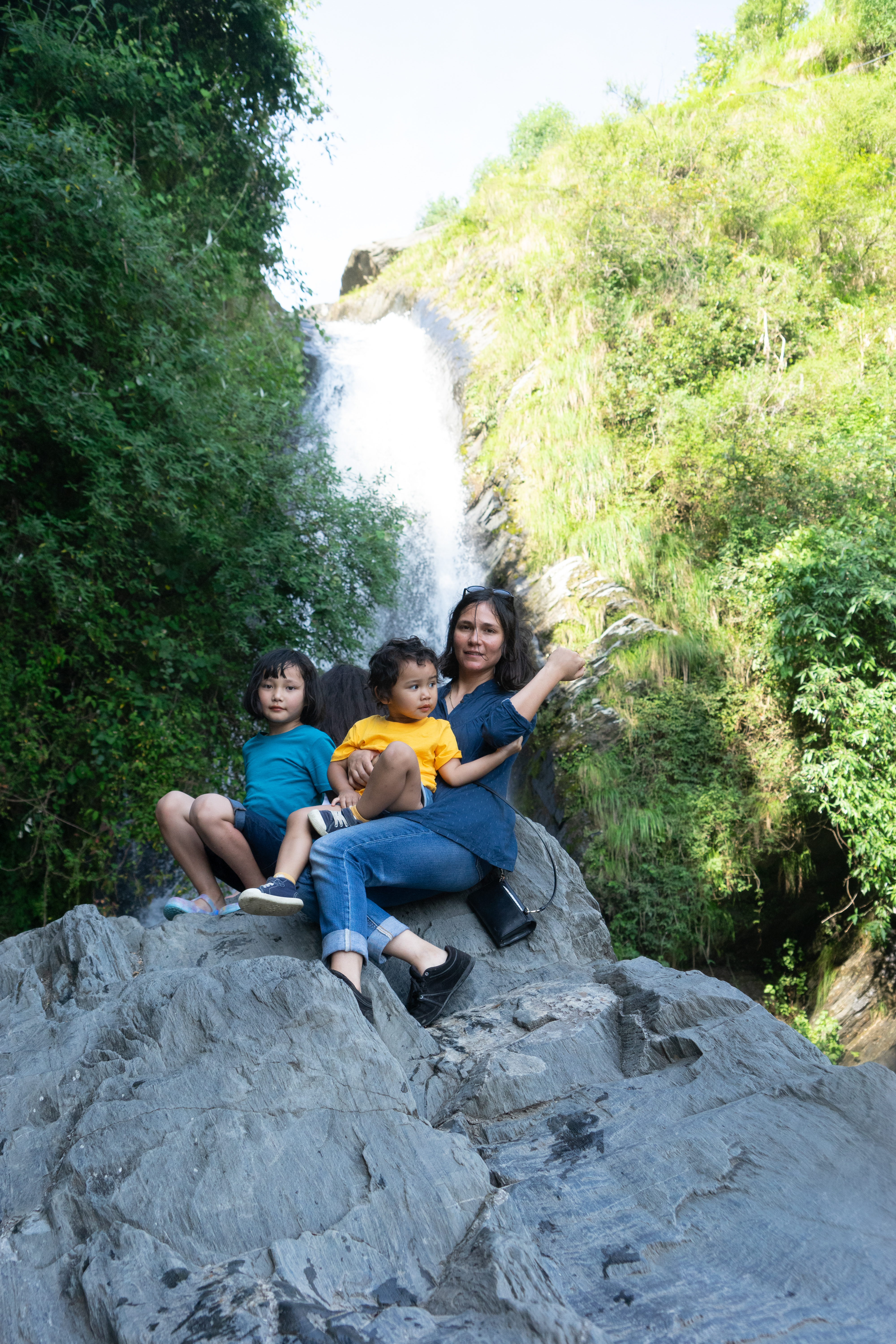
KYIN20061432 (1)KYIN20061433 (1)Dechen said she didn’t want to miss out on revisiting her childhood haunts, something impossible in normal times due to the tourist traffic, and we do a weekly excursion to a beautiful spot. Last week it was to the Baghsu Nath water fall, where the children found clear pools to bathe in while we drank chai and made friends with the goats.KYIN20061445 (1)KYIN20061449 (1)KYIN20061453 (1)Last week was birthday week, Yiga turned 3 on the 18th and Losel one two days later, on the 20th. We ordered a very fancy pink cake from Moonspeak, the owner went all over town looking for the strawberries. Losel had a blue cake from Woser Bakery and a display of matching cupcakes. We had balloons and toys that they will have to share. No one is going anywhere, for the moment at least, with China still closed. We don’t know how long this state of things will last, but we all feel safe here, with time in suspension. Knowing that nothing is up to us, waiting has a certain feel of comfort to it. Hope that India was being bypassed by covit-19 has now evaporated. Beyond Himachal’s borders, five hundred kilometers south in Delhi, hospitals are overflowing, and patients being turned away. Reading a Tibetan biography, we realize how people less than a century ago lived with the reality of epidemics, while we never considered they could also be part of ours.KYIN20061863KYIN20061881KYIN20061880KYIN20061877KYIN20062088KYIN20061421 (1)

Remembering Tendrol la

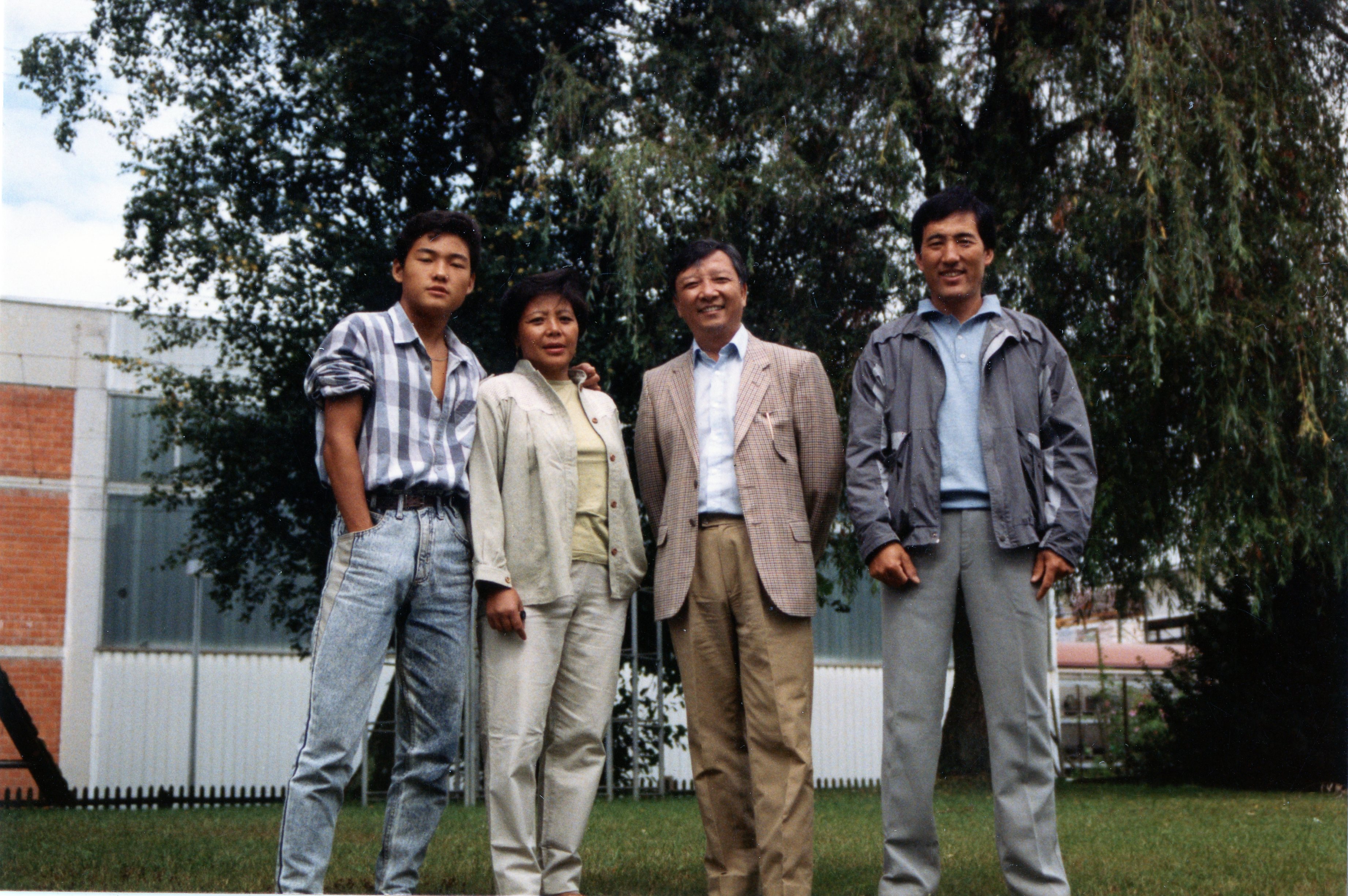
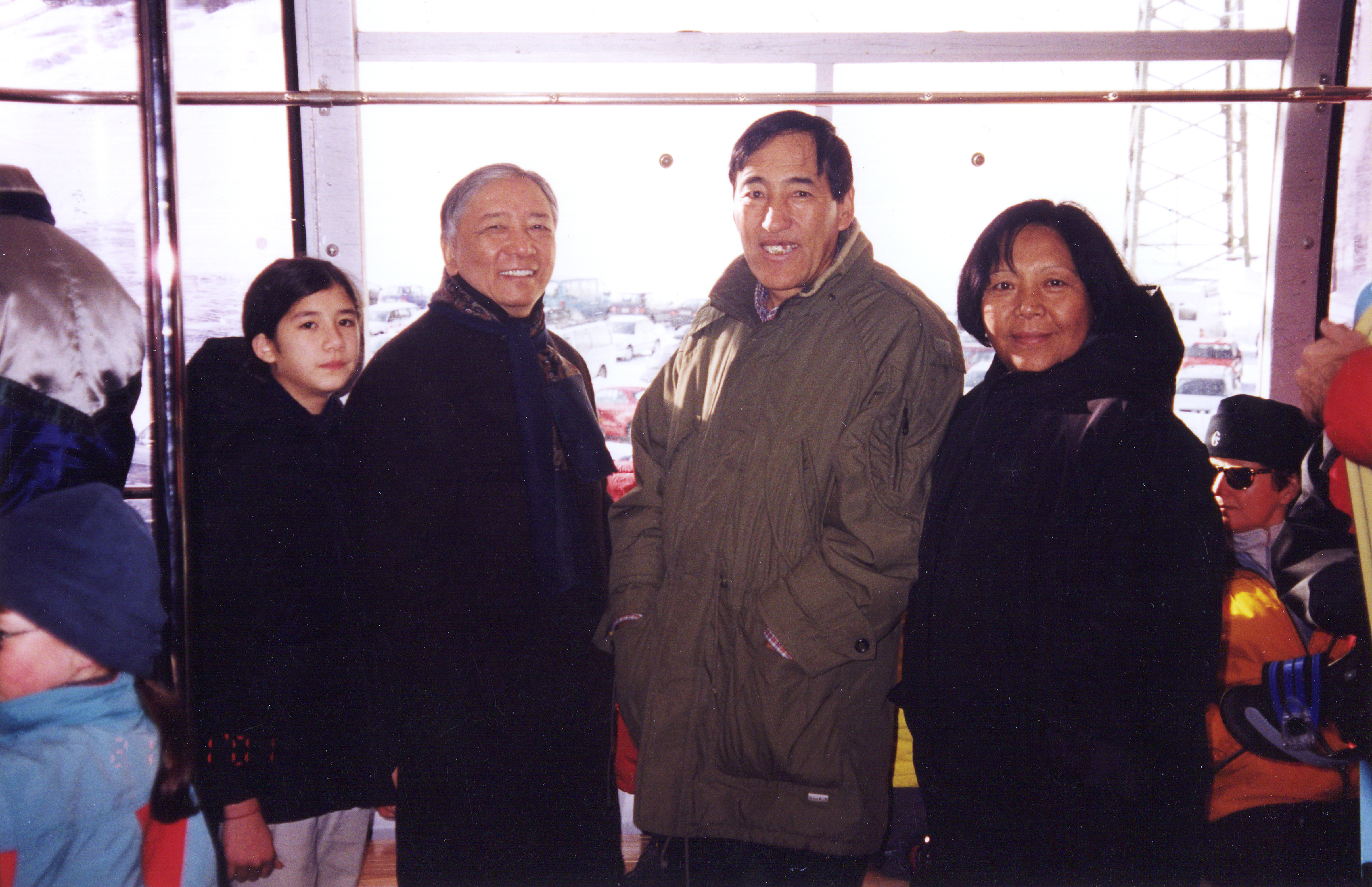
Yesterday, Covit-19 came closer than ever with the death of a friend. Tendrol la was only a few years older than me, born in Tibet, raised in Switzerland. Our families had known each other for years and when our children were young, we would visit them in Switzerland. In the early 90’s Tendrol came to see us in India, and she told me she was quitting her job as a nurse and starting a project in Tibet, a hostel for orphans and children in need. We had in common this drive to do things that people admired but felt were risky and somewhat unreasonable. She began splitting her time between Tibet and Switzerland and within a few years, had built two thriving hostels, one in her husband Gyazur Lobsang Tsultrim’s area, Gyethang, and another near Lhasa, and had created a whole network of sponsors to support both. Sochoe and Dechen visited several times, and in 2018, Tendrol came to see us at Norden Camp with her husband and their son, Songtsen, who had settled in Gyethang and built his life and business there.  Tendrol la was full of energy and we spent happy hours catching up.

Yesterday, a friend in Gyethang told us the news. She and Lobsang Tsultrim had both been ill in Switzerland, but she had not made it through. She was the younger and stronger one, another of this pandemic’s mysterious antics. I just wanted to remember her and let her family, her husband, and sons Songtsen and Gala, know that we are all thinking of her, of their loss, and the moments in our lives spent together.

KYCH199331
Tendrol la, Lobsang Tsultrim and Songtsen with Kalsang, Switzerland, 1988

Kim Collection-053
With Kalsang and Noryang in Switzerland, 2002

KYND120718171
With Dechen (and Norbu) at Norden Camp, 2018 

Covit-19 Chronicle 4

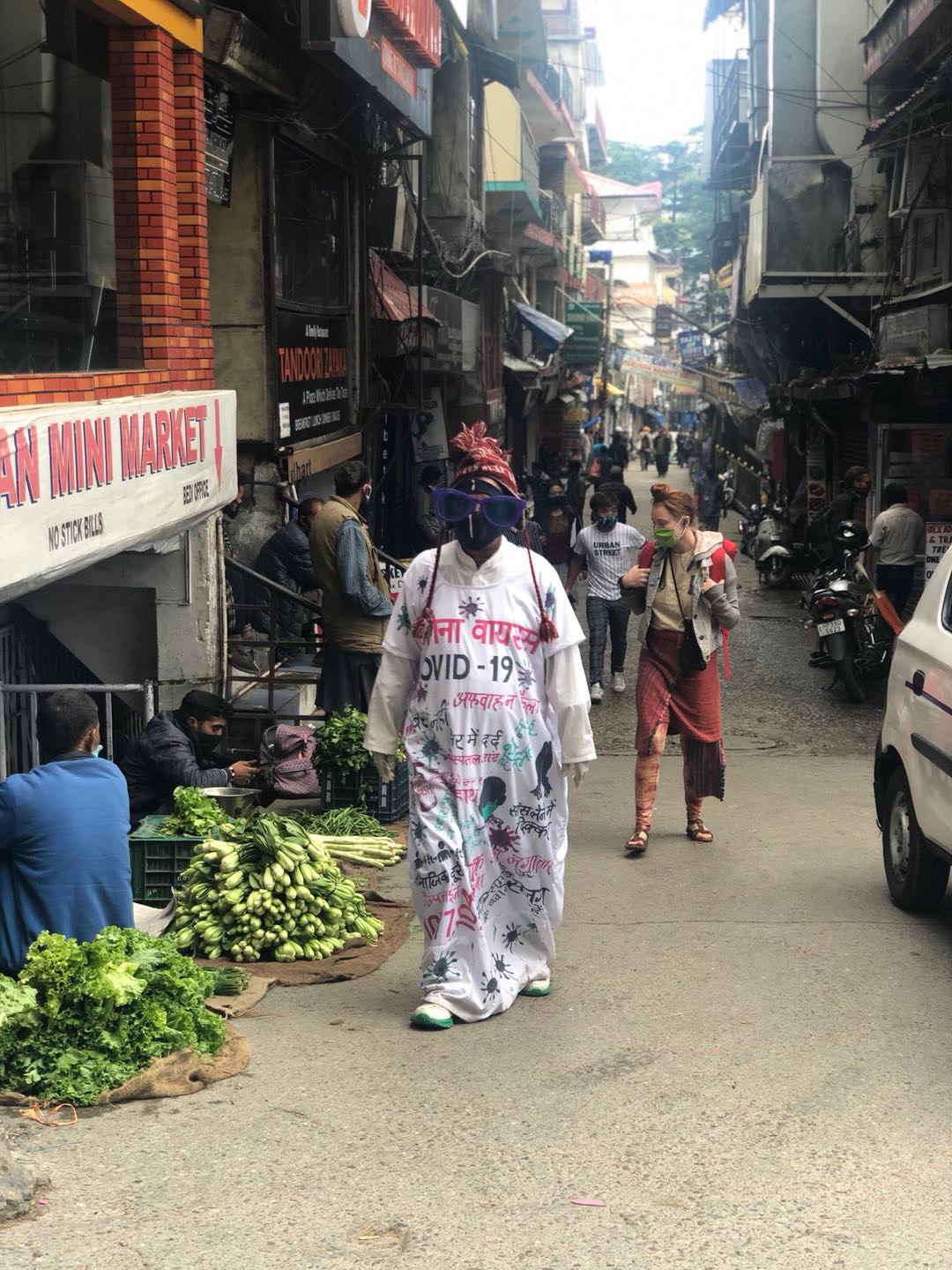
The days slide by, Monday slipping into Tuesday, and suddenly the week is gone. We are now in our 7th week of lockdown. Tomorrow, the second round ends, and the third round, announced for two weeks, begins. We are considered an orange zone, so still no vehicles, and a curfew of sorts. The policemen are more relaxed, and some have become creative, donning extravagant robes to direct the covit-19, mostly pedestrian, traffic during the non-curfew hours. More shops are opening and yesterday, we found cheese. Around us, the weather is growing warmer, the cicadas and barbets louder, and the violent thunderstorms, precluders of the monsoon, more frequent. Mango season is here, we are getting increasingly creative in the kitchen, with Tenor making a whopping chocolate cake, and my trying my hand at smoothies and banana tea bread. The children are happy, finding new games, being artistic, inventing birthdays, and organizing treasure hunts.

On the news, we see the pandemic plateauing, people becoming restless, hopes for a vaccine rising, finger-pointing, and people still dying in frightful numbers. We feel safe in our little haven and in the back of our minds, wonder what will happen when it all starts again, not like before.

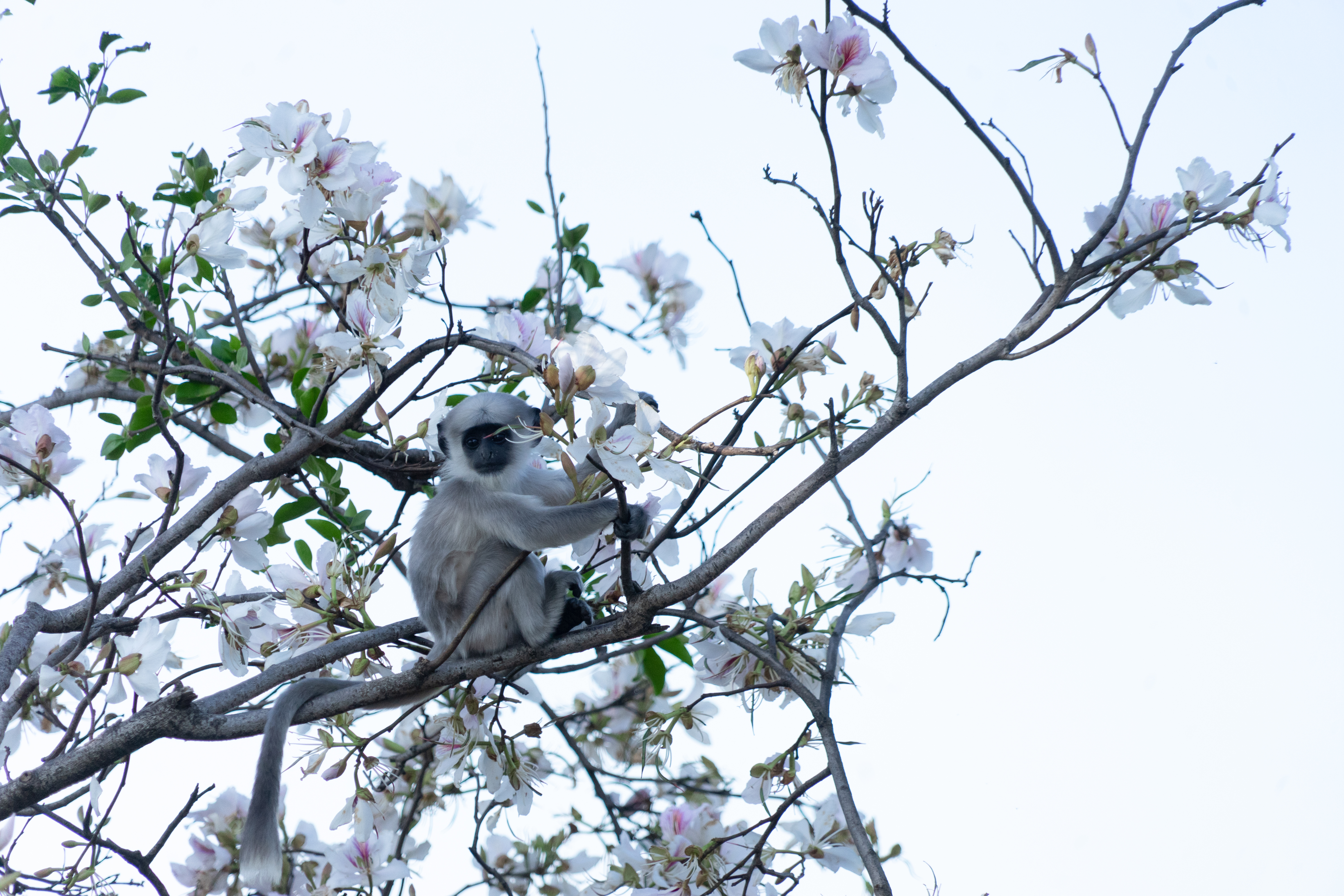
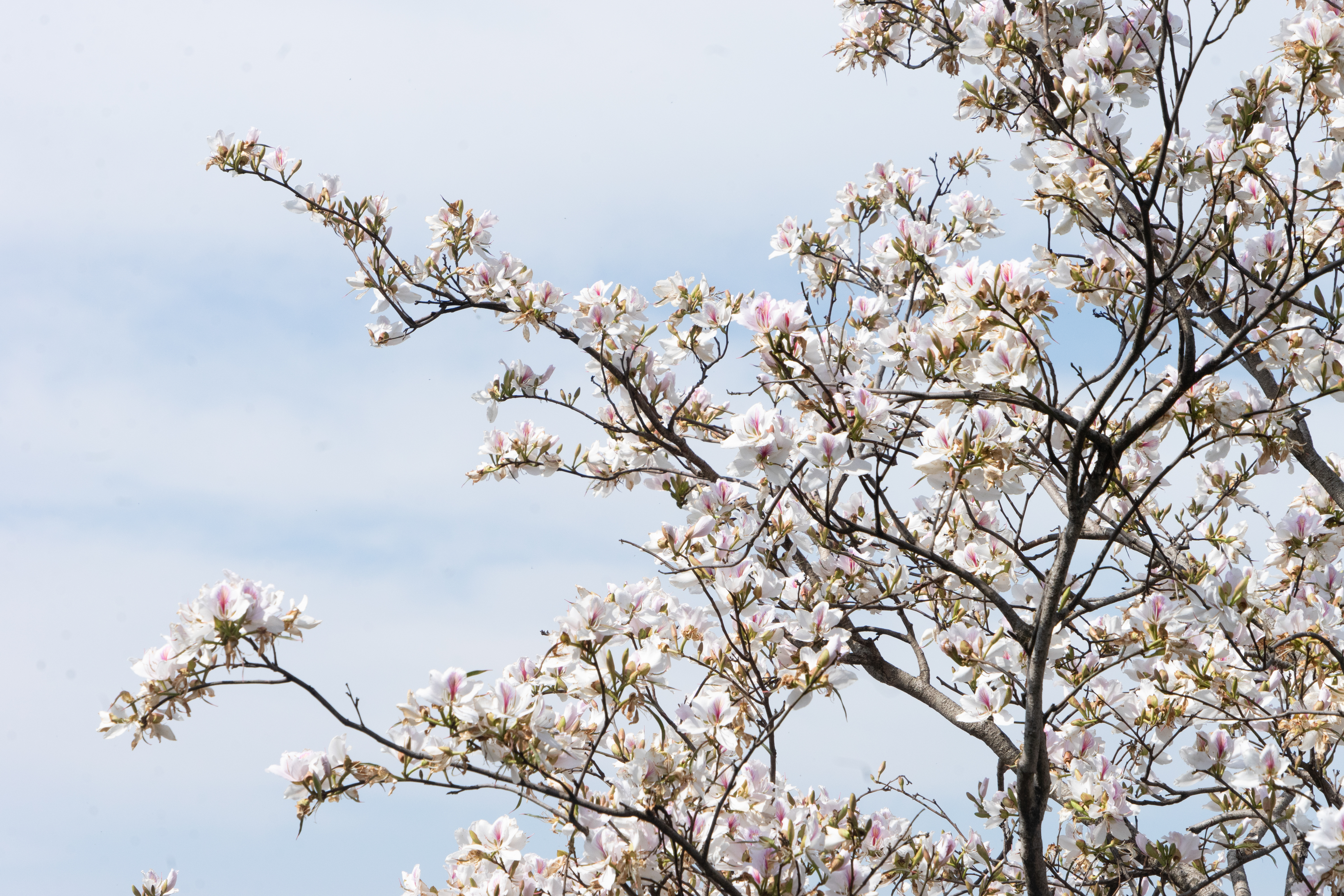
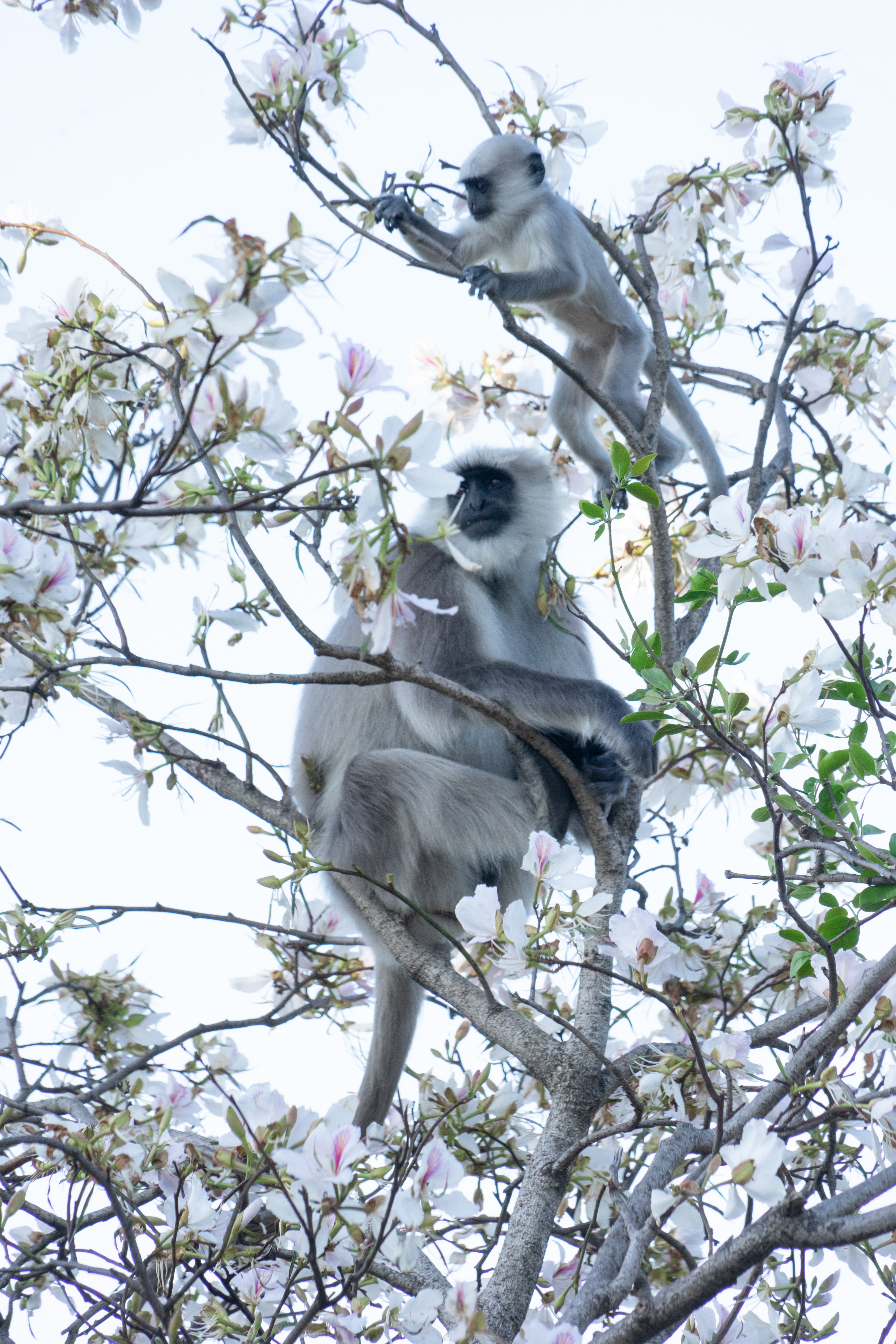
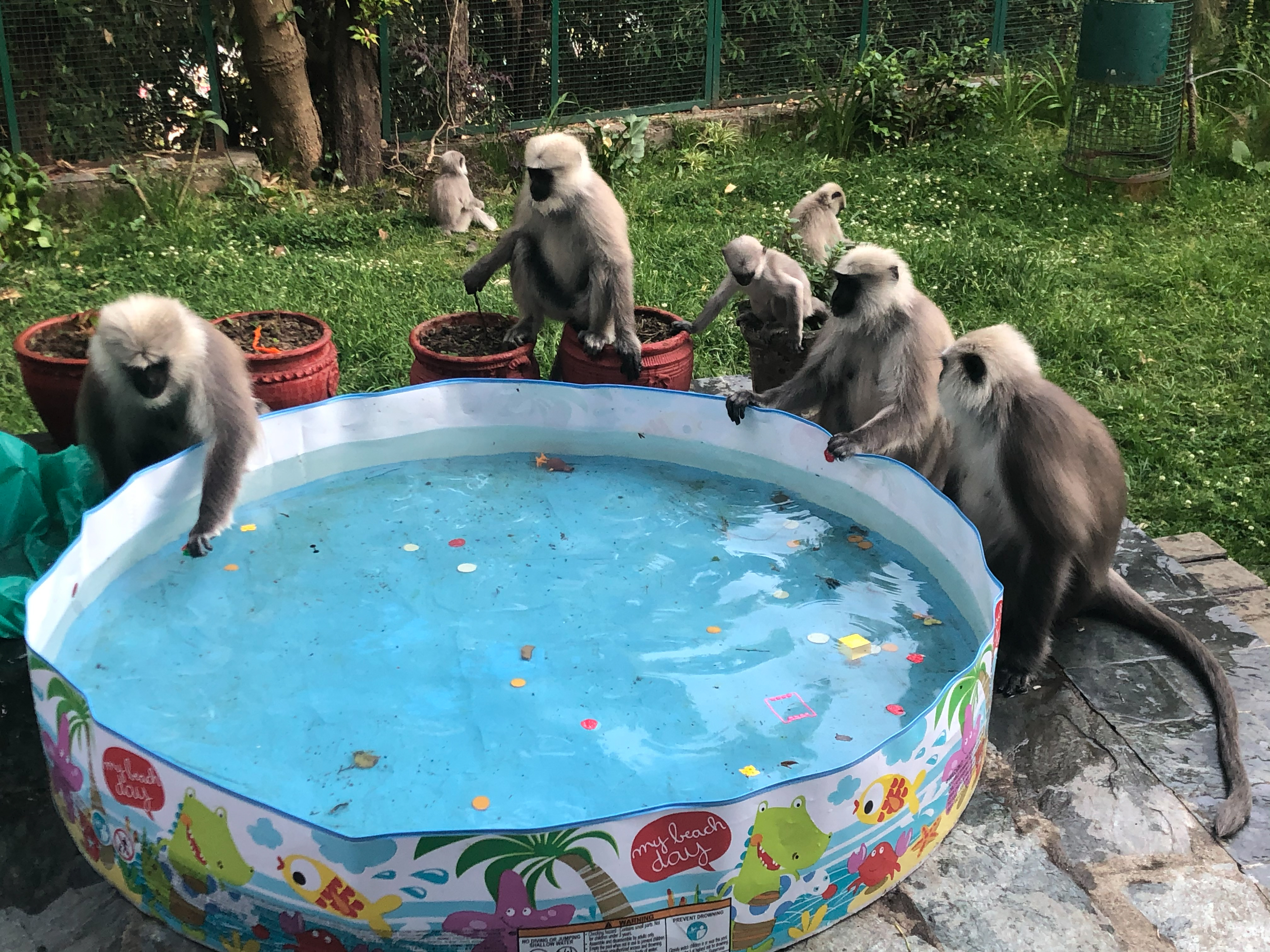
Our animal visitors are more rare, busy elsewhere in areas neglected by humans.  For more than a month, we had an old macaque rhesus monkey visit our terrace every afternoon. He was small for his age and had a lame leg. He limped his way up, then found a peaceful spot to nap. If I came out, he would retreat into a corner and look at me in a pleading way. A few times, I gave him the leftover spoils of Losar, khapses, and he ate them leisurely. Then he stopped coming. The langurs didn’t show themselves for over a month, Each year, the Kachnar tree in our garden blooms, an explosion of exuberant white flowers tinged in pink. Everyone loves these flowers, more to eat than to look at, and in usual circumstances, I don’t get to see them in their full glory. The gardeners climb the tree to collect a sack or two and the langurs take care of the rest unless a hailstorm does away with them.  This year I wondered if they would come and go undisturbed, but the day before yesterday, the langurs were back. From early morning, the ladies and babies feasted on the flowers, while the teenagers jumped about the terrace, upsetting the chairs. They took a noon nap in the trees, then spent the afternoon frolicking on the lawn before discovering the children’s plastic pool. It soon became like a waterhole in the jungle. By evening they were gone, and all was calm.

KYIN01052025
Baby in the katchnar tree

KYIN28042012
The tree before the langurs

KYIN26042008
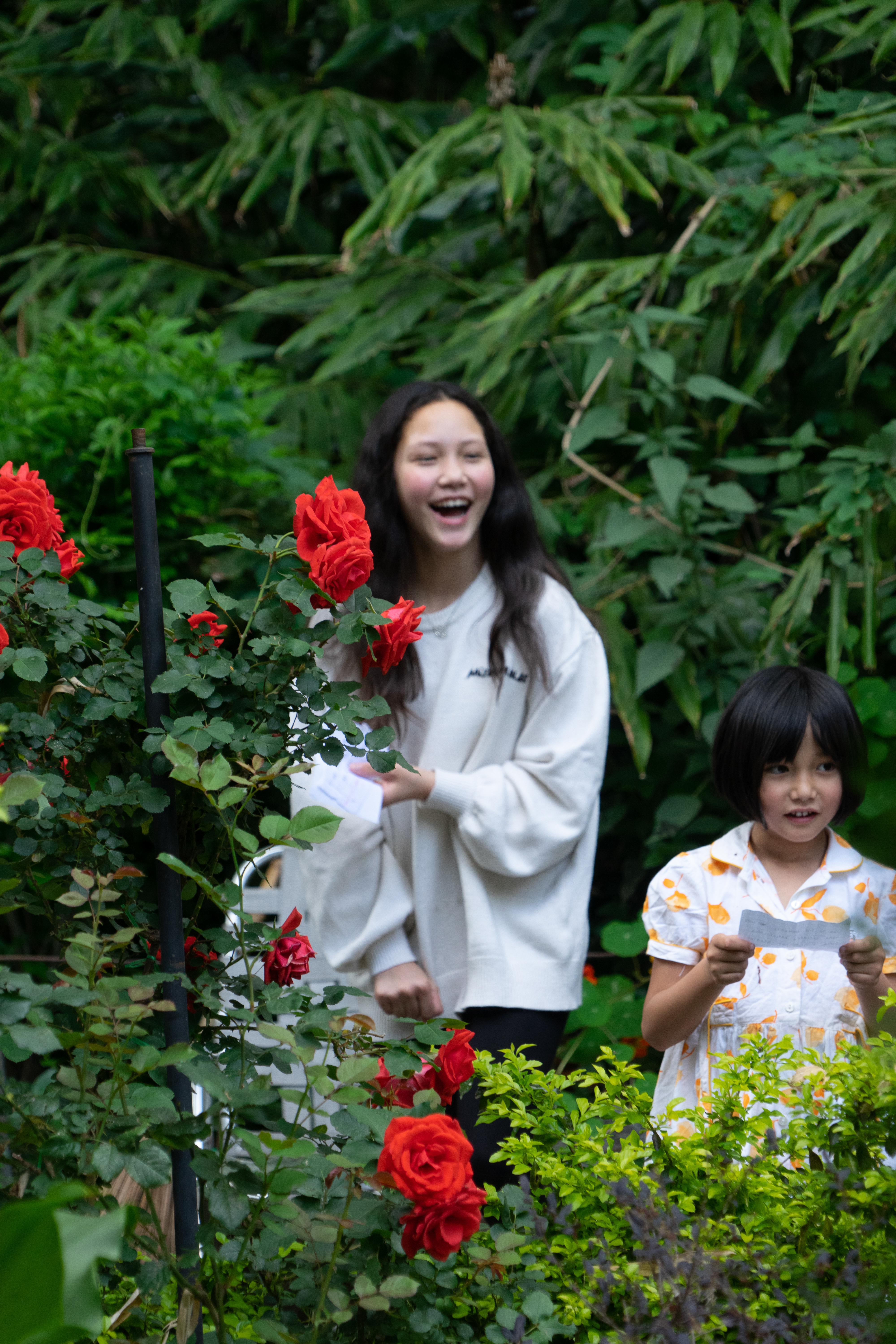
The treasure hunt

KYIN01052041

KYIN27042063
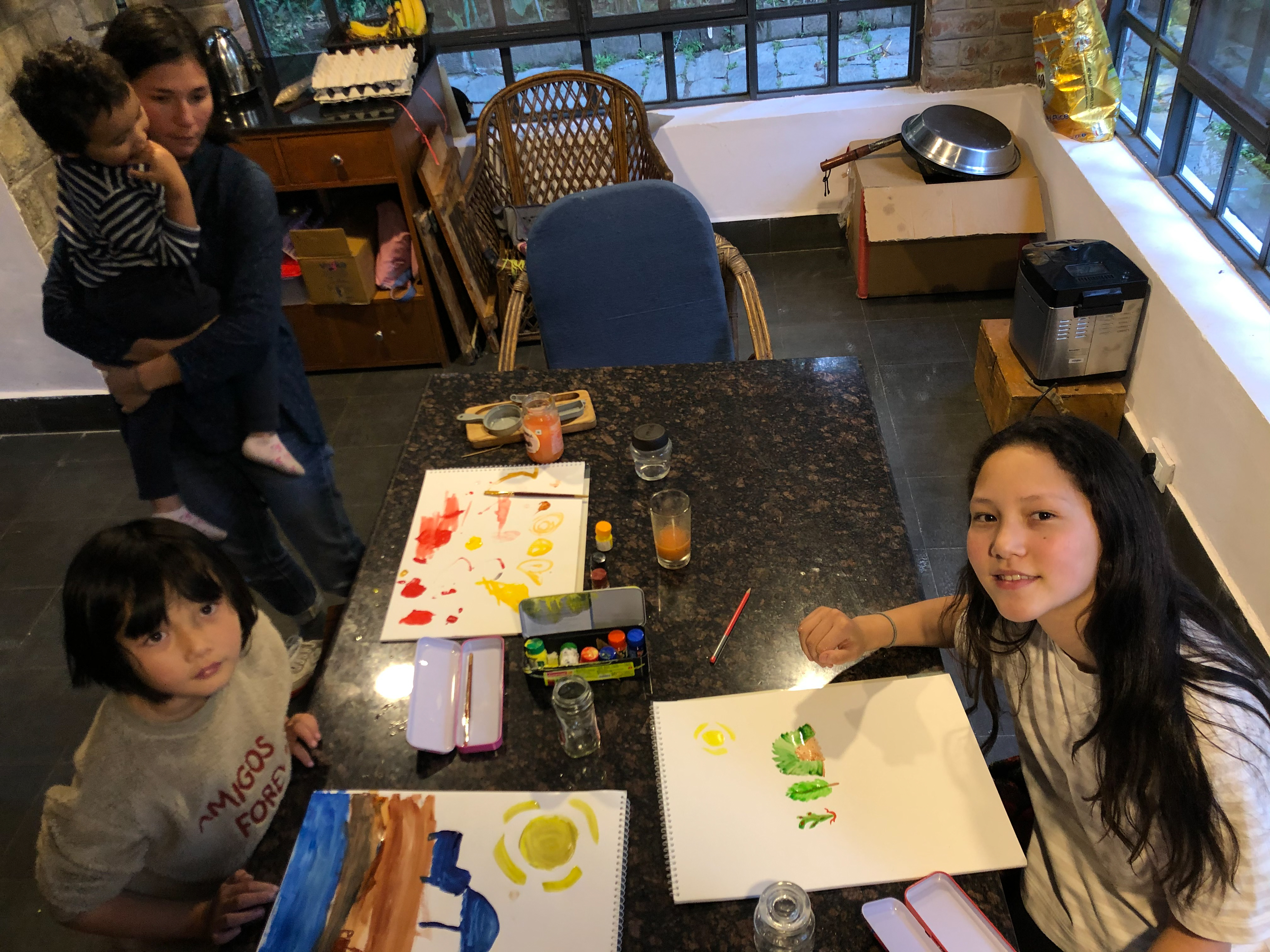
Art time

KYIN25042053
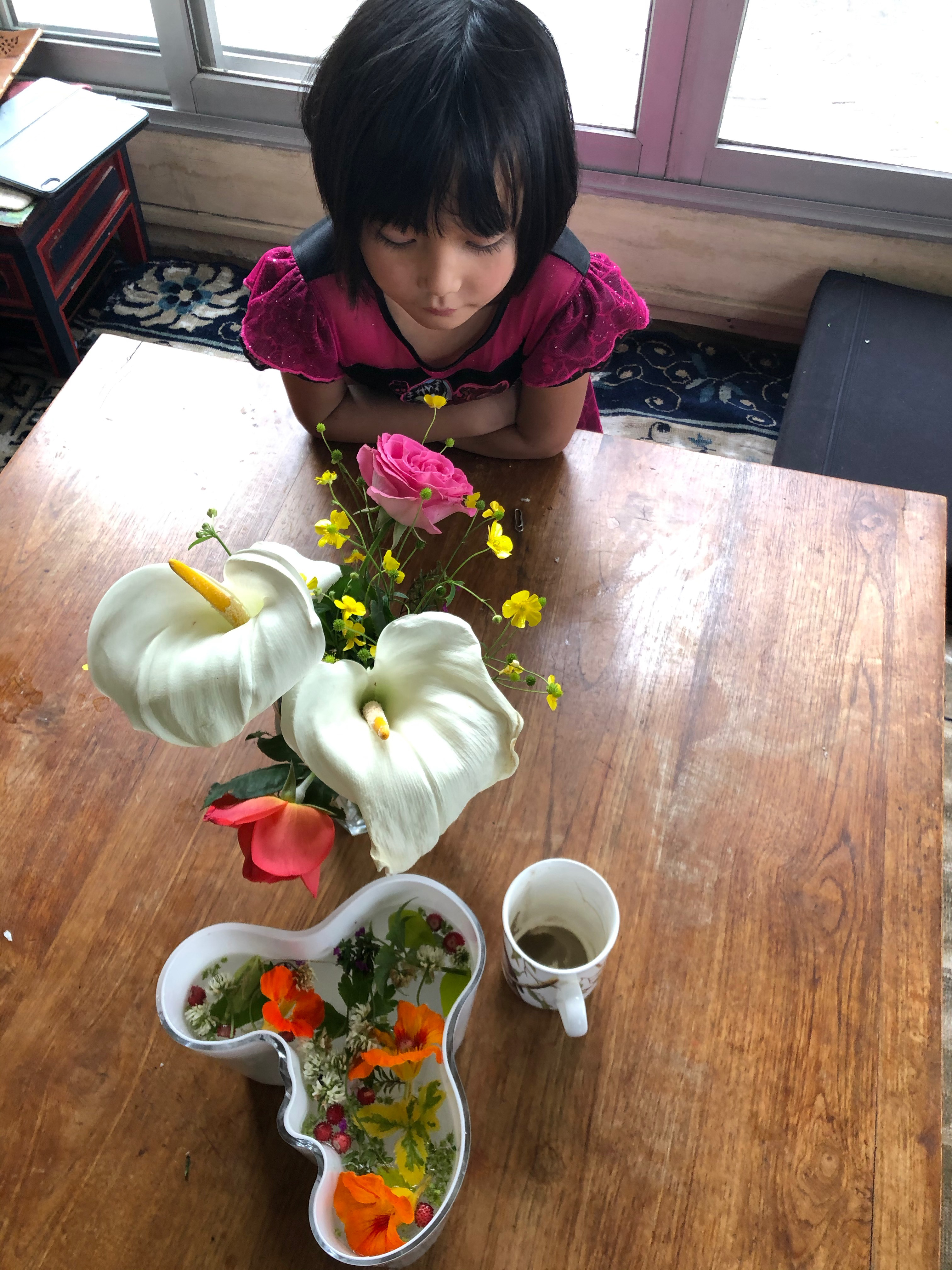
The fake birthday.. I made a cake but she couldn’t wait, so we used flowers

KYIN22042098
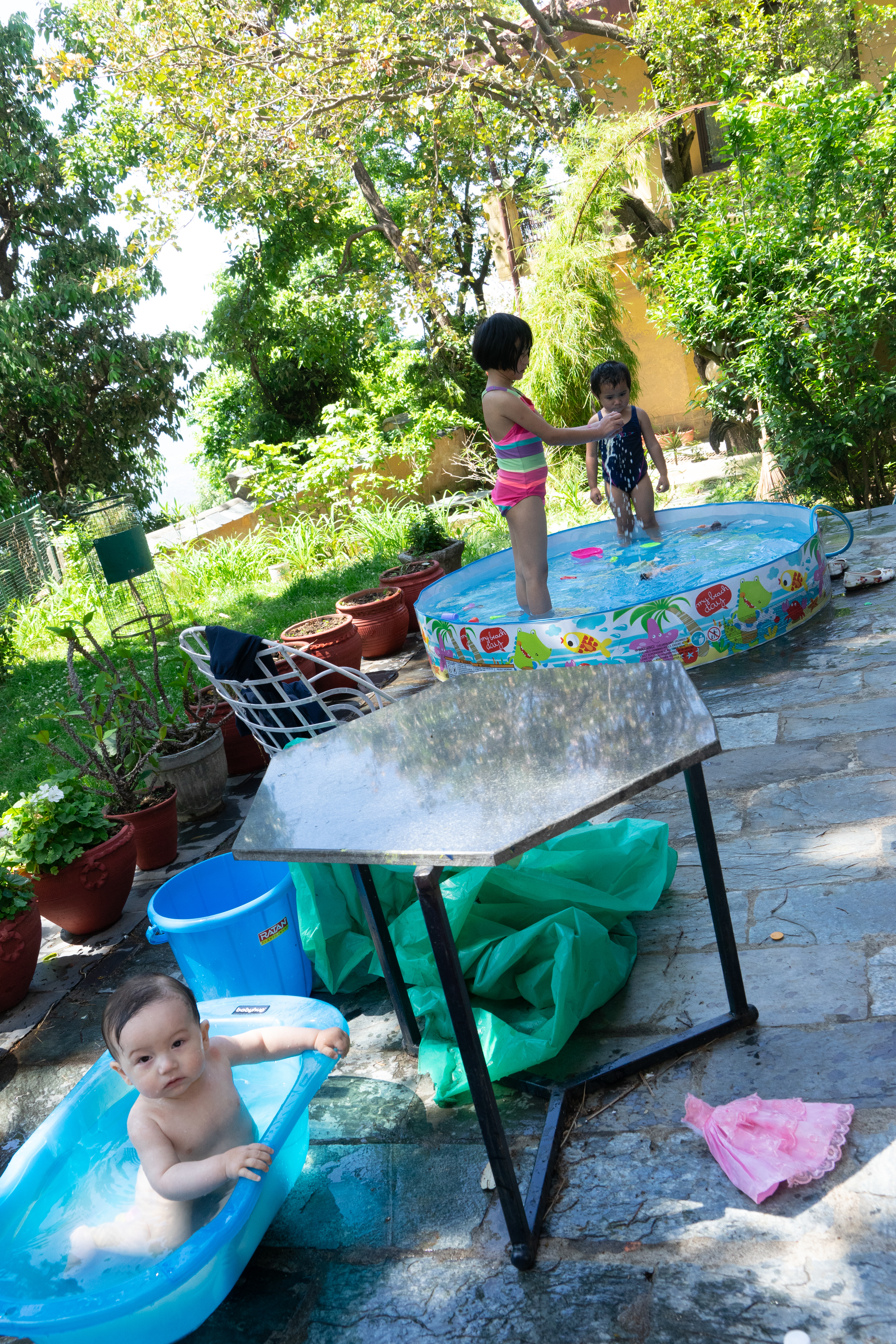
Children pool party. The drowning Barbies are, according to Baby D, sleeping mermaids. 

KYIN01052075
Langur pool party 

KYIN29042066
Policeman in Covit-19 garb, couldn’t miss him 


Celebrating Earth Day

DYNL19061171

The birds are singing louder, the nights are quiet except for the dogs barking, the langurs have almost stopped coming, probably because they now have the whole town to themselves. Walking several kilometers for groceries and making lines is the new normal. The air is clear, there is more time to think, and though we are busy all day, there is a new calm, a ‘whatever comes, comes’ attitude. This is our life under lockdown, how we see it affecting us and our immediate environment, though we can imagine how the confinement of humans is affecting nature in the rest of the world.

On Earth Day, I think of Earth, and how she is getting a break, amazed at her capacity to rejuvenate and capitalize on the slightest retreat from our nefarious activities. I can’t help but reflect on our obnoxious behavior, fueled by arrogance and sense of entitlement. Let’s be honest; homo sapiens is a despicable, dangerous, and destructive creature. Those with a conscience may worry that we are ruining the earth, that we will be destroying it if we don’t change our ways, but no one can make the sacrifices to stop, not even slow down the huge machine that has been put in motion, as that would result in scraping the income of those at the top and deprive the ones at the bottom of basic necessities. And life goes on…until the limit is reached and Earth hits back. I feel we are presumptuous in thinking that Earth will let us destroy her. This is a losing battle, where we shouldn’t worry so much about Earth, she will take care of herself, but rather about the survival of our species. The pandemic may have changed the way we think, brought in new realities, new priorities, but when it is over, which may take some time, what will be the new normal? Will we go right back to where we were?

Earth not only deserves but commands respect. For Jews, Christians and Moslems, she is God, for Hindus, the Universe, for Buddhists, the law of cause and effect, for animists, Mother Earth. We cannot escape the reality that we are reaping what we sow, though we can redeem ourselves by reducing greed and acting smartly and selflessly. If we want to remain on this Earth, we need to show more empathy, compassion, and an understanding of the meaning of happiness.

Epidemic

PicNo01
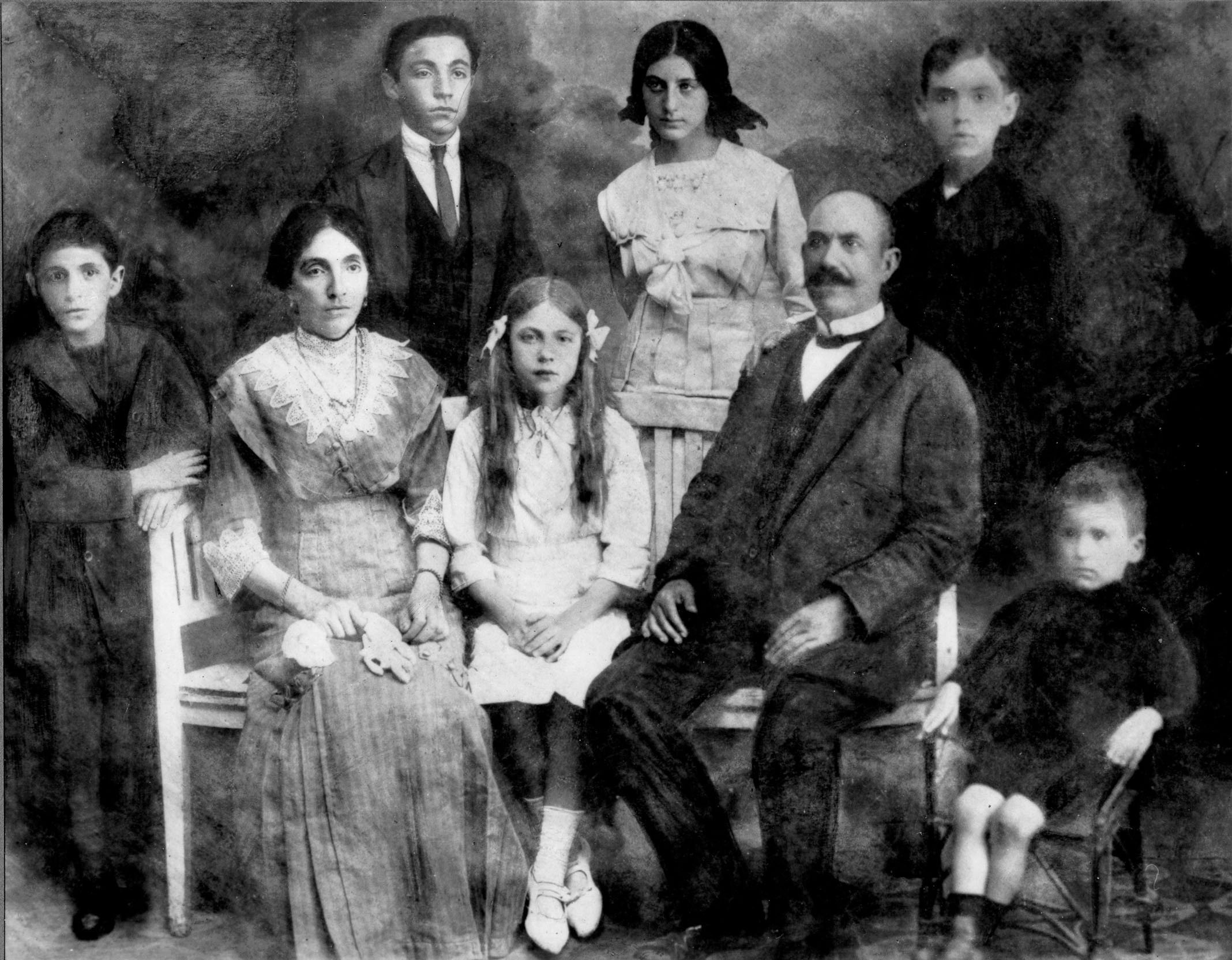
My family in 1913, around the time of the story. My father is on the right, the little boy in the chair. 

My father was also an accomplished storyteller endowed with a prodigious memory. He was born in 1909 in Salonica, then a part of the Ottoman Empire, now Greece, and would sometimes tell me stories on Sundays, the only day I spent time with him. I loved hearing of his childhood and he reminisced his pranks and sibling rivalries, summer fun, the awful French school, but also the loss of his father, the fire that destroyed the city in 1917, and the near-famine they experienced thereafter. There were tales of companionship, adventure, endurance and privation but also of a loving family, all told to me in riveting detail.

In these days of  pandemic where we are all at home, I thought the following story, depicting an incidence of cholera that took place in 1913, would be relevant. My father was only four, and his child’s view of the events offers a slice of life of a long-gone era tinged with present significance.

My first awareness of death came a few months after the takeover of Salonica by the Greeks, in 1913. It was difficult getting used to all the changes, and people were continually reminiscing about the good old ‘tiempo del Turco’, or Time of the Turks, under which the Sephardim community had been living for the past five hundred years.  By this time, we had moved upstairs, to the middle floor of our building, with my Aunt Boulissa above and another family downstairs. One day, a member of that family became very ill. The doctor arrived, recognized the unmistakable signs of Cholera and called in the Greek sanitary services. Their reaction was swift, though we thought of it more as a calamity brought by the Greeks. They put us all in quarantine and brought in a string of gendarmes to watch over us day and night, making sure we didn’t leave the house.

There was but one way to get supplies and I enjoyed the process immensely. From a window, we would lower a hamper tied to a rope, with money inside. A bandanna covering their mouths, the pluckier greengrocers, leading donkeys saddled on both sides with baskets laden with victuals, would fill our hamper.

From the window, I could watch day after day, the sidewalk across the street being sprinkled with quicklime, poured out of a watering can. It was a whitish liquid that turned yellow after a time. The next day, it would be sprinkled with plain water until it recovered its pristine white color.

I was jubilant; I was no longer left alone with my mother all day long. Everybody stayed put at home, and it was like a holiday. I could not understand what it was all about as I had the word ‘calado’, down with a cold, mixed up with cholera. Father nervously rolled cigarettes, my brothers rehearsed their German lessons and my mother complained that the grocers took advantage of the situation by putting inferior goods into our hamper.

One morning, I discovered that the door leading downstairs to the cholera-stricken neighbor’s apartment had been left unlocked. From the landing, I caught sight of my little neighbor, Estrellica, who was chewing on something and, looking up at me said, “Do you want passicas, raisins? Come down, I’ve got a pocketful.” I climbed down and she gave me a handful. I had started eating them when I heard my mother’s imperious voice calling, “What are you doing downstairs? Get up here this minute! But what is this you are eating?” “They’re passicas, Mamica; Estrellica gave them to me.” Holding her cheeks with both hands, I heard her uttering a fearful “Oh, my God!” I thought that she was going to faint. Everyone came running and stared at me in consternation as the news of my escapade spread through the whole building like wildfire.

The passicas were soon thrown down the toilet and my hands were washed in alcohol. “All we needed was this rascal Maïrico making us all croak with cholera!” was the general outcry. Father kept his composure and firmly opposed the request of all our neighbors that I be closeted alone in a bedroom to await the outbreak of the dreaded disease. My mother, as any mother would, declared that she would not hesitate to be closeted with me if necessary.

From that moment on, I became an object of great curiosity. Ten times a day, family and upstairs neighbors would inquire if I felt any bellyache or dizziness. I had never been the center of such attention and to further boost my importance, I went from one to the other just to state that I felt no bellyache at all, nor had I had any dizzy spells; and I enjoyed watching them all raise their gaze to heaven.

Our neighbor died after a few days. Her body, soaked in quicklime, was removed by the special services. From the window, we watched the solitary hearse moving away.